MUHS3061: Vienna as City of Music in the Long Nineteenth Century
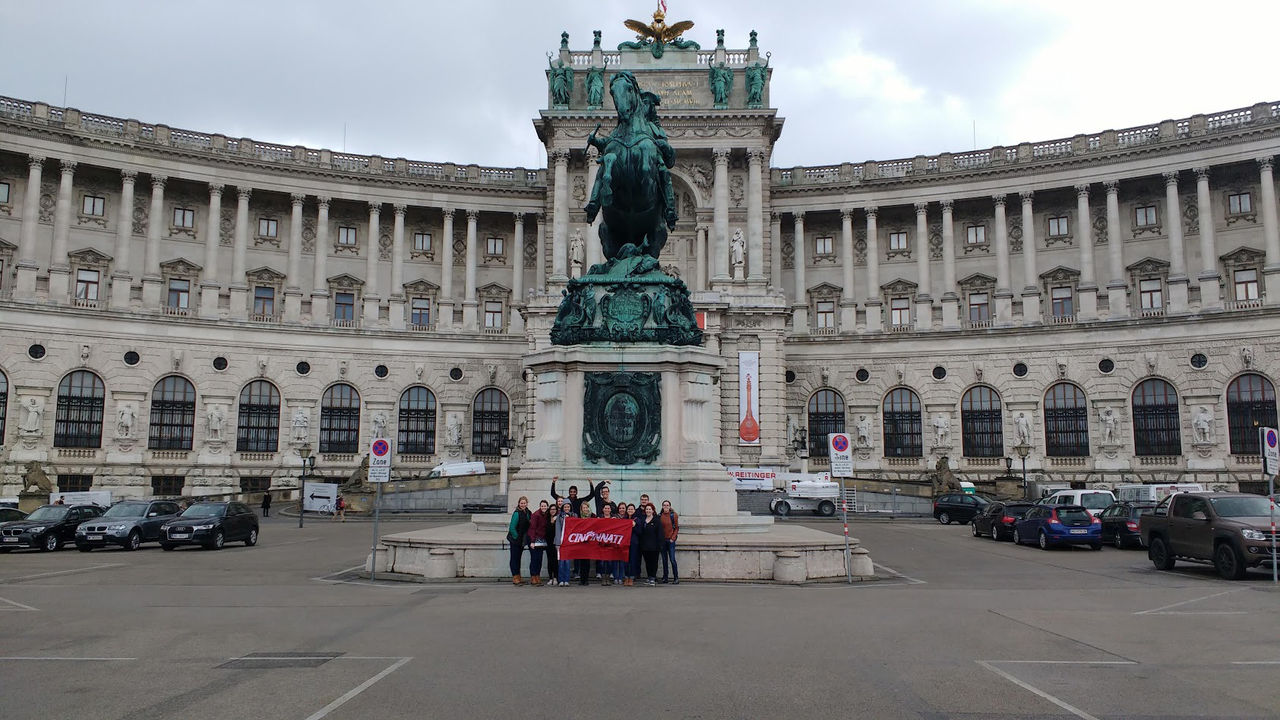
Instructors: Jonathan Kregor
Requires a study tour to Austria: April 30 – May 8, 2027
The seminar will be held Spring 2027 on Thursdays, 2:00pm-4:50pm.
Why take this course?
What you'll do in this course:
- Discover Austria's history through music, from the roots of the Austro-Hungarian Empire to the Fin de Siècle and the prologue to World War I
- Explore the complex relationship between cultural and political change in the 19th century
- Travel to Vienna and Salzburg to experience Austria's musical and cultural legacies firsthand
Try this course if you:
- Want to know why, when it was first invented, the waltz was considered scandalous
- Are curious about the role art and artists play in society at large, and how perceptions of that role have changed across time
- Are ready to learn about music history in a tight-knit community (and maybe try a sachertorte...)
Full Description
The Austrian capital of Vienna proudly touts itself today as “Musikstadt Wien,” or “Vienna, City of Music.” This claim largely hinges on the presence of Wolfgang Amadeus Mozart, Ludwig van Beethoven, Johannes Brahms, Gustav Mahler, Arnold Schoenberg, and dozens of other world-class musicians who called the city home between c. 1780 and 1913.
Yet many of these figures did not originate in Vienna itself; rather, they came from elsewhere in the vast Habsburg and German-speaking worlds, bringing with them regional identities, artistic traditions, and cultural perspectives that helped shape Vienna. The capital thus emerged not only as a center of artistic achievement, but also as a reflection of a dynamic, cosmopolitan empire shaped by ongoing exchanges and tensions between center and periphery, metropolis and province.
This course examines the compositions, writings, and other activities of these musicians against the changing artistic, social, and political climate of the “long” nineteenth century. Focus on primary sources, local institutions, and performances; knowledge of foreign language or music notation not necessary. This course concludes with a week-long tour of Salzburg and Vienna.
Course Objectives
Exploring Vienna in the long nineteenth century, while also considering peripheral sites like Salzburg, Prague, and Budapest, will help develop your abilities to:
- Recognize how political, economic, artistic, and other cultural forces gave rise to these cities as unique centers of artistic creation
- Relate aspects of the culture and history of the Austrian Empire (including the Holy Roman Empire and the Austro-Hungarian Empire) to events in our modern world
- Evaluate the role of patronage, tourism, festivals, and other economic forces in artistic creativity and cultural memory
- Identify, discuss, and write about aspects of Austro-German music, literature, and art in concrete terms using appropriate vocabulary
- Cultivate an historical imagination
- Travel internationally, navigate unfamiliar cities, and courteously communicate basic needs in German
- Acquire an appreciation for another culture


Itinerary
Please note that this itinerary may change prior to the start of the semester!
Day 1 - Friday, April 30: depart Cincinnati, travel to Vienna
Day 2 - Saturday, May 1: arrive in Vienna, bus to Salzburg, check into hotel, city walk and welcome dinner
Day 3 - Sunday, May 2: visit Hohensalzburg Fortress, Alte Residenz, and the Salzburg Cathedral
Day 4 - Monday, May 3: morning at Mozarteum University. Travel to Vienna, guided city sightseeing tour
Day 5 - Tuesday, May 4: visit Vienna Museum, Haydn House, Mozart House, and then free time and/or optional guided visit of Vienna Central Cemetary.
Day 6 - Wednesday, May 5: Schönbrunn Palace visit, then free time
Day 7 - Thursday, May 6: State Hall guided visit, Vienna State Opera visit, then free time
Day 8 - Friday, May 7: UN visit and Belvedere Museum. Gather for farewell dinner and attend performance at Musikverein (pending availability)
Day 9: Saturday, May 8: depart Vienna for Cincinnati.