UC mosasaur research attracts international attention
Smithsonian, BBC, FOX News highlight UC biology professor Takuya Konishi's new study on 'ugly duckling' of ancient marine reptiles

International news media highlighted research by University of Cincinnati biology professor Takuya Konishi, who will present his findings at this month's Society of Vertebrate Paleontology conference.
The study demonstrates the value UC places on research in its strategic direction, Next Lives Here.
Konishi theorizes that some prehistoric sea creatures called mosasaurs might have subdued their prey by ramming them with their bony snouts like killer whales do today.
In a study published this month in the Journal of Vertebrate Paleontology, Konishi examined skull fragments of a baby mosasaur found in Kansas in 1991 and used his experience and other fossil examples to identify it as a Tylosaurus, the largest known mosasaur species. Unlike other species, Tylosaurus had a protruding bony snout. But the baby's snout was blunted and not nearly as prominent.
Konishi speculated that this feature, called a rostrum, becomes more pronounced as the marine reptile ages. He likened it to the "ugly duckling" that grows into the graceful swan, a notion that caught on with BBC News, which called it the "ugly duckling fossil from the deep."
Smithsonian Magazine called it "a case of mistaken sea monster identity."
FOX News called the discovery an "85 million-year-old sea monster."
United Press International, or UPI, quoted UC's Konishi on his moment of discovery when he realized what he was looking at.
"Having looked at the specimen in 2004 for the first time myself, it took me nearly 10 years to think out of that box and realize what it was – a baby Tylosaurus yet to develop that snout," Konishi said.
Europa Press in Madrid, Spain, highlighted the discovery of the smallest baby mosasaur ever found.
Read more about his discovery in UC News.
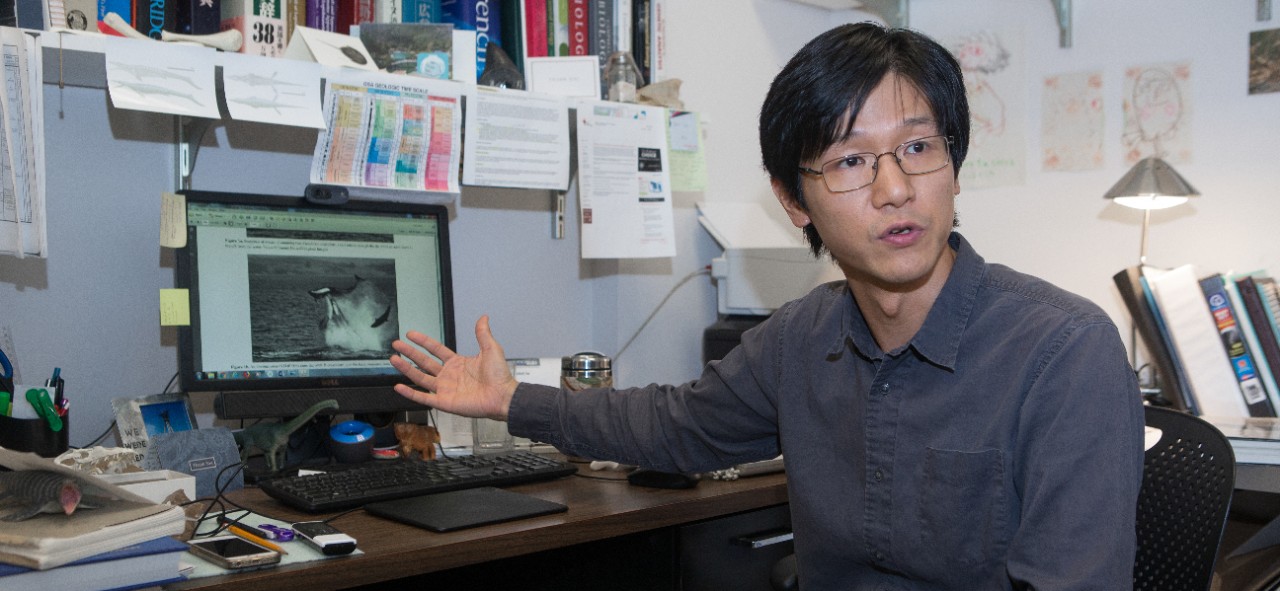
Featured photo above: UC biology professor Takuya Konishi talks about the aggressive hunting behavior of orcas. Photo/Joseph Fuqua II/UC Creative Services.
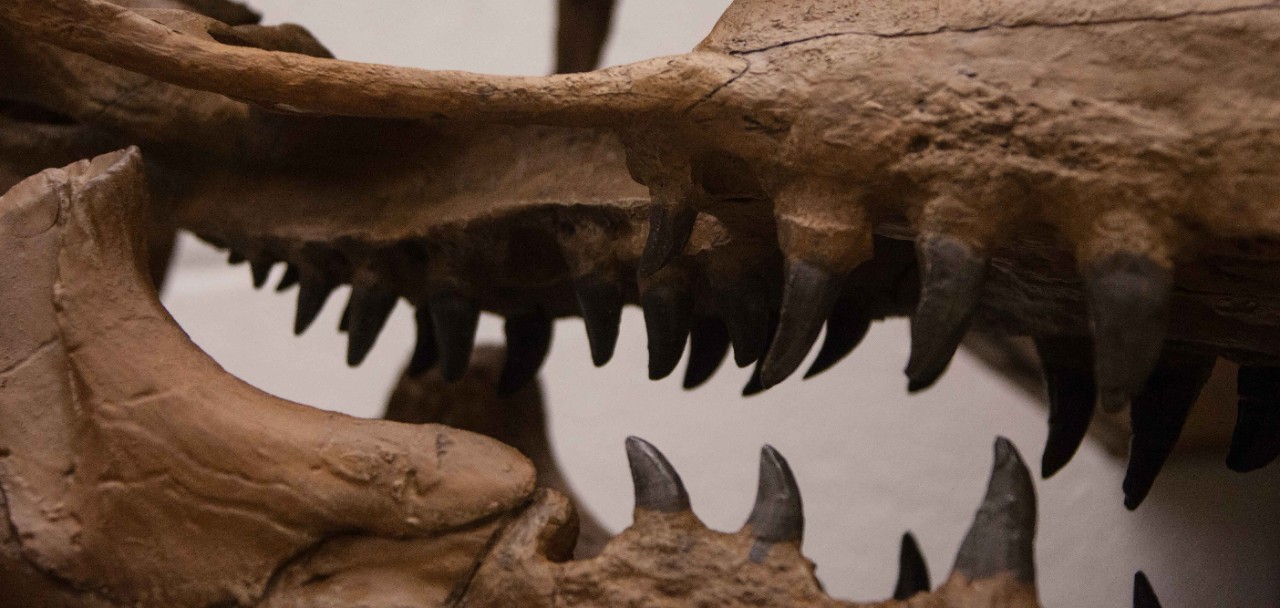
A mosasaur skull. Photo/Ravenna Rutledge/UC Creative Services
Next Lives Here
The University of Cincinnati is classified as a Research I institution by the Carnegie Commission, and is ranked in the National Science Foundation's top 35 public research universities. UC's graduate students and faculty investigate problems and innovate solutions with real-world impact. Next Lives Here.
Related Stories
Everyday guide to AI prompt engineering
August 5, 2026
Prompt engineering can be the difference between strong and poor AI outputs. Success comes from explaining your end goal, breaking down large requests and carefully checking for errors.
Bidirectional link between oral, kidney health calls for patient education, access
August 4, 2026

Despite growing awareness of the connection between oral health and chronic health conditions, patient awareness and access to dental care remain limited, according to University of Cincinnati experts who recently spoke with Healio | Nephrology News & Issues.
'Be human in it': UC College of Medicine welcomes Class of 2030 at 31st White Coat Ceremony
August 4, 2026
The University of Cincinnati College of Medicine welcomed 185 first-year medical students in the Class of 2030 at the 31st annual White Coat Ceremony.