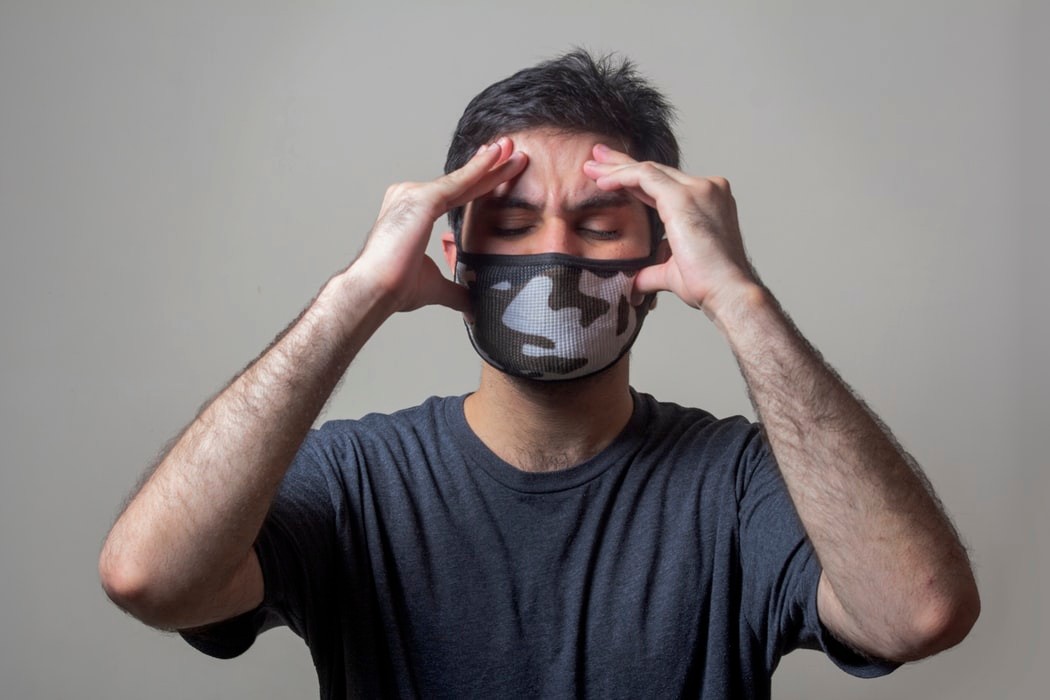
Ivanhoe Broadcast: Migraine sufferers—beware of fall
UC migraine expert says weather changes are a primary cause of migraine

As many as one in four U.S. households has someone who suffers from migraines. If you are the one of the estimated 38 million Americans who get migraines and think they really are worse this time of year, you’re not imagining it.
It’s the time of year where people think of pumpkins, changing leaves, and crisp air. But the fall means misery for many. Vincent Martin, MD, professor and director of the Headache and Facial Pain Center at the University of Cincinnati, says research indicates weather changes are a primary cause of migraine.
Martin, a UC Health physician and also president of the National Headache Foundation, spoke with Ivanhoe Broadcast about the challenges some face as a result of migraine.
Related Stories
Driven by curiosity, guided by care
May 14, 2026
Max Wilson, a University of Cincinnati College of Allied Health Sciences health sciences major on the pre-physician assistant track, found his path expanding beyond the classroom and into hands-on research focused on human performance and patient care.
New cohort of nursing students get ready to join co-ops
May 14, 2026
A new chapter is beginning for more than 100 University of Cincinnati College of Nursing rising seniors as they embark on one of the most distinctive experiences in undergraduate nursing education: the UC Nursing Co-op Program. The incoming cohort will fan out across Cincinnati's premier healthcare institutions, stepping into some of the most dynamic and specialized clinical environments in the region. Placement sites include UC Medical Center (UCMC), West Chester Hospital, Cincinnati Children's Hospital Medical Center (CCHMC) Burnet, College Hill, and Liberty campus.
Will a gas tax help lower prices at the pump?
May 14, 2026

WCPO recently reported on Kentucky and Indiana’s steps to combat surging gas prices, cutting and suspending state gas taxes, respectively. UC economist Michael Jones explained the impact on Cincinnati.