Columbus Dispatch: New trial granted after man serves years behind bars
Ohio Innocence Project at the University of Cincinnati helps free 34th individual

A Columbus man imprisoned for a 2004 home invasion and robbery was released Wednesday after nearly 16 years and will get a new trial thanks to the efforts of the Ohio Innocence Project (OIP) at the University of Cincinnati.
Richard Horton, 45, was convicted in 2006 and sentenced to 23 years in prison for allegedly breaking into a home in Columbus and shooting a victim in the leg during an armed robbery.
But a team from OIP worked for the release of Horton, who became the 34th individual freed since OIP’s founding in 2003. Using DNA analysis techniques that were not available until very recently, testing by the Ohio Bureau of Criminal Investigations revealed that DNA from a partial fingerprint found on a fired shell casing at the crime scene excluded Horton as the source.
The Columbus Dispatch reported the release of Richard Horton online.
Franklin County Common Pleas Judge Colleen O’Donnell issued an opinion overturning Horton’s conviction. OIP believes this to be the first time such DNA analysis from a shell casing has led to a reversal of a conviction. Horton, who has maintained his innocence in this matter since the time of his arrest, has been represented for the last several years by OIP staff attorney Brian Howe.
A victim in that crime was shot in the leg. The only physical evidence was a spent 9mm cartridge casing that had been fired during the commission of the crime. Research by University of Cincinnati law students prompted OIP to request advanced forensic DNA testing on the casing. OIP director and co-founder Mark Godsey puts the significance of the ruling in the following context.
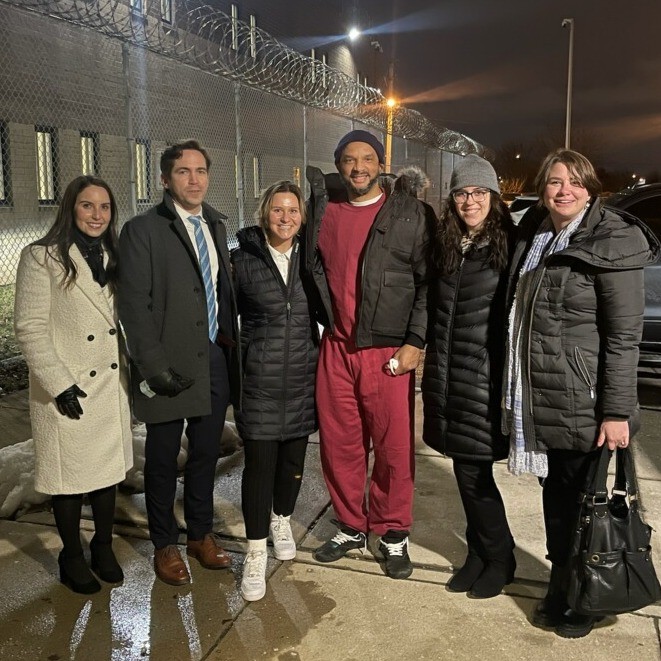
Horton (center) is shown minutes after his release with members of the OIP team that worked to help free him. From left, former OIP Fellow and now attorney Kiley Beale, OIP staff attorney Brian Howe, current OIP Fellow Baylee Kalmbach, Richard Horton, current OIP Fellow Isabelle Weber and former OIP Fellow Cate Douglas. Photo submitted.
“The interesting thing about this case is that the DNA testing results derived from fired shell casings found at the scene,” Godsey says. “That previously was not possible because the heat of firing a gun made the DNA on the casing untestable, and to our knowledge this is the first such overturned conviction in the country to involve DNA lifted from shell casings that had been fired.”
The UC Law students and OIP Fellows whose initial research started the momentum to get Ohio to look at this form of DNA testing were Norb Wessels and Riley Able. According to Howe, former OIP Fellows Kiley Beale and Jordan Blake also deserve particular recognition for their efforts in pushing this case from the investigative to the litigation stage.
Along with those four, other UC Law students and OIP Fellows who worked on Horton’s case include former students Kanisha Ervin, Alisher Kassym, Jefferson Kisor, Tyler Liston, Jack Duhan and Max Moreland, along with current third-year students Cate Douglas and Julia Stern, and current second-year students Baylee Kalmbach and Isabelle Weber.
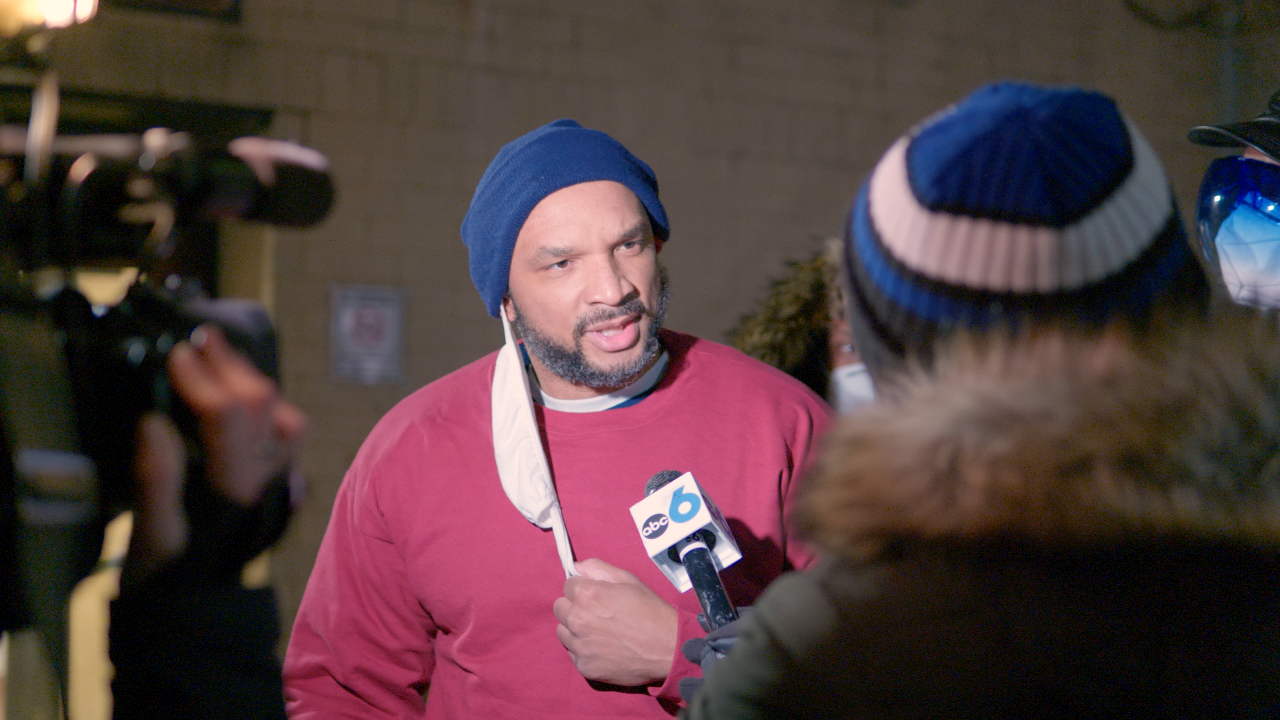
Featured image of Richard Horton shown following his release speaking with media. Photo provided.
Related Stories
Is Cincinnati building new homes fast enough?
September 22, 2026

Gary Painter, professor and academic director of the Real Estate Center at UC's Lindner College of Business, offers comments on affordability issues in Cincinnati.
UC expert explains geology of Mammoth Cave
September 21, 2026

UC Associate Professor Dylan Ward and UC geosciences graduate Rachel Bosch joins an episode of OutSCIder Classroom to talk about weathering in caves found in places such as Mammoth Cave National Park.
AI is going to change all our lives
September 21, 2026

UC College of Arts and Sciences Assistant Professor Kelly Merrill Jr. tells the Columbus Dispatch that AI is becoming engrained in every aspect of health care.