CNBC: Thales CEO recommends new approach to AI
Exec touts transparent, explainable AI created by UC graduate

Thales CEO Patrice Caine touted an artificial intelligence system created by a University of Cincinnati graduate as a responsible model for the future.
Caine spoke to CNBC about the need for companies to adopt responsible AI.
“AI can bring the best and the worst out,” Caine told CNBC. “That's why we developed this quite unique approach we call 'TRUE AI' for transparent, understandable and ethical AI.”
UC College of Engineering and Applied Science graduate Nick Ernest developed the system and is now working at Thales as chief architect in avionics.
“Transparent means you need to know how it works so it can't just be a black box,” Caine said.
“Understandable means at the end of the day to validate the idea proposed by the AI it needs to be understandable. You need to understand what it means when it says yes or no,” he said.
“And ethical values need to be taken into account. How? It's easy to say. More difficult to implement into our daily engineering job. But that's clearly the goal we set for ourselves.”
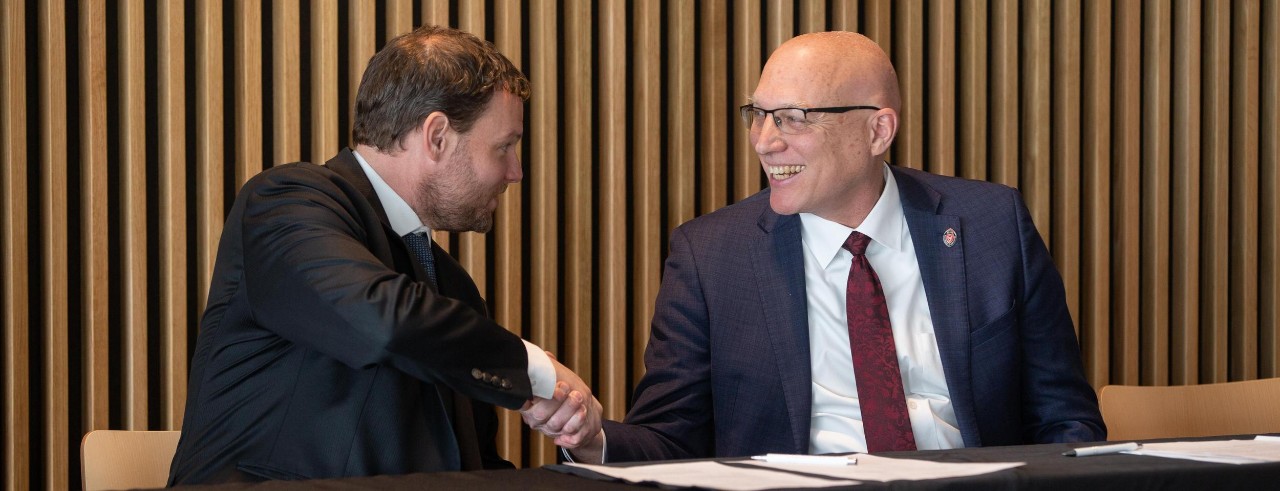
Thales, one of the world’s leading aerospace companies on national defense, space exploration and aeronautics, in March signed a five-year research agreement with UC to develop digital and aerospace technology.
Ernest and UC graduate Tim Arnett, senior AI researcher at Thales, gave a presentation on the novel artificial intelligence during this month’s North American Fuzzy Information Processing Society’s annual conference at UC’s Digital Futures building.
Featured image at top: Thales Vice President Yanik Doyon shakes hands with UC College of Engineering and Applied Science Dean John Weidner. Thales signed a five-year research agreement with UC to develop digital and aerospace technology. Photo/Andrew Higley/UC Marketing + Brand
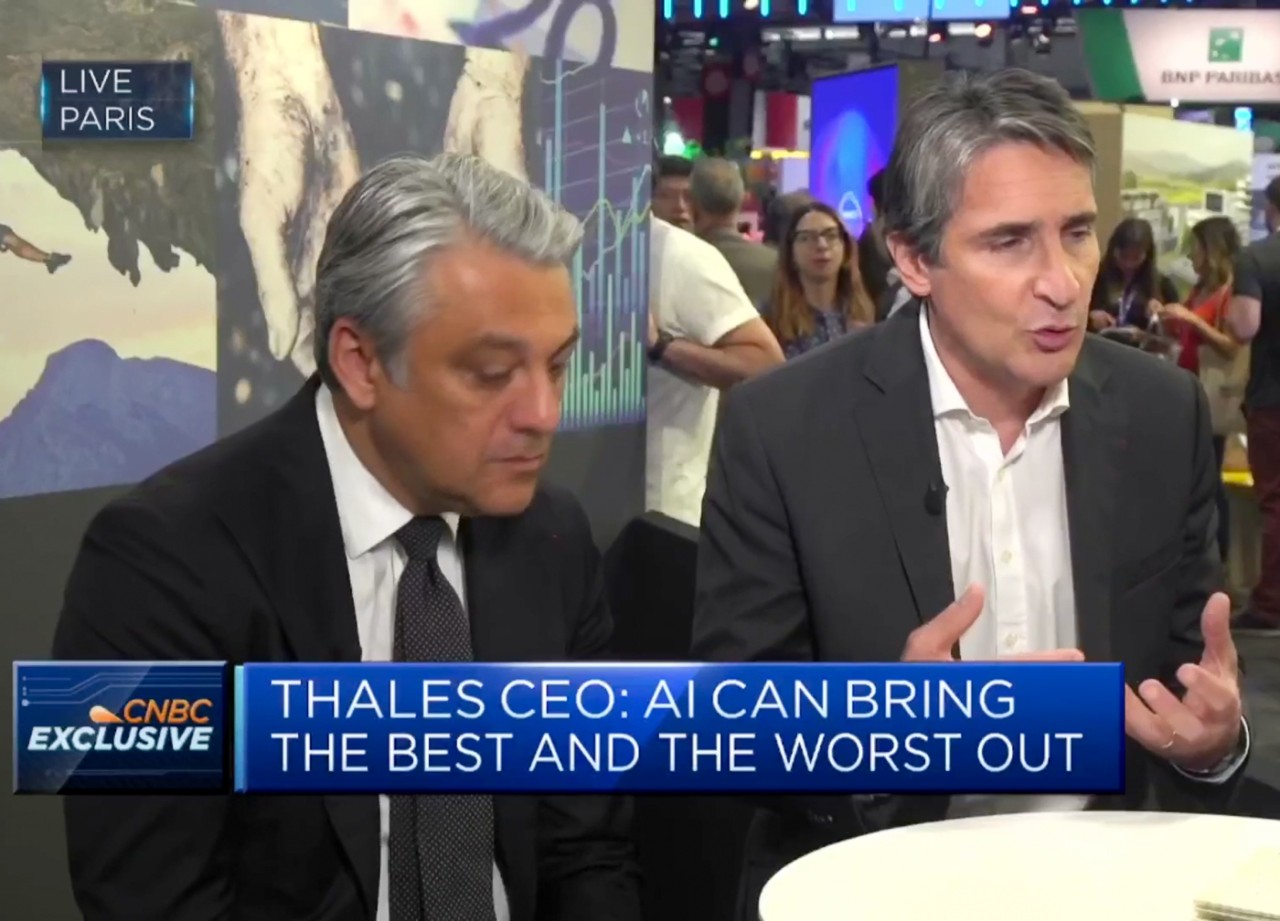
Thales CEO Patrice Caine, right, and Renault CEO Luca de Meo talk to CNBC about incorporating AI technology into their businesses. Photo/CNBC
Related Stories
These teeny spiders are social media stars
August 28, 2026

The New York Times turned to a University of Cincinnati professor to explain the appeal of jumping spiders on social media.
An internal divide among unions on AI impacts the Wisconsin gubernatorial race
August 28, 2026

Anne Lofaso, a professor in the Donald P. Klekamp College of Law at UC, spoke with Wisconsin Public Radio, about the schism among unions over AI and whether it is a plus, a negative, or somewhere in between when looking at job creation.
UC, NKU renew longstanding partnership supporting Army ROTC cadets
August 26, 2026
The University of Cincinnati Army ROTC and Northern Kentucky University (NKU) have renewed a longstanding partnership that supports students preparing to become Army officers and leaders in their communities. The universities formalized the renewed agreement during a signing event Aug. 11 at NKU.