
New York Times: When your workout stops working
UC expert suggests a method of getting muscles to work smarter, not harder

Starting up a new exercise routine can be challenging. The first weeks can produce trembling muscles, burning lungs and a racing heart. But after a month or two, it gets easier: You’re running faster and longer, or lifting weights with more ease. Then suddenly, progress slows or stalls. You’ve hit a workout plateau.
In article on this topic published by the New York Times, several experts were interviewed, including Brian Grawe, MD, of the Department of Orthopaedic Surgery at the UC College of Medicine.
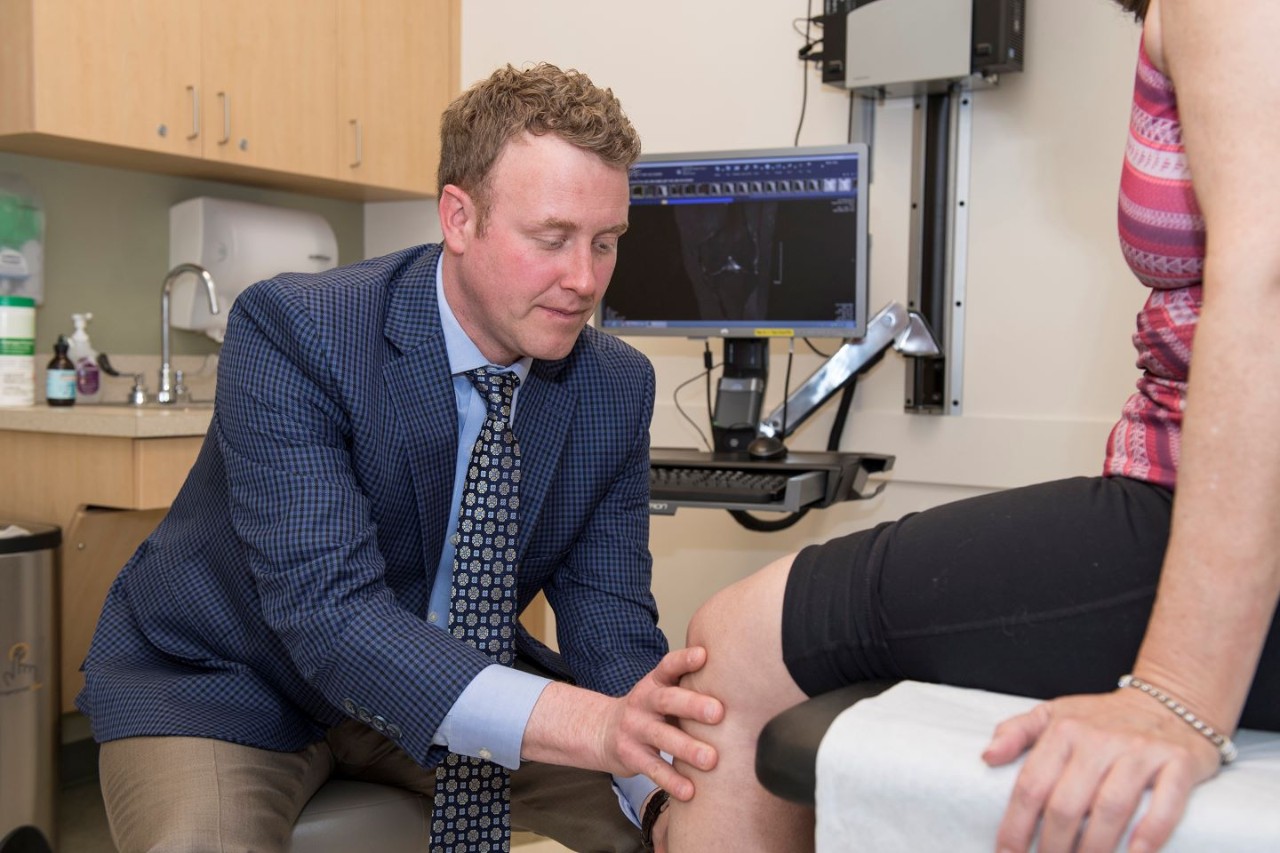
Brian Grawe, MD, of the Department of Orthopaedic Surgery at the UC College of Medicine/Photo/Colleen Kelley/UC Marketing + Brand
The Times reported that plateaus can happen once the body adapts to a new workout. After just a few training sessions, the brain can become more skilled at telling muscles to move. And, usually over the course of weeks or months, the body itself changes.
The article went on to describe some strategies to help overcome unwanted plateaus, including multi-tasking exercises to produce more widespread results.
One option is to wear a cuff around a muscle during exercise. This practice, known as blood restriction therapy, limits blood flow to mimic the effect lifting weights has on the muscle.
“It allows your muscles to work smarter, not harder,” gaining strength while lifting less weight, said Grawe. While the tool is safe, Grawe recommended consulting a personal trainer or doctor before using one.
Lead photo/Alex Wroblewski/New York Times
Next Lives Here
The University of Cincinnati is classified as a Research 1 institution by the Carnegie Commission and is ranked in the National Science Foundation's Top-35 public research universities. UC's graduate students and faculty investigate problems and innovate solutions with real-world impact. Next Lives Here.
Related Stories
Still the top ‘cat
October 20, 2026

The University of Cincinnati Bearcat mascot was voted Cincinnati’s favorite mascot in a Cincinnati Enquirer reader poll, earning 45.1% of the vote and topping other local favorites.
How will Ohio's minimum wage bump impact businesses and their employees?
October 20, 2026

UC economist Michael Jones spoke to WVXU's "Cincinnati Edition" on if Ohio's latest minimum wage increase will actually impact employees and businesses as inflation continues to rise.
Researchers test gene therapy as less invasive treatment for hydrocephalus
October 20, 2026

Researchers at the University of Cincinnati College of Medicine say an experimental gene therapy could eventually lead to a less invasive treatment for hydrocephalus, a condition in which excess fluid accumulates in the brain. The early-stage study, led by Agnes (Yu) Luo, PhD, professor and vice chair for research, was published in the journal Fluids and Barriers of the CNS. Yahoo! News recently featured it.