
From flight nurse aspirations to health care innovation: Meet Nick Dobrzelecki, BSN '97

We can thank flight nurses for alumnus Nick Dobrzelecki’s interest in nursing.
“I worked as an EMT volunteer and knew I wanted to get into health care. I started off as a pre-med major but have always been intrigued by flight nurses, so I switched to nursing with no idea of what I was getting myself into,” Dobrzelecki, Bachelor of Science in Nursing, ’97, says.
More than 30 years since making that decision, Dobrzelecki has not yet flown as a nurse, but has impacted the health care industry on many fronts.
An ROTC student at UC, Dobrzelecki was stationed in Bosnia two years after graduation. His deployment brought the opportunity of leading medical training for his NATO division and gave him international exposure to people and hospitals. Twenty years later, Dobrzelecki’s path led to finding solutions to the international crises he witnessed back then.
“After leaving the Army, I worked as a home healthcare nurse. Becoming an entrepreneur wasn’t a goal, but I foresaw an opportunity to develop a large-scale remote coding service when regulatory changes took place in the industry,” Dobrzelecki says. “The holistic perspective nurses employ when treating patients is what can make them successful in health care innovation so, although I had no business background, the critical thinking I learned in nursing school helped me grow the company and become a key player in the home healthcare market.”
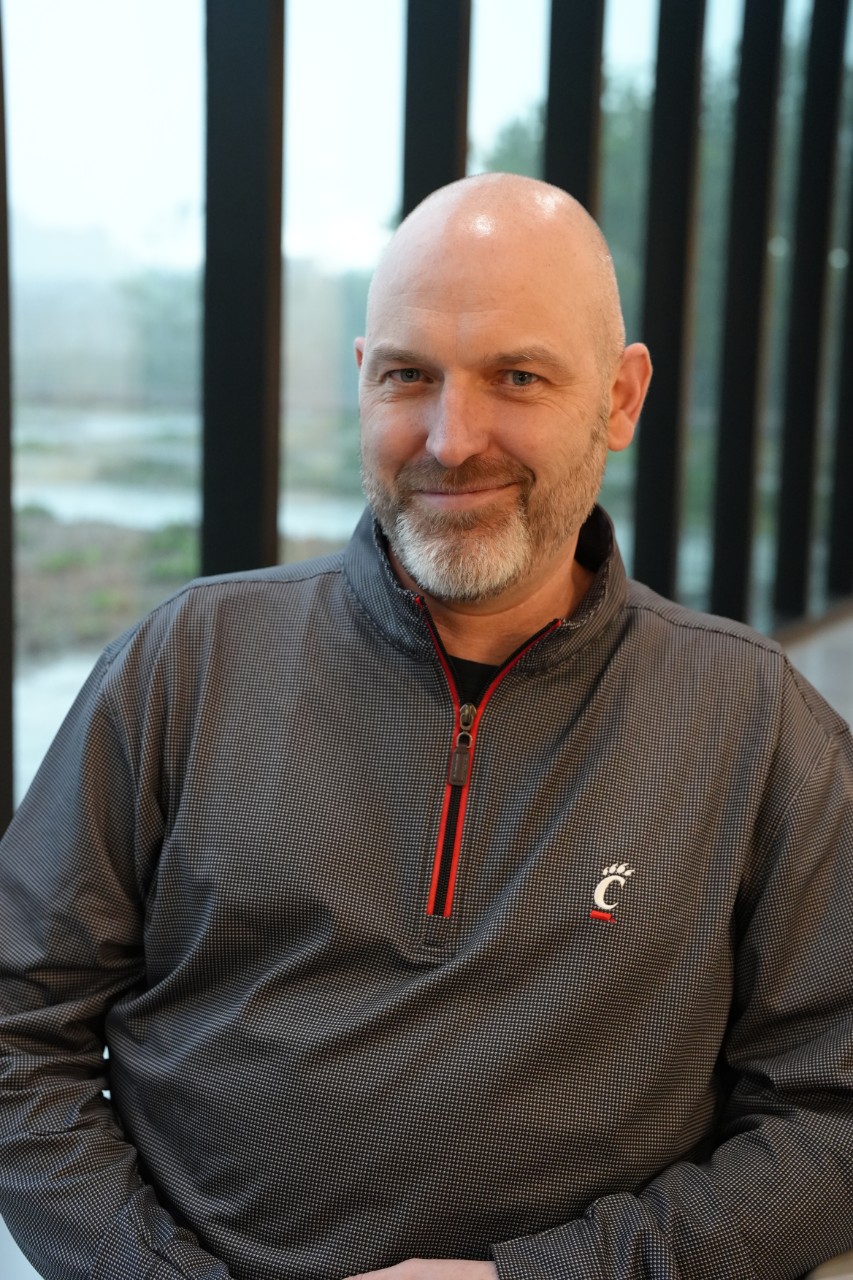
Nick Dobrzelecki/photo provided.
In 2021, Dobrzelecki was ready for new challenges, so he sold his first company and partnered with a like-minded physician to investigate and design new businesses. Together, they built The Learnery, a microlearning platform for health care workers, which just signed a multi-year partnership with United Hatzalah of Israel, and Titan Health Corporation, a company that offers strategic executive oversight and operational support for health care startups. Titan Health Staffing, a division of Titan Health Corporation, was recently awarded a critical staffing contract by the Department of Veterans Affairs.
“Innovation doesn’t need to be about the next gadget, it can be about employing a systems view to create new processes that prevent deficiencies from occurring,” Dobrzelecki says. “Having learned to solve health care problems holistically, I know to account for future potential issues when making decisions to grow my businesses.”
Dobrzelecki has recently joined the college’s Alumni Council and the Innovation Certificate program advisory committee.
“I’m excited to support our students’ evolution of critical thinking to innovation thinking and to get nurses confident so they can push forward and influence change. Having an innovation mindset in whatever environment they work will foster small changes that lead to bigger changes,” he says.
Related Stories
UC Foundation celebrates 2026 philanthropy winners
October 23, 2026
The University of Cincinnati Foundation recognized its Outstanding Philanthropic Volunteer Award honorees at the George Rieveschl Recognition Dinner on October 22, 2026.
AI breast cancer survival model from Cancer Center could improve accuracy and personalize care
October 23, 2026
UC Cancer Center researchers, including lead author Wedad Alatebi, developed a deep learning survival model for breast cancer that combines detailed clinical and genetic information, potentially offering physicians a more accurate tool to guide treatment decisions.
UC expert explains potential impact of Pennsylvania’s new vape product law
October 22, 2026

UC professor Ashley Merianos speaks to the Pittsburgh Post-Gazette about Pennsylvania’s new vape law, youth vaping prevention, enforcement challenges and possible unintended consequences.