
Misinformation is having its moment in 2024 election
UC journalism professor talks to WVXU about how to gauge veracity of campaign claims

WVXU's Cincinnati Edition spoke to a University of Cincinnati journalism professor about ways misinformation is being used to political advantage in the 2024 presidential election.
UC College of Arts and Sciences Professor Jeffrey Blevins said artificial intelligence is helping to spread falsehoods by targeting users who are likely to engage with particular content.
“The algorithm wants to keep you engaged so it puts content in front of you that you will like or comment on. And that tends to be things that push our emotional buttons,” Blevins said.
Blevins also teaches political science in UC's School of Public and International Affairs. He is author of the new book “Social Media and Digital Politics: Networked Reason in an Age of Digital Emotion.”
Blevins was joined on the show by Case Western Reserve University law professor Eric Chaffee. Chaffee said exaggerations, half-truths and whoppers have a storied history in American politics. The news media plays a big role in fact-checking statements, he said.
But Blevins said everyone should greet the messages of political campaigns with at least some skepticism.
Listen to the Cincinnati Edition episode.
Featured image at top: WVXU's Cincinnati Edition took up the question of misinformation in the 2024 election. Photo/Unsplash
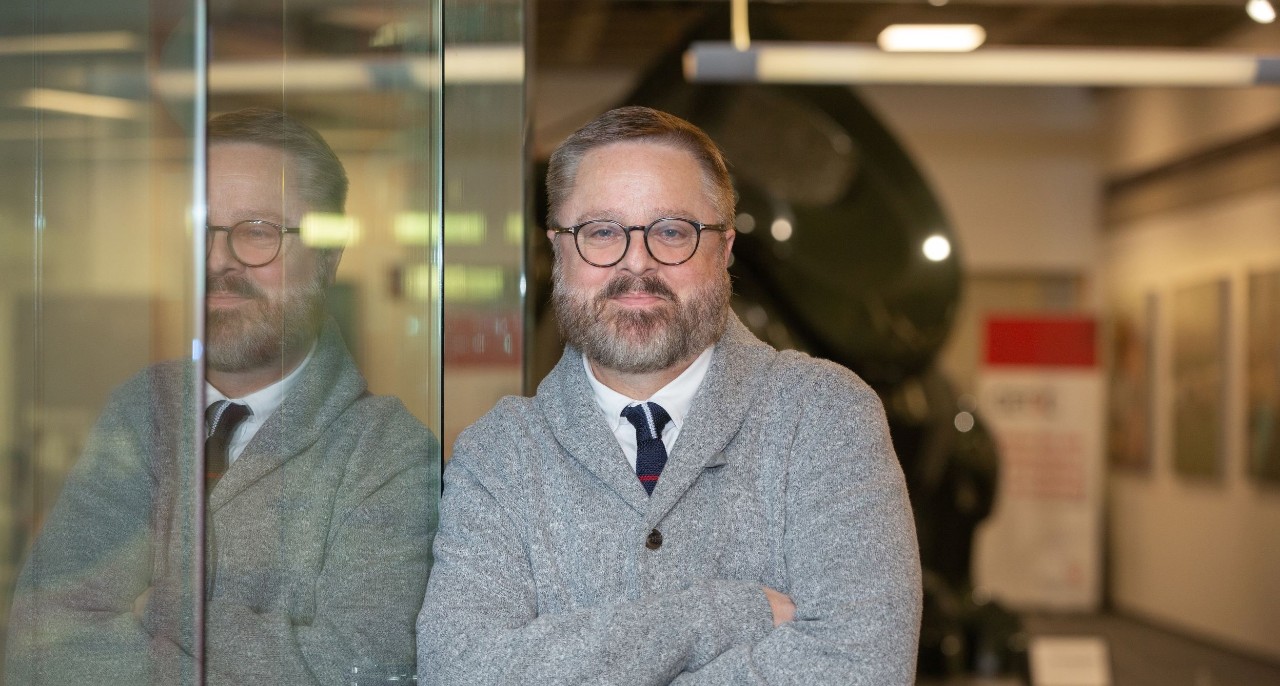
UC College of Arts and Sciences Professor Jeffrey Blevins is co-author of the new book “Social Media and Digital Politics: Networked Reason in an Age of Digital Emotion.” Photo/Andrew Higley/UC Marketing + Brand
More UC Journalism in the news

A UC professor tracks misinformation in the 2024 election. Photo/Unsplash
Related Stories
Cancer Center expert urges lung cancer screenings as too few at-risk patients get tested
September 4, 2026

The University of Cincinnati Cancer Center's Robert Van Haren, MD, spoke with Local 12 about the need for more awareness and discussions around lung cancer screenings.
Apply for 2027 Presidential Medal Awards
September 4, 2026
UC President Neville Pinto invites eligible students to apply for two of our university’s top awards — the PLME & PMGSE.
Selecting noninvasive tests for liver disease diagnosis, monitoring
September 3, 2026

Noninvasive tests have emerged as valuable alternatives for diagnosing, staging and monitoring MASLD and MASH, according to a recent MedCentral report.