Federal agency warns about foreign election disinformation
A UC professor talks about ways to sort fact from fiction on social media

Local 12 talked to a University of Cincinnati journalism and political science professor about a report by the U.S. Department of Homeland Security warning that foreign countries are trying to meddle with November's election using disinformation on social media.
While misinformation is false or inaccurate information shared inadvertently, disinformation is false information shared purposely to deceive, often for ulterior motives. The U.S. State Department says Russia is using social media and its state-run media to erode public faith in the integrity of democratic elections in the United States and 100 other democratic nations around the world.
Russia interfered with the 2020 election, according to U.S. intelligence, and is trying to meddle again this year. In September federal prosecutors said Russia secretly paid a company employing popular right-wing influencers to undermine the war in Ukraine.
The U.S. Justice Department this year charged three Iranian hackers with compromising election campaign email accounts. And China, too, has launched a covert online campaign to deceive American voters on social media, according to the Council on Foreign Relations.
UC College of Arts and Sciences Professor Jeffrey Blevins told Local 12 that voters can look for clues about a social media post's veracity such as the credibility of a source.
“Are there local outlets that are reporting it? Are there national outlets?” Blevins said.
Likewise, social media is becoming inundated with images manufactured with artificial intelligence, so everyone should greet potentially inflammatory posts with a healthy dose of skepticism, he said.
“It's easy to throw misinformation out there, fake images, especially if they're outrageous. It's very easy to get things to go viral,“ he told Local 12.
Blevins teaches journalism and political science in UC's School of Public and International Affairs. He is author of the new book “Social Media and Digital Politics: Networked Reason in an Age of Digital Emotion.”
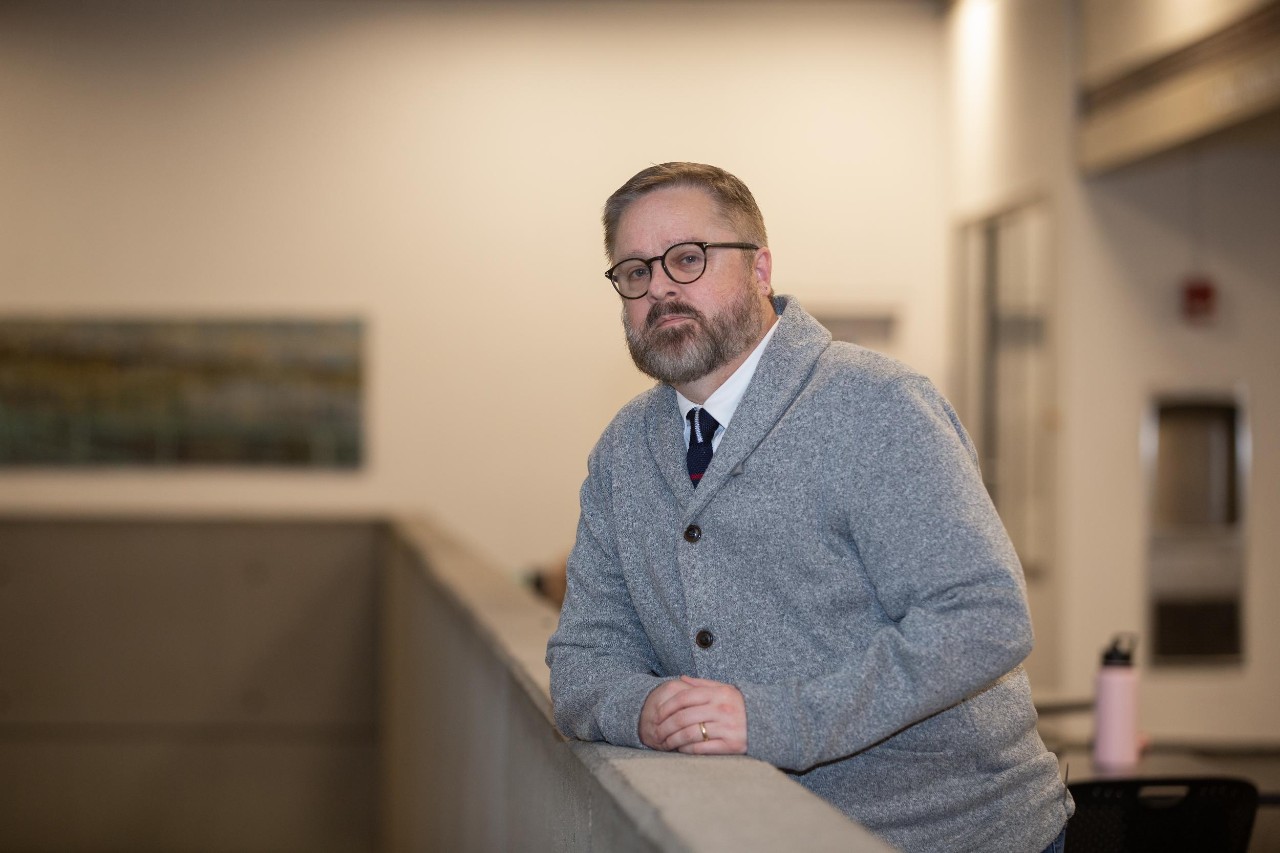
Featured image at top: UC Professor Jeffrey Blevins talked to Local 12 about ways voters can guard against being duped by disinformation on social media. Photo/Andrew Higley/UC Marketing + Brand
Related Stories
What is electroacoustic music?
August 21, 2026

Professor Mara Helmuth spoke with Cincinnati Spotlight about her upcoming faculty recital on Cincinnati Spotlight.
Boutique shopping is 'in vogue'
August 20, 2026

Tessa Clark, DAAP alum and fashion designer, owns Idlewild, an OTR shop recently featured in both the New York Times and Vogue.
UC's Taft Research Center names two new Taft distinguished professors to advance humanities research with public impact
August 20, 2026
The University of Cincinnati's Charles Phelps Taft Research Center has named Erynn Masi de Casanova and Muhammad U. Faruque as the newest Taft Distinguished Professors. Recognized for their outstanding records of scholarly distinction, engagement across multiple fields, and continued promise, Casanova and Faruque will hold the title for the next five years, delivering inaugural public lectures and events on campus this fall.