
Why are fighter planes so loud?
Aeorspace engineering students work with Navy to dampen jet engine noise

SlashGear talked to a University of Cincinnati aerospace engineering professor about his efforts to dampen the noise of jet engines. The story was republished in MSN.
UC College of Engineering and Applied Science Distinguished Research Professor Ephraim Gutmark and his aerospace engineering students are developing new technology to reduce the noise of jet engines without harming performance.

Ephraim Gutmark.
Hearing loss and tinnitus are the leading causes of military disability claims, affecting more than 3.6 million former service members, according to numbers from the U.S. Department of Veterans Affairs.
The VA is the biggest employer of audiologists and speech language pathologists in the United States to treat military veterans whose hearing was damaged during their service.
Aerospace engineers at the University of Cincinnati and the Naval Research Laboratory have come up with a new nozzle design for F-18 fighter planes they hope will dampen the deafening roar of the engines without hindering performance.
But noise also limits the siting, expansion and operation of commercial and military airports.
“The main purpose is to reduce the impact on neighboring communities,“ Gutmark told SlashGear.
“The Navy had a big lawsuit in Norfolk, Virginia, from people who lived near the base and complained about hearing problems, sleeping problems and the diminished value of their properties. So the military has to limit its operations and stop operating at certain times of day. It's a severe problem.“
Featured image at top: An F/A-18 Super Hornet's afterburners roar prior to launch aboard the USS Kitty Hawk. Photo/ Photographer's Mate 3rd Class Bo Flannigan
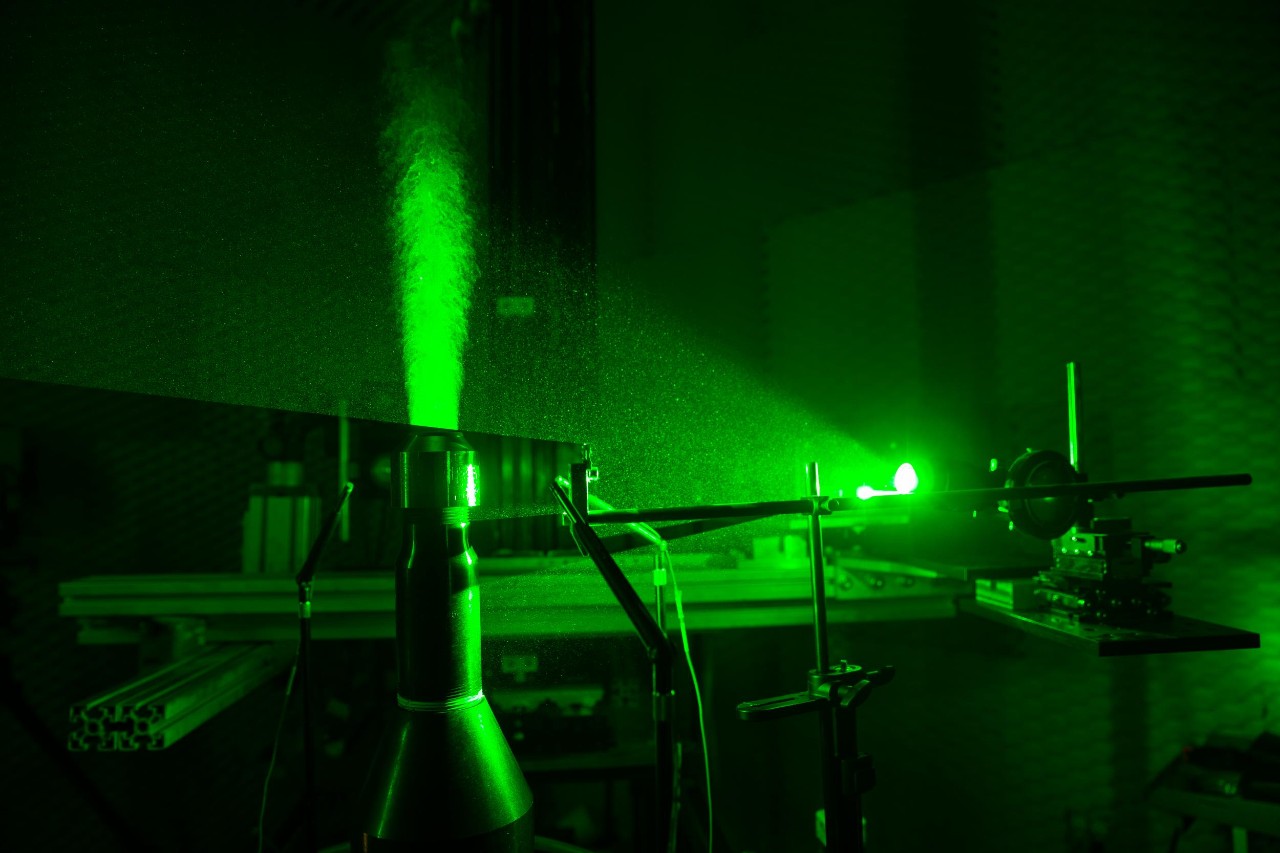
Aerospace engineering students use lasers to study the flow of jet engines in Distinguished Research Professor Ephraim Gutmark's lab. Photo/Andrew Higley/UC Marketing + Brand
Related Stories
Simple ways to find a deeper sense of happiness and well being
October 8, 2026

UC assistant professor Suzie White, featured in an AARP story on practical ways to live a happier, healthier life, shared research-backed strategies for increasing well-being through gratitude and service to others. White teaches Happiness in Action, a course that helps students apply the science of happiness in everyday life.
New vending machine helps people with addiction
October 8, 2026

The University of Cincinnati's Daniel Arendt was featured in a Spectrum News report on a new harm reduction vending machine installed at the IPM Food Pantry in partnership with the Hamilton County Mental Health and Recovery Services Board.
UC study correlates increased physical activity with slower Parkinson’s progression
October 7, 2026
Higher levels of physical activity were associated with slower declines in thinking and memory as well as slower worsening of movement symptoms for people with Parkinson’s disease, according to a new study led by University of Cincinnati researchers published Oct. 7, 2026, in Neurology.