
Cleveland agrees to pay $7.9M to estate of wrongfully convicted Ohioan
Isaiah Andrews, an OIP exoneree, spent 45 years behind bars and then died before compensated

City officials in Cleveland have agreed to pay $7.9 million to settle a lawsuit filed by the estate of a man who served one of the longest prison sentences in history before he was exonerated, reports The Plain Dealer.
Isaiah Andrews spent 45 years in prison for a murder he didn’t commit. He died in 2022, less than a year after a jury found him not guilty in the slaying of his wife. The Ohio Innocence Project at UC Law re-examined his case and was able to help him gain freedom in 2020.
Andrews’ retrial in 2021 was granted after lawyers with the Ohio Innocence Project discovered that investigators of his wife’s death had another suspect but didn’t share that information with the original jury. The settlement with Andrews’ estate is believed to be one of the largest Cleveland has paid out over a wrongful imprisonment case, attorneys told The Plain Dealer.
The Ohio Innocence Project at the UC Law has worked for the past two decades to free every person in Ohio who has been convicted of a crime they didn’t commit.
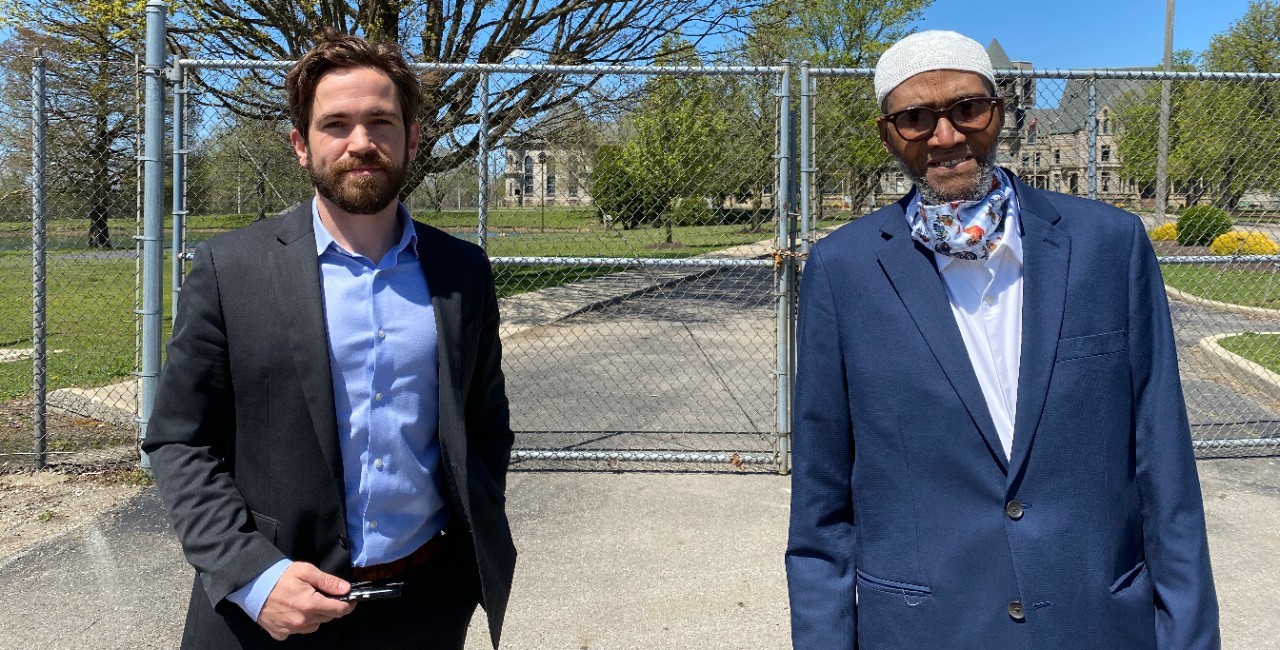
UC Law's Brian Howe showed with Isaiah Andrews shortly after his release in 2020. Photo provided.
So far 43 individuals have been exonerated or freed thanks to the work of the Ohio Innocence Project (OIP), based in the University of Cincinnati College of Law. The group of clients collectively has spent more than 800 years behind bars for crimes they didn’t do.
Brian Howe, a UC Law professor and OIP attorney, says Andrews wanted vindication of his innocence and accountability for the people who stole so much of his life.
“Unfortunately, our system makes that especially hard,” says Howe. “Prosecutors, for example, are typically immune from civil liability. Under these circumstances, this result is significant, and I wish he could have lived to see it.
“Prosecutors delayed his release by fighting against DNA testing, despite knowing about undisclosed evidence of his innocence,” explains Howe. “Even after that evidence came out, they fought against his release and put him through the pain of a second trial. By the time he was fully acquitted, after years of fighting, he was in his 80s, seriously ill, with only a few months to live.”
Howe says Andrews was treated so poorly and so unfairly for so long.
“Many of the people responsible are either deceased or have immunity,” says Howe. “But in another sense, there's no amount of money that would have made it right. He lived to see his name cleared. He lived to see vindication. He died a free man. And now there is some final accountability. I choose to see him as victorious.”
Read the story about Isaiah Andrews online in The Plain Dealer.
Learn more about the Ohio Innocence Project at UC Law online.
Featured top image of the city of Cleveland, Ohio. Photo/Istock.
Related Stories
Simple ways to find a deeper sense of happiness and well being
October 8, 2026

UC assistant professor Suzie White, featured in an AARP story on practical ways to live a happier, healthier life, shared research-backed strategies for increasing well-being through gratitude and service to others. White teaches Happiness in Action, a course that helps students apply the science of happiness in everyday life.
New vending machine helps people with addiction
October 8, 2026

The University of Cincinnati's Daniel Arendt was featured in a Spectrum News report on a new harm reduction vending machine installed at the IPM Food Pantry in partnership with the Hamilton County Mental Health and Recovery Services Board.
Defying the demographic cliff
October 7, 2026

Despite the looming demographic cliff, the University of Cincinnati and five other major Greater Cincinnati universities grew enrollment this fall, with UC reaching a record 54,437 students, helped by strong first-year demand.