
Albatross flight inspires next generation of drones
Science writers highlight UC aerospace engineering research

Earth.com highlighted aerospace engineering research at the University of Cincinnati to develop efficient drones that can harness the power of the wind like an albatross.
UC College of Engineering and Applied Science Assistant Professor Sameh Eisa and his students received a grant from the Defense Advanced Research Projects Agency to develop a drone that can optimize flight through dynamic soaring like the oceangoing birds.

Sameh Eisa. Photo/Provided
Albatrosses have the largest wingspan of any living bird. But Eisa said it's how they use those wings that make them world-class flyers.
The birds tack into the wind like a sailboat to gain lift and altitude, finding faster air currents as they climb. When they eventually lose the forward momentum needed to stay in the air, they turn, harnessing the kinetic energy of gravity and wind that propels them forward. At the bottom of this glide path, sometimes mere inches off the water, they turn back into the wind and do it again — all without wasting a single wingbeat.
The birds are able to gauge wind speed and direction through their sensitive nostrils, allowing them to make fine flight adjustments to maximize each leg of upward and downward flight path.
“Nature has been optimizing flight for millions of years of evolution. So to take this gift from nature and make it available to humanity is engineering at its best,” Eisa said.
Featured image at top: UC engineering students in Assistant Professor Sameh Eisa's lab are developing drones that can harness the power of the wind like an albatross. Photo/Michael Miller
More UC Aerospace Engineering in the news
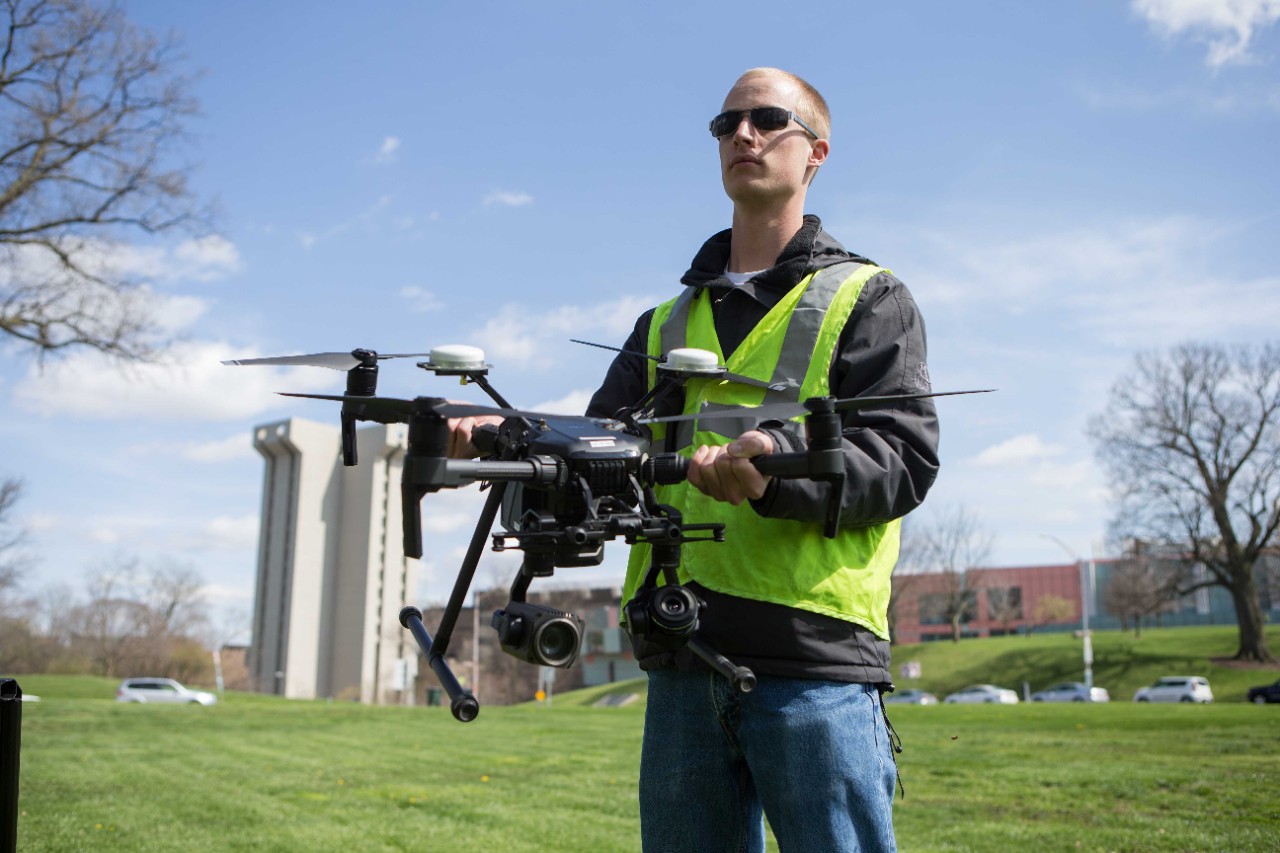
UC students are developing new autonomous drone technology in the College of Engineering and Applied Science. Photo/Andrew Higley/UC Marketing + Brand
- The Defense Post: UC researchers explore drone concept that mimics albatross flight
- Interesting Engineering: U.S. mathematician plans albatross-inspired drone
- Eurasia Review: Next generation of UAVs will harness wind like albatross
- Commercial UAV News: Albatross-inspired UAVs
Related Stories
Defying the demographic cliff
October 7, 2026

Despite the looming demographic cliff, the University of Cincinnati and five other major Greater Cincinnati universities grew enrollment this fall, with UC reaching a record 54,437 students, helped by strong first-year demand.
Grad Career Week to Help Graduate Students Prepare for What’s Next
October 6, 2026
Grad Career Week is a week-long professional development series designed to help graduate students build the skills, confidence and connections they need to navigate their careers and prepare for the job search.
FAA turns to AI to reform air traffic control
October 6, 2026

WKRC Local 12 turned to an aerospace engineering professor at the University of Cincinnati to explain the risks and benefits of a proposal by the Federal Aviation Administration to use artificial intelligence to revamp air traffic control in the United States.