
Social media linked to student loneliness
National media outlets highlight UC study examining social media use

Inside Higher Education highlighted a new study by researchers at the University of Cincinnati that found students who spent more time on social media reported more feelings of loneliness.
The study, published in the Journal of American College Health, analyzed data from nearly 65,000 students ages 18 to 24 at more than 120 colleges across the country. Students who used social media at least 16 hours a week — averaging more than two hours a day — were significantly more likely to say they were lonely than those who reported less screen time.
“I wish I could say I was shocked. I wish I could say that this was a surprising finding, but this was what I was expecting to see,” UC doctoral graduate and lead author Madelyn Hill told Inside Higher Education.
Hill now teaches at Ohio University.
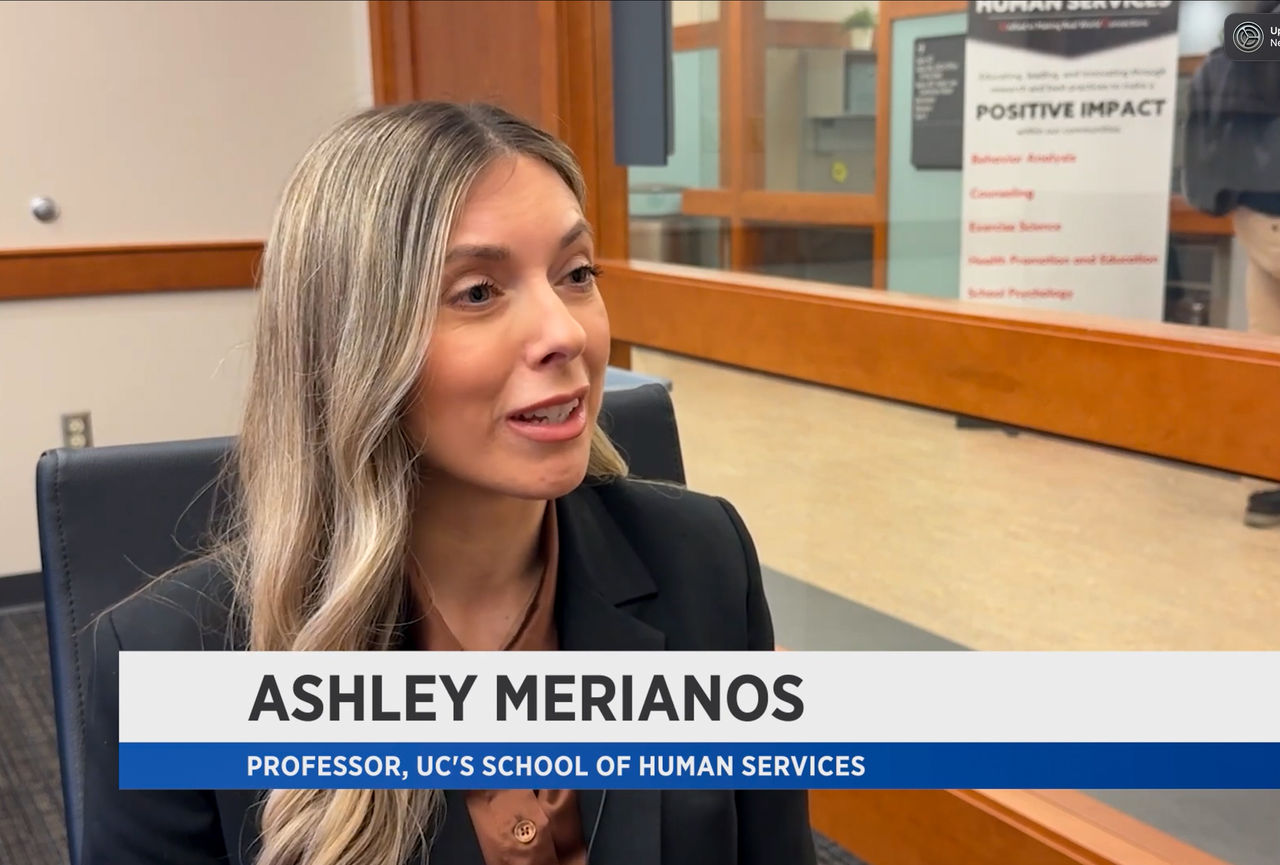
UC School of Human Services Professor Ashley Merianos talks to Spectrum News about her study examining the link between college student loneliness and social media use. Photo/Spectrum News
Loneliness was measured by asking students how often they felt left out, lacked companionship or felt isolated. Students were also asked how many hours they spent on social media in a typical week.
The study co-authors included UC Professors Ashley Merianos, Rebecca Vidourek and Keith King and Indiana University Professor Matthew Smith.
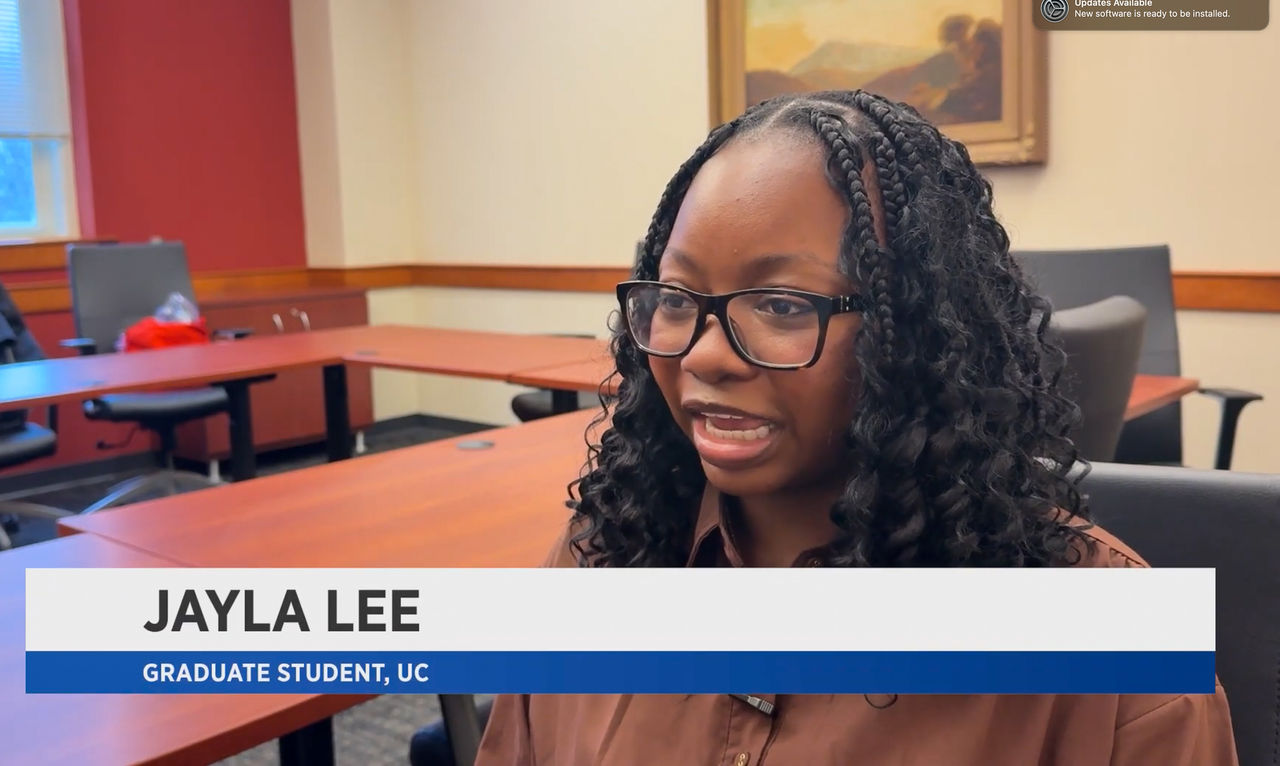
UC College of Education, Criminal Justice, and Human Services graduate student Jayla Lee talks to Spectrum News about how college students can avoid the pitfalls of doomscrolling on social media. Photo/Spectrum News
“These results underscore how widespread loneliness is among college students and highlight that excessive social media use may be replacing the meaningful interactions that protect their mental health,” said Merianos, who teaches in UC's School of Human Services in the College of Education, Criminal Justice, and Human Services.
“A key public health strategy is to strengthen social connection and help students build supportive relationships offline.”
Spectrum News also spoke to Merianos about the study. Loneliness can be dangerous both to people’s mental and physical health, she said.
“The U.S. Surgeon General declared loneliness a public health crisis,” she said.
UC graduate student Jayla Lee said students can find themselves unintentionally scrolling apps for hours.
“Next thing you know, it’s 10 at night and you realize you haven’t talked to anyone or socialized,” Lee told Spectrum News.
Merianos said the study demonstrates why it’s important for students to be intentional and deliberate about using social media.
Lee said she sometimes sets a timer to remind herself how long she’s been scrolling apps. And she recommends spending time outside or working on hobbies or activities such as her favorite, dance.
Read the Inside Higher Education story.
Featured image at top: UC researchers examined links between heavy social media use and loneliness among U.S. college students. Photo/PeopleImages/iStockPhoto
News outlets highlight CECH research

Researchers at the University of Cincinnati found that college students who spend more time on social media are more likely to report feelings of loneliness than those who have less screen time. Photo/Constantinis/iStockPhoto
- Baltimore Sun: How to reduce loneliness? Put down the phone
- The Independent: Spending two hours a day on social media linked to loneliness
- Phys.Org: Study links social media to loneliness
Related Stories
UC launches new Center for Public Health
April 6, 2026

The University of Cincinnati College of Medicine recently announced Suzanne Judd, PhD, as the inaugural director of its new Center for Public Health. The hire follows a national search launched in August 2025, as the Cincinnati Business Courier reported.
Ex-smokers who vape at higher risk of lung cancer
May 21, 2024

Ashley Merianos, PhD, is cited as an expert in two recent Deutsche Welle articles on vaping research. Merianos, a prolific tobacco researcher, is an assistant professor of human services in UC's College of Education, Criminal Justice and Human Services (CECH).
How to prevent social isolation at school
July 1, 2026

UC Professor Ashley Merianos talks to U.S. News & World Report about her study that found that excessive use of social media exacerbates feelings of loneliness among college students. UC is taking preventive steps to give students social outlets.