Expeditions of American stories
Artist Wes Modes documents hidden histories along America’s rivers

For artist Wes Modes, assistant professor in the School of Art at the University of Cincinnati, rivers are more than geographic features, they are sites of memory, conflict and survival.
Through his ongoing project, A Secret History of American River People, Modes has spent years traveling waterways across the country, collecting stories that reveal how communities have lived and been pushed aside along the edges of American cities.
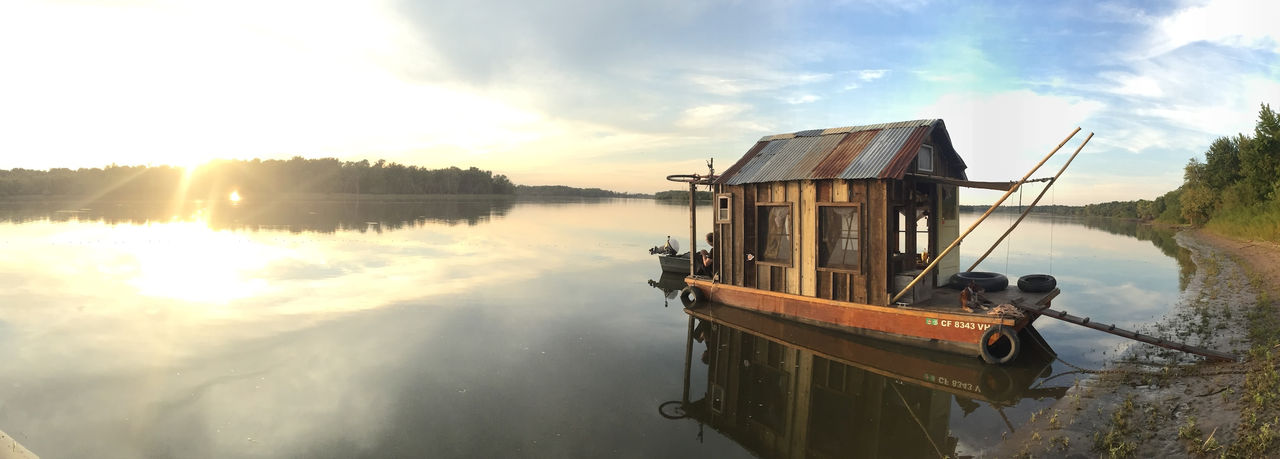
Modes began the project in 2014, launching his work on the Mississippi River, often considered central to American history. He built a small, hand-constructed shanty boat using reclaimed materials and set out to document life along the river, initially without testing the vessel before its first journey.
“We dropped this untested boat into the Mississippi River, in Minneapolis, at Boom Island, where there used to be a boom across the river to catch the logs coming down from the from the northern rivers, and it floated,” he said.


Since then, the project has expanded to include fieldwork along multiple waterways, including the Ohio River, the Tennessee River, the Hudson River, rivers in California and the Mississippi Delta. Over time, Modes has conducted more than 175 interviews, collecting hundreds of hours of video and audio.
Capturing stories
The project focuses on personal narratives, often recorded in locations meaningful to participants, such as riverbanks or former community sites. Rather than formal settings, interviews are designed to reflect lived experience and connection to place.
Modes said his approach has evolved. Early fieldwork relied on spontaneous encounters along riverbanks, but he later incorporated more intentional outreach to better represent communities affected by displacement, including Indigenous groups and longtime residents who may no longer live along the river.

Artist Wes Modes interviewing a resident.
In some cases, that has meant traveling beyond the river itself. Modes noted that along the Ohio River, for example, there are no federally recognized tribes today, despite the region’s deep Indigenous history. Many descendants now live in other parts of the country, requiring a broader geographic scope for the project.
The interviews are archived online as primary source material, allowing researchers and the public to access recordings that range from short conversations to extended oral histories.
Across the project, Modes said recurring themes have emerged. He described the riverfront as a historically contested space, one that has served as both the origin of cities and a boundary where marginalized communities have lived.
“The river was both the beginning and the edge of the city,” Modes said. “It provided resources and transportation, but it also became a place where industry, pollution and displacement were concentrated.” He added that as these spaces change, understanding their earlier histories becomes increasingly important.
He said riverfront areas have often undergone cycles of transformation, from informal settlements and working-class communities to industrial zones, and eventually to redeveloped public spaces. While these spaces may appear revitalized, they can also obscure earlier histories. One of the central questions guiding his work is understanding what existed before these transformations.

Wes Modes working on his computer inside the shanty boat.
In addition to documenting the past, the project also considers possible futures for riverfront spaces. Modes said he envisions rivers that are environmentally healthy, publicly accessible and socially connected.
He described a future where rivers support wildlife, where people can safely interact with the water and where access is not limited by economic status.
“Housing, access and environmental health are all connected,” he said. “Who gets to be near the river is tied to larger questions about access.”
Art as research
Modes frames the project as both research and artistic practice. While it incorporates elements of ethnography, he describes the work as rooted in dialogue, with conversation itself serving as the central artistic act.
“The art is the conversation."
Wes Modes
“The art is the conversation,” he said. “Everything else, the recordings, the exhibitions, comes from that.”
The project continues to grow through exhibitions, digital platforms and new media installations, as well as an interactive map that allows users to contribute their own river stories. Together, these elements form an evolving archive of experiences tied to waterways across the country.

The team of "A Secret History of American River People."
The team working on the boat has been expansive. While some crew members have remained consistent across years of travel, such as Jeremiah Daniels, Adrian Nankivell and Lauren Benz, others have contributed over time, helping build the boat and keep it operational.
For Modes, the work remains ongoing each summer, shaped by collaboration, travel and the people who share their stories.
The next groundbreaking discovery
UC is a powerhouse of discovery and impact as a Carnegie 1 research institution. From pioneering medical research to transformative engineering and social innovation, our faculty and students drive progress that reaches across the world.
Featured image at top of a boat on the river. Photos provided by Wes Modes.
Related Stories
How to spot a fake
December 6, 2022
University of Cincinnati chemists, geologists and art historians are collaborating to help area art museums answer questions about masterpieces and detect fakes — and teaching students about their methods.
UC welcomes record-breaking student body
August 26, 2024
The University of Cincinnati anticipates record enrollment as classes begin Monday, Aug. 26, with a projected 52,000 students — a 2.1% increase over last year. Growth continues but is more strategic with the university attracting more online learners, a greater number of transfer and first-generation students along with a stronger student presence on regional campuses at Blue Ash and Clermont.
Creating an artistic buzz
September 6, 2024

A study by urban design researcher Hyesun Jeong, an assistant professor of design in UC's DAAP, is cited in a New York Times article on the impact of public art on development. The article highlights the trend of using public art in commercial real estate developments in cities across the country.