UC Research Takes A New Approach To Identifying Food Deserts
University of Cincinnati-led research takes a new direction in examining the availability of healthy foods for urban populations by examining the commuting patterns of its residents. This new approach to identifying so-called food deserts, now published online, will appear in the May journal of
Neighborhoods without access to stores that provide healthy food options such as fresh fruits and vegetables are often labeled as food deserts. However, current methods for determining which neighborhoods have access to nutritious foods focus only on where residents homes are located, and not where people move through the course of the day.
In an article led by Michael Widener, a UC assistant professor of geography, researchers calculated a new way to pinpoint food deserts by factoring the commuting patterns of residents. Focusing their examination on Cincinnati and using transportation data from The Ohio-Kentucky-Indiana Regional Council of Governments (OKI), they found that residents in certain transportation analysis zones had better access to supermarkets, thanks to their commutes, compared with just factoring in locations of homes.
In other words, some people who reside in food deserts could still pick up healthy foods like fruits and vegetables on their way home from work, as their access to supermarkets increases because of their other daily travel plans.
The paper also points to an American Community Survey which found that 71 percent of workers 16 and older in Cincinnati are lone commuters to work. However, the current study did not identify whether commuters who resided in food deserts were actually purchasing the healthier foods carried by supermarkets.
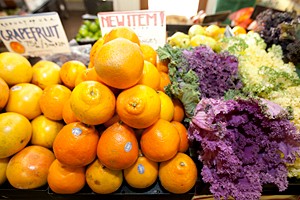
Findlay Market
Food deserts are often associated with low-income neighborhoods, which have been linked to a range of health problems, including increased risk of diabetes and stroke. However, the authors report that previous research has not produced a consistent link between access to healthy food and healthier residents.
The authors suggest that by using this new method of locating food deserts, new intervention strategies could be developed to encourage post-work trips for healthier food options.
Given the daily movements of an urban population, this novel measure can provide new information to public and transportation policy makers seeking to understand the role spatial access to healthy food plays in population health, states the article.
The OKI data that was studied on the Cincinnati-proper region was from 2005, the most recent year available. Researchers used 2012 data to examine locations of national and regional grocery stores and supermarkets in comparison to Cincinnati neighborhoods. The study covered 359 transportation analysis zones in Cincinnati and approximately 158,000 automobile commuters.
Although the researchers focused on automobile commuters for this study, future research is under way in factoring populations taking public transportation.
Steven Farber, assistant professor of geography at the University of Utah; Tijs Neutens, a post-doctoral researcher for the Department of Geography at Ghent University; and Mark W. Horner, associate professor of geography at Florida State University, were additional authors on the study.
Health and Place is an international journal published by Elsevier, dedicated to the study of all aspects of health and health care in which place or location matters.
Related Stories
UC students study political violence in America
September 19, 2024
UC Assistant Professor Michael Loadenthal and his students have created a national database on felony criminal convictions related to political violence in the United States.
Nationwide map shows area's risks of landslides

September 19, 2024
UC Associate Professor Daniel Sturmer talks to WVXU about a new national map identifying areas at greatest risk for landslides.
Misinformation is having its moment in 2024 election
September 17, 2024
UC Professor Jeffrey Blevins talks to WVXU's Cincinnati Edition about misinformation in the 2024 presidential election.