UC HEALTH LINE: Patients Can Remain Awake During Surgery With Continuous Nerve Block Catheter

The anesthetic procedure, called a continuous nerve block catheter, may be used for patients undergoing certain orthopedic surgery, such as a ligament repair or shoulder replacement.
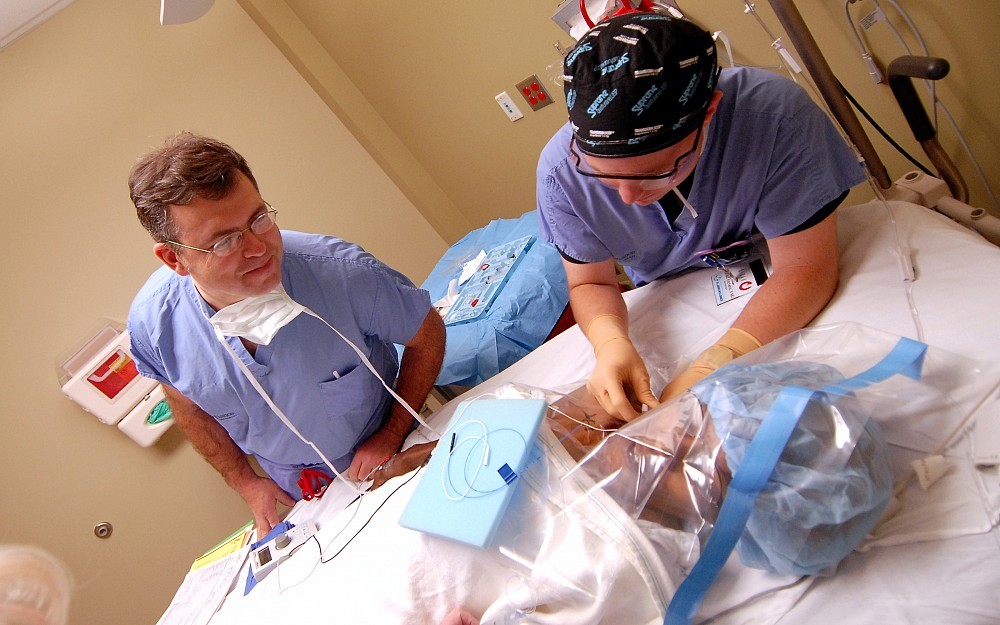
In the procedure, anesthesiologists inject numbing medication such as ropivacaine or bupivacaine near the nerves of the area being operated on (a nerve block). They then thread a thin catheter alongside the nerves. The catheter is attached to a large bulb containing anesthetic medication, which continues to provide pain relief to the surgical site for up to four days following surgery.
Nerve blocks are fairly common in surgery on peripheral areas like arms, hands and legs, says Gerald Kitchens, MD, assistant professor of anesthesiology. Whats different about what were doing is that we also use a catheter that supplies localized pain medication during surgery and up to two to four days after surgery.
Kitchens says that because patients are not put to sleep during the procedure (as they are with general anesthesia), they do not require breathing tubes and the chances of nausea and vomiting are significantly reduced.
Some patients who undergo the nerve block catheter procedure may remain awake and watch their surgery on a computer screen if they desire, or they can be lightly sedated.
Some of my patients want to see their injury and how I repair it, which I explain to them as Im doing it, says Keith Kenter, MD, assistant professor of orthopedic surgery.
Kenter says patients who receive the continuous nerve block catheter are alert and coherent after surgery and only spend about 20 minutes in the recovery room, which minimizes the patients time in the hospital and lowers costs.
The initial nerve block lasts an average of 12 to 16 hours and inhibits sensory and motor function. After the initial block wears off, motor function returns but the catheter continues to block sensory information, giving the patient pain relief.
Patients are released the same day and go home with the catheter, which is attached to an external collapsible ball. The ball has a dial that allows the patient to control the amount of pain medication they receive. Each ball typically contains about 550 milliliters of medication and lasts for two to four days. Patients remove the catheter themselves when the ball is empty.
My patients who have received the nerve block catheter tend to have less issues with pain post-op and can even go to work or school the next day if they want, says Kenter.
Kenter says that many of his patients who undergo the procedure do not need to take narcotic medication, which can also cause nausea and grogginess, to relieve their pain after surgery.
The catheter is especially helpful for those patients that require physical therapy immediately after surgery because they can begin their therapy without pain, Kenter says.
Kitchens cautions the procedure is not for everyoneparticularly those taking blood thinners or who have had previous nerve injuriesbut it can be beneficial for otherwise healthy individuals and older adults, as well as patients with heart or lung issues who may be at higher risk of complications from general anesthesia.

Gerald Kitchens, MD, inserts a continuous nerve block catheter into a patient undergoing shoulder replacement surgery.

Orthopedic surgeon Keith Kenter, MD
Tags
Related Stories
Cancer Center plays key role in lab research, clinical trials for new pancreatic cancer drug
September 1, 2026

WLWT and WCPO highlighted the contributions of University of Cincinnati Cancer Center researchers that helped lead to the recent FDA approval of daraxonrasib, a new treatment for pancreatic cancer.
Cancer Center physician receives $150,000 New Investigator Research Grant to study treatment-resistant leukemia
September 1, 2026
The University of Cincinnati Cancer Center’s Sarah Skuli, MD, PhD, received a two‑year, $150,000 Leukemia Research Foundation New Investigator Grant to study TP53‑mutated leukemia, a treatment‑resistant subtype with very poor outcomes.
Heavy social media use linked to depression
August 31, 2026

U.S. News and World Report, Yahoo! News, MSN, USA Today and other national media highlight a new study by the University of Cincinnati and Northwestern University that found a correlation between heavy social media use and depression in adults.