UC HEALTH LINE: Specialized Kidney-Sparing Procedures Give Cancer Patients More Options

But University of Cincinnati (UC) urologic surgeons say that is no longer the case.
They are among the first in Greater Cincinnati to offerand have significant experience performingwhat is known as kidney-sparing surgery to remove small cancerous tumors without sacrificing the entire organ, using minimally invasive techniques.
Kidneys are small, crescent-shaped organs that filter blood and remove waste products from the body via urine. People can live with one or part of one kidney, but if both organs are removed or dysfunctional the blood must be mechanically cleansed using a process known as dialysis.
Clinical data has shown that removing only the tumor and sparing the rest of the kidney is as effective as removing the entire organ in certain patients.
The UC urology team offers a number of kidney-sparing, minimally invasive surgical procedures for the treatment of small kidney tumors, including laparoscopic partial nephrectomy (removing part of the kidney) and laparoscopic cryoablation (freezing tumor tissue).
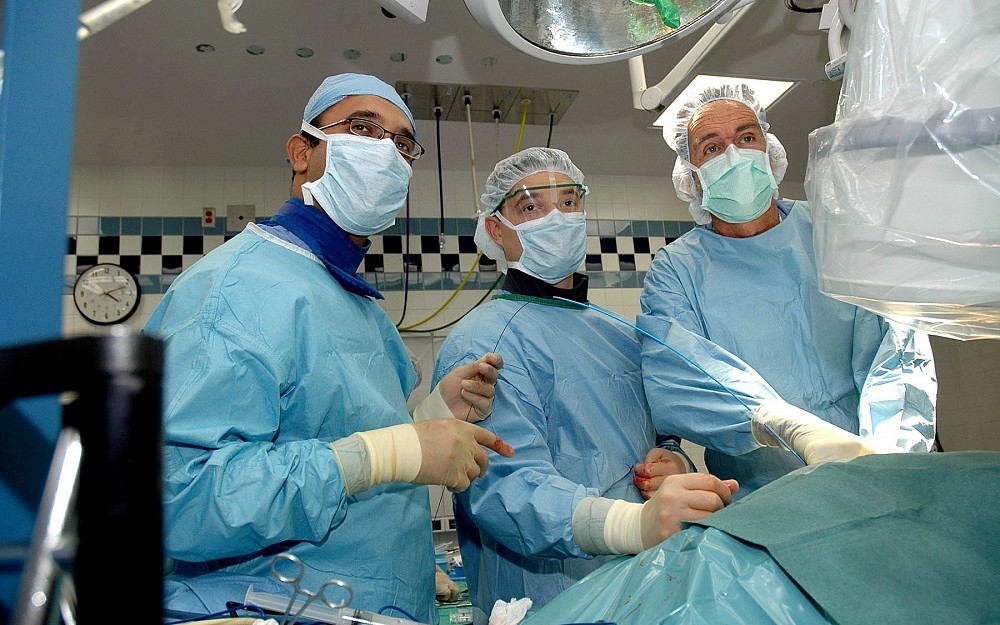
Minimally invasive surgery is a technique for operating inside the abdomen that requires only very small incisions versus a single, large incision. The surgeon performs the operation through small ports using a fiber-optic light source, camera and specialized instruments. The magnification provided by the camera (laparoscope) allows for improved visualization and increased precision during surgery. Patients also report faster recovery and less pain after minimally invasive surgery.
Our goal is to maintain the kidneys function so the patients have more options if the cancer recurs or if they develop any form of kidney disease later, explains Krishnanath Gaitonde, MD, assistant professor of surgery at UC and minimally invasive urological surgeon with UC Physicians and University Hospital. Once the tumor is removed, the kidney can heal and usually maintains function.
Gaitonde says kidney-sparing surgery is usually performed for tumors that are 4 centimeters in diameter or smaller (about the size of a walnut) but can be done for larger tumors in special circumstances such as patients with decreased overall kidney function or those who have only one functioning kidney.
Partial nephrectomy is a good option for younger patients with small kidney tumors who are otherwise healthy and can tolerate a significant operation, he explains. Cryoablation is generally a better option for patients who are older or cannot tolerate traditional surgery due to other medical conditions.
Cryoablation involves inserting a needle into the center of the kidney tumor and subjecting it to extreme cold (negative 40 degrees Fahrenheit) to destroy the cancerous tissue and cells. The dead tumor tissue is left in place. After the procedure, the patient has regular imaging tests to monitor for cancer recurrence.
The procedure is still relatively new, however, and long term data on cancer recurrence is limited so it is generally recommended for a select group of patients.
The urologists at UC are also evaluating the use of robotic (daVinci) surgery for performing these minimally invasive kidney procedures.
According to the National Cancer Institute, more than 54,000 people will be diagnosed with kidney cancer in 2008. Approximately 13,000 will die from the disease.
For more information on kidney and urologic diseases, visit www.netwellness.org, a collaborative health-information Web site staffed by
To schedule an appointment with Gaitonde or another UC urologist, call (513) 475-8787.
The UC division of urology has been ranked among the top 50 urology programs in the

Krishnanath Gaitonde, MD, specializes in treating urological disease and cancers using minimally invasive surgery and robotic technology.
Tags
Related Stories
Cancer Center plays key role in lab research, clinical trials for new pancreatic cancer drug
September 1, 2026

WLWT and WCPO highlighted the contributions of University of Cincinnati Cancer Center researchers that helped lead to the recent FDA approval of daraxonrasib, a new treatment for pancreatic cancer.
Cancer Center physician receives $150,000 New Investigator Research Grant to study treatment-resistant leukemia
September 1, 2026
The University of Cincinnati Cancer Center’s Sarah Skuli, MD, PhD, received a two‑year, $150,000 Leukemia Research Foundation New Investigator Grant to study TP53‑mutated leukemia, a treatment‑resistant subtype with very poor outcomes.
Heavy social media use linked to depression
August 31, 2026

U.S. News and World Report, Yahoo! News, MSN, USA Today and other national media highlight a new study by the University of Cincinnati and Northwestern University that found a correlation between heavy social media use and depression in adults.