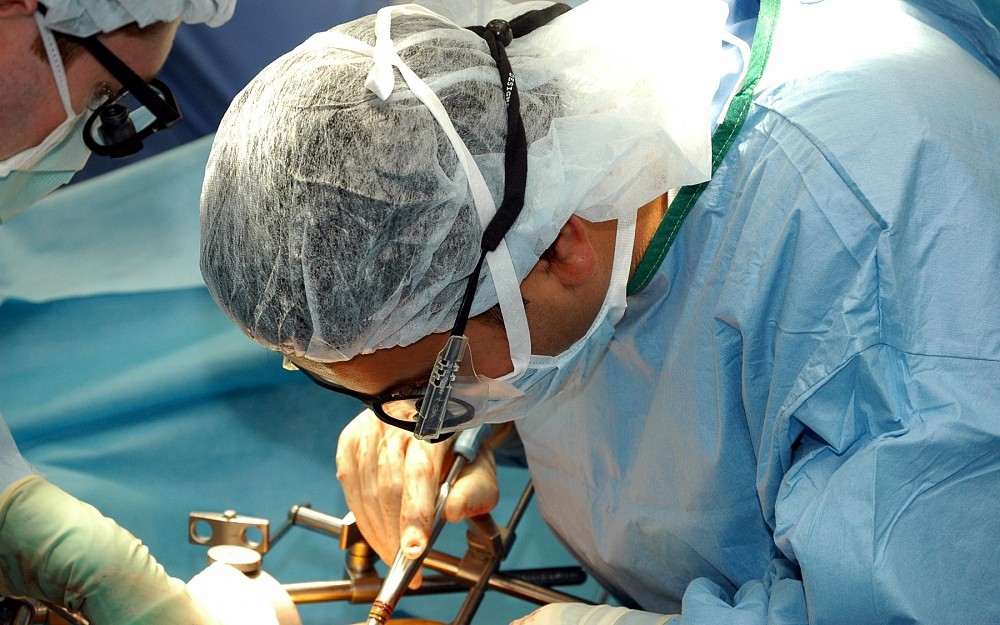
UC Performs 100th Specialized Procedure For Alleviating Chronic Pancreatitis

CincinnatiPhysicians at the University of Cincinnati (UC) Pancreatic Disease Center recently completed their 100th autologous islet cell transplantation at University Hospital, a highly specialized surgical procedure that can "cure chronic pancreatitis.
The Cincinnati team is one of only three major centers in the United States that offer pancreatectomy (removal of the pancreas) with autologous islet cell transplant to treat chronic pancreatitis (inflammation of the pancreas). UC began offering the procedure in 1999.
Syed Ahmad,
"Patients with chronic pancreatitis are quite debilitated. Most patients are on two to four short- and long-acting narcotics for pain by the time they get to us andfor the most partare addicted to these medications, explains Ahmad, a UC assistant professor and surgeon at University Hospital. "Even after the source of the pain (pancreas) is removed, many patients still perceive pain because their bodies are programmed to need these medications.
Because of this, he says, it usually takes about a month to wean patients off their pain medications or reduce them to an acceptable level.
"In our experience, 60 to 70 percent of patients can be taken off all pain medications, adds Ahmad. "This is extraordinary, considering that most of our patients have been taking narcotics for pain management for years.
Located behind the lower part of the stomach, the pancreas is a small organ that produces insulin and enzymes that help the body process and use food. The pancreas creates clusters of cells called the islets of langerhans, which are made of several types of cells including insulin-producing beta cells. This hormone helps the body use glucose (sugar) for energy. If the body does not produce enough insulin or has trouble using it properlycausing glucose to build up in the bloodthe patient will develop diabetes, requiring strict dietary changes or insulin injections.
During a pancreatectomy with autologous islet cell transplantation, the patients pancreas is completely removed. The organ is then taken to a laboratory where specialized enzymes are used to remove islet cells. The cells are then purified, processed and infused back into the patient through a vein in the liver.
"When we transplant islets, we transplant not only the cells that produce insulin but also cells making glucagon and other counteregulatory hormones critical to maintain the glucose homeostasis, explains Horacio Rilo, MD, director of the cellular transplant program at UC and associate professor of surgery, pediatrics and biomedical engineering. "Success is defined as insulin independence and stable, easy-to-control diabetes.
"Once implanted in a surrogate home (the liver), the beta cells in the islets begin to make and release insulin, adds Rilo. "These cells are less than 1 percent of the entire pancreas and very fragile, so the entire process is very time-sensitive.
The UC team says 40 percent of patients do not need insulin injections following the islet cell transplantation procedure; the remaining 60 percent require minimal to moderate amounts of injected insulin.
Patients typically remain in the hospital for four to six weeks following surgery to recover from the operation
Since opening in 2001, the UC Pancreatic Disease Center has become a leader in the treatment of pancreatic diseases, including chronic pancreatitis and pancreatic cancer. The multidisciplinary team treats about 200 patients annually from across the
The team includes gastroenterologists Andres Gelrud, MD, Shailendra Chauhan, MD, and Nathan Schmulewitz, MD; medical oncologist Malek Safa, MD; radiologists Kyuran Choe, MD, and Jonathan Moulton, MD; radiation oncologists William Barrett, MD, and David Grisell, MD; nurse Lori Haggerty; surgeons Jeffrey Sussman, MD, and Ahmad; and islet cell transplantation expert Rilo.
For more information about treatment at the UC Pancreatic Disease Center, visit www.ucpancreas.org or call (513) 584-CURE.

Syed Ahmad, MD
Tags
Related Stories
On-site training in Speech & Hearing Clinic sets UC’s programs apart
August 27, 2026
At the University of Cincinnati’s Speech & Hearing Clinic, Doctor of Audiology and Speech-Language Pathology graduate students gain real-world experience while providing free speech and hearing services to the community.
Funding expands UC research into weight gain side effects of bipolar medication
August 26, 2026
University of Cincinnati researchers have been approved for funding by the Patient-Centered Outcomes Research Institute (PCORI) to expand the implementation of healthy lifestyle interventions and metformin prescription to help manage weight gain in overweight or obese youth taking second-generation antipsychotic medications.
One in four NFL players had CTE at death
August 25, 2026

Forbes cites research on concussions and football helmets by the University of Cincinnati in a report that found one in four NFL players had brain damage at death.