UC, Cincinnati Children's Researcher Receives Howard Hughes Medical Institute Investigator Designation

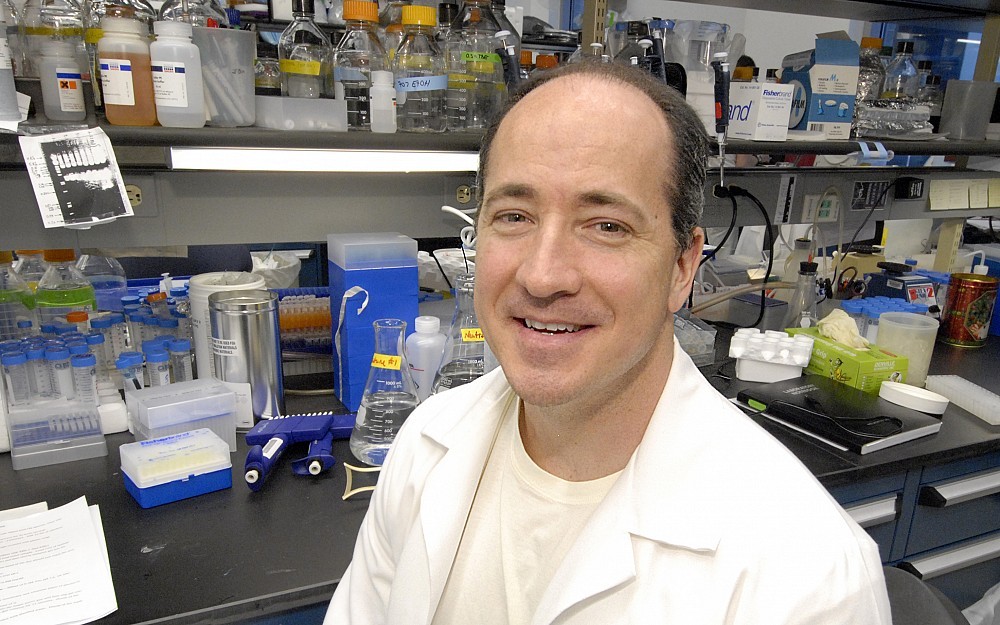
CINCINNATIJeffery Molkentin, PhD, a scientist and professor at the UC College of Medicine and Cincinnati Childrens Hospital Medical Center, has been named one of 56 new Howard Hughes Medical Institute (HHMI) investigators.
This will place Molkentin among an elite group of the nations most promising scientists who are challenged to extend the boundaries of science by pursuing bold and creative research. A researcher in the division of molecular cardiovascular biology at Cincinnati Childrens and the department of pediatrics at UC, Molkentin was among 1,070 scientists who applied for the appointment. In making its selections, HHMI sought outstanding scientists studying biomedical problems in a variety of disciplines.
We look for scientists who have demonstrated originality and productivity in biomedical research and show exceptional potential for future contributions, says Jack Dixon, PhD, vice president and chief scientific officer at HHMI. This infusion of fresh scientific talent allows us to refresh our commitment to original and creative biomedical research.
Molkentins research has advanced the understanding of molecular events behind heart disease and muscular dystrophy. His team studies the signaling mechanisms that control cell growth, differentiation and death.
One study from Molkentins laboratory, published this spring in the science journal Nature Medicine, identified a possible a new treatment for muscular dystrophy. The research showed an investigational antiviral drug undergoing human trials in
Molkentin says the HHMI award will allow him to expand his research in a more exploratory way.
HHMI encourages innovative research, he says. This award is typically given to individuals from institutions that have strong and pioneering programs. This shows the success of both UC and Cincinnati Childrens. It is an example of how the tie between these two institutions can strengthen the impact of our research on a local and national scale.
The HHMI provides long-term, flexible funding to about 300 Hughes scientists across the nation, allowing researchers to pursue their scientific interests no matter where they lead.
Molkentin is the fourth HHMI investigator ever appointed in
The non-profit medical research organizationfounded in 1953 by aviator-industrialist Howard Hugheshas invested more than $8.3 billion in the last 20 years to support, train and educate the nations most creative and promising scientists. The institute is based in
Once selected, investigators continue to be based at their host institutions but become HHMI employees and derive their salaries and benefits from the institute. The collaboration agreement also provides for payment to the host institution for a researcher's laboratory space. Investigators retain their faculty positions and continue to participate in teaching and other professional activities at their university or research institute.
Molkentin joined UC and Cincinnati Childrens in September 1997, after completion of his post-doctoral fellowship at the
Related Stories
Cancer Center plays key role in lab research, clinical trials for new pancreatic cancer drug
September 1, 2026

WLWT and WCPO highlighted the contributions of University of Cincinnati Cancer Center researchers that helped lead to the recent FDA approval of daraxonrasib, a new treatment for pancreatic cancer.
Cancer Center physician receives $150,000 New Investigator Research Grant to study treatment-resistant leukemia
September 1, 2026
The University of Cincinnati Cancer Center’s Sarah Skuli, MD, PhD, received a two‑year, $150,000 Leukemia Research Foundation New Investigator Grant to study TP53‑mutated leukemia, a treatment‑resistant subtype with very poor outcomes.
Heavy social media use linked to depression
August 31, 2026

U.S. News and World Report, Yahoo! News, MSN, USA Today and other national media highlight a new study by the University of Cincinnati and Northwestern University that found a correlation between heavy social media use and depression in adults.