Non-Surgical Kidney Cancer Treatment Helps Patient

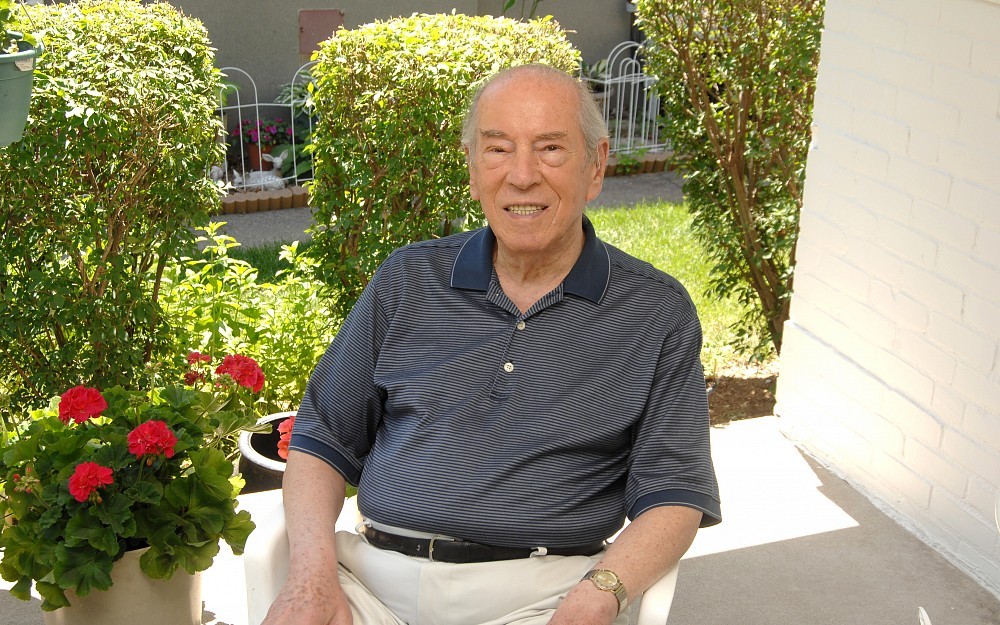
Joseph Polaniecki has been through a lot in his 87 years.
A Holocaust survivor, he immigrated to the United States in 1951 with his 9-months pregnant wife, Doris, a few possessions and no grasp of the English language. They welcomed their first childa sonjust nine days after arriving in Cincinnati and starting a new life in America. It took him five months to find workand he landed that first job through sheer determination and perseverance.
Those traits also served him well later in life in another journey: Polaniecki is also a two-time kidney cancer survivor.
He was first diagnosed with the disease in 2005, undergoing a successful radiofrequency ablation of a small tumor in his left kidney. In 2011, a similar tumor in the backside of his right kidney was detected and needed medical intervention.
James Donovan, MD, chief of urology at the University of Cincinnati College of Medicine and urologist with UC Health, suggested an innovative technique known as computed tomography (CT)-guided percutaneous cryoablation. The procedure uses 3-D imaging technology to direct a small probe through the skin and into the kidney to freeze cancerous tissue, sparing the patient from major open surgery.
"Patients with posterior tumorsembedded deep in the backside of the kidneytypically dont qualify for minimally invasive surgery because the tumors are hard to access, says Donovan. "Cryoablation spares patients like Mr. Polaniecki of drastic open surgery and still provides good cancer control. The CT-guidance improves the effectiveness of the treatment.
Clinical data has shown that removing only the tumor and sparing the rest of the kidney is as effective in curing cancer as removing the entire organ in certain patients.
"I had no pain whatsoever from the cryoablation and so far Im doing great, says Polaniecki. "I was about to get on a plane to go to California to be treated by the person who was doing the most kidney cryoablation cases nationwide, but Dr. Donovan made that care available right here in Cincinnati. Im thankful I didnt have to travel beyond my hometown to get great care.
Polaniecki s follow-up CAT scan showed he was cancer free. Now hes back to regular chess matches, violin practice and exercise at the Jewish Community Center. He also enjoys spending time with his two children, Elliott and Judy; four grandchildren; and one great-grandchild.
Urologists with UC Health perform CT-guided cryoablation procedures of the kidney at West Chester Hospital. For more information on UC Health urology services, visit ucphysicians.com or call (513) 475-8787.
UC Health urologists were among the first in Greater Cincinnati to offer and have significant experience performing minimally invasive partial nephrectomywhat is known as "kidney-sparing surgeryto remove small cancerous tumors without sacrificing the entire organ, using minimally invasive techniques. The team also offers cryoablation to treat certain localized prostate cancers.

CT scan of a small renal tumor, prior to cryoablation
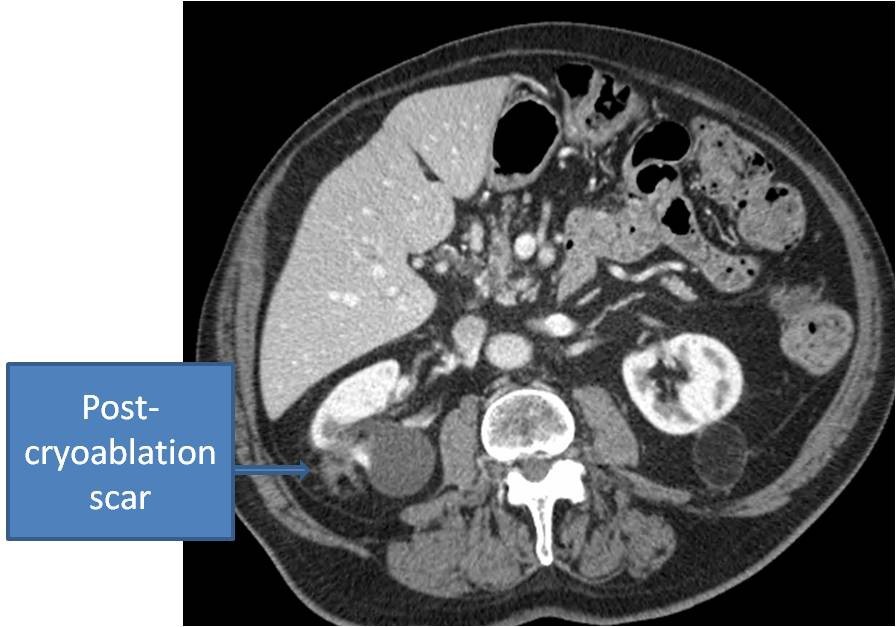
A small renal tumor three months after cryoablation

James Donovan, MD, is chief of the division of urology at UC.
Related Stories
Cancer Center plays key role in lab research, clinical trials for new pancreatic cancer drug
September 1, 2026

WLWT and WCPO highlighted the contributions of University of Cincinnati Cancer Center researchers that helped lead to the recent FDA approval of daraxonrasib, a new treatment for pancreatic cancer.
Cancer Center physician receives $150,000 New Investigator Research Grant to study treatment-resistant leukemia
September 1, 2026
The University of Cincinnati Cancer Center’s Sarah Skuli, MD, PhD, received a two‑year, $150,000 Leukemia Research Foundation New Investigator Grant to study TP53‑mutated leukemia, a treatment‑resistant subtype with very poor outcomes.
Heavy social media use linked to depression
August 31, 2026

U.S. News and World Report, Yahoo! News, MSN, USA Today and other national media highlight a new study by the University of Cincinnati and Northwestern University that found a correlation between heavy social media use and depression in adults.