Behind-the-Scenes Shared Research Facilities Critical to Cancer Research Success

The "a-ha moment that leads to a cancer cure will most likely happen to a molecular geneticist or cell biologist hunched over a sophisticated piece of equipment analyzing cell or tissue samples.
Its not as sexy of an idea as a personalized cancer vaccine or miracle pill, but basic science researchalso known as bench or laboratory researchis where all discoveries about complex diseases begin.
But conducting truly "state-of-the-art research is an expensive undertaking, requiring access to high-level expertise, advanced testing technologies and equipment that individual investigators alone cannot afford.
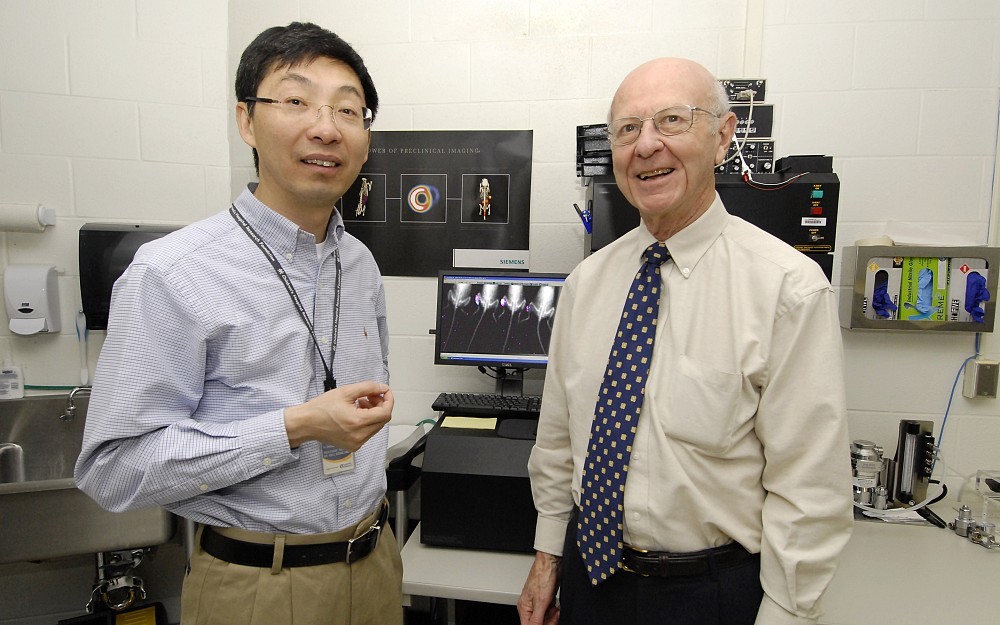
Shared research facilities are the hidden backbone of the cancer research enterprise at the Cincinnati Cancer Center (CCC). Between the UC Cancer Institute and Cincinnati Childrens Hospital Medical Center, CCC researchers have access to sub-specialized expertise unavailable from commercial laboratories: For example, gene-modified mouse models, where researchers can study the implications of a specific gene in breast cancer, or xenograft models, where actual human tissue is implanted and studied in a living specimen.
"Core service teams provide expertise that most individual labs dont have access to. Because the facilities are shared institutional resources, the costs are driven down, and services are much more affordable for individual researchers to utilize, explains Yi Zheng, PhD, director of experimental hematology and cancer biology at Cincinnati Childrens and professor of pediatrics at the UC College of Medicine.
"Having a robust portfolio of core services available on the medical campus is so critical to our ability to attract new researchers to the Cincinnati region to conduct their work, says Jerry Lingrel, PhD, interim chair of UCs cancer and cell biology department and professor of molecular genetics at the UC College of Medicine. "Without it, translating bench findings to human application would be cumbersome.
As federal funding opportunities shrink, that cost-effective access to technology becomes even more important to not only junior faculty who have limited lab teams and funding support but also to more established labs that may be experiencing a gap in funding.
"These core services lead researchers to discovery faster because they need not be handcuffed by their individual expertise and resources, adds Zheng.
Cincinnati Cancer Center Core Facilities
- A dedicated pre-clinical imaging center
- Centralized blood and tissue bank
- High-throughput screening capabilities and compound library for drug target screening
- Computational biology and proteomics capabilities
- Mass spectroscopy
- Transgenic mouse core
- Genomic microarray analysis
- Biostatistical services
- Bioinformatics capabilities
- Biological microscopy
Related Stories
Can new rules in Ohio address a pharmacy staffing shortage and...

May 17, 2024
The University of Cincinnati's Michael Hegener joined WVXU's Cincinnati Edition to discuss recent rules released by the Ohio Board of Pharmacy designed to address pharmacy staffing.
Is ketamine the answer to treatment-resistant depression?
May 16, 2024
The University of Cincinnati's Stephen Rush joined WVXU's Cincinnati Edition to discuss the use of ketamine and esketamine to treat treatment-resistant depression.
UC study: Severe ischemic strokes rare in total patient...
May 15, 2024
The University of Cincinnati’s Yasmin Aziz will present research at the European Stroke Organisation Conference that found severe ischemic strokes with the most severe damage are rare in the total stroke patient population.