Specific Inhibition of Autophagy May Represent a New Concept for Kidney Cancer Treatment

CINCINNATINew research at the University of Cincinnati (UC) suggests that kidney cancer growth depends on autophagy, a complex process that can provide cells with nutrients from intracellular sources. Researchers say in certain circumstances autophagy can protect tumor cells from chemotherapy, allowing them to survive for long periods of time in a hidden, dormant, metastatic state.
In this newly published data, researchers identify two distinct autophagy regulated pathways downstream from the von Hippel-Lindau tumor suppressor gene, or VHL. This specific tumor suppressor is lost in the majority of renal cell carcinomas.
UC researchers report these findings in the April 16, 2012, issue of Cancer Cell.
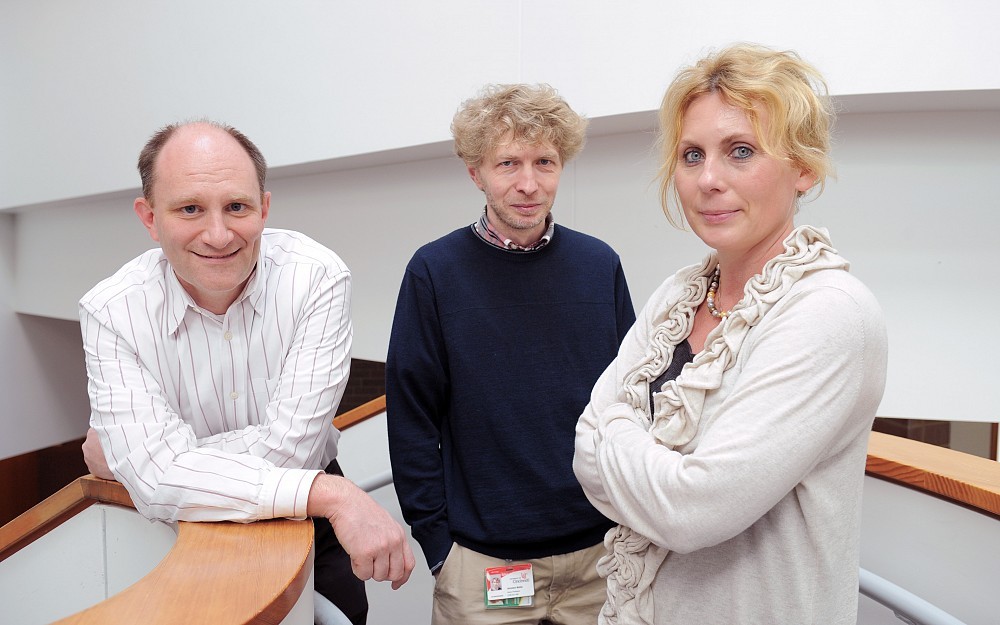
Maria Czyzyk-Krzeska, MD, PhD, corresponding author of the study, says the discoveries could guide researchers to more effective treatment approaches for kidney cancer, particularly metastatic disease, based on knowledge of these specific autophagic processes. UC collaborators in this study include David Plas, PhD, assistant professor of cancer and cell biology, and Jarek Meller, PhD, associate professor of environmental health.
"VHL has emerged as a master controller of access to intracellular nutrients through autophagy and to extracellular nutrients through formation of blood vessels. Our work shows that there are different autophagic programspro-and anti-oncogenic. Drugs that inhibit the final stages of autophagy non-specifically, such as derivatives of chloroquine, may not be as beneficial as hoped, explains Czyzyk-Krzeska, a professor of cancer and cell biology at the UC College of Medicine and researcher with the UC Cancer Institute.
She says the challenge is to understand the molecular mechanisms of these diverse autophagic pathways and identify targets that are specific to the pro-oncogenic pathway but not affecting tumor-suppressing pathways.
"Current drugs for metastatic kidney cancer target angiogenesisblocking the formation of blood vessels that feed the tumorbut they typically only increase survival by a matter of months, says Czyzyk-Krzeska. "We hope this new body of evidence can help pave a new path to more effective treatment options for this disease.
According to the American Cancer Society, incidence rates of kidney cancer are increasing steadily by 2 to 3 percent each year. The disease is curable when it is identified early and isolated to the kidney. Treatment options for metastatic disease are limited.
The study was sponsored by grants from the National Cancer Institute, U.S. Department of Veterans Affairs and U.S. Department of Defense.
Related Stories
Cancer Center plays key role in lab research, clinical trials for new pancreatic cancer drug
September 1, 2026

WLWT and WCPO highlighted the contributions of University of Cincinnati Cancer Center researchers that helped lead to the recent FDA approval of daraxonrasib, a new treatment for pancreatic cancer.
Cancer Center physician receives $150,000 New Investigator Research Grant to study treatment-resistant leukemia
September 1, 2026
The University of Cincinnati Cancer Center’s Sarah Skuli, MD, PhD, received a two‑year, $150,000 Leukemia Research Foundation New Investigator Grant to study TP53‑mutated leukemia, a treatment‑resistant subtype with very poor outcomes.
Heavy social media use linked to depression
August 31, 2026

U.S. News and World Report, Yahoo! News, MSN, USA Today and other national media highlight a new study by the University of Cincinnati and Northwestern University that found a correlation between heavy social media use and depression in adults.