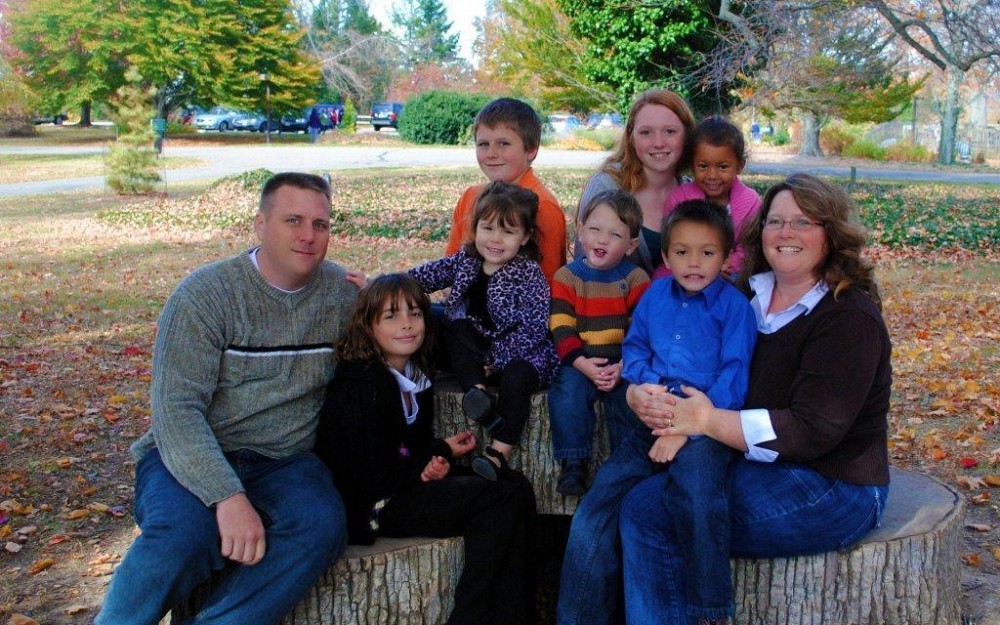
Focus on Alumni With Mark Raaker, MSW

U.S. Army Lt. Col. Mark Raaker earned his masters in social work, with a concentration in children and families, from UC in 2008.
Raaker completed his undergraduate degree in 1992 at Xavier University, where he also went through the universitys ROTC program. After receiving his commission in 1992, Raaker served as a traditional guardsman in the Army ordnance corps and a military police officer on weekends while working as a civilian police officer full time. In 1998, he transitioned to active duty, working first as a construction engineer, inspector general, and most recently as the deputy logistics officer for the state of Ohio.
Raaker is also an operations office for the Armys 371st Sustainment Brigade, which manages commodities distribution across the battlefield. The brigade will be deploying to Kuwait next spring for an 11-month deployment.
How are you involved with veterans health in your current Army work?
"One of my additional duties in the Army is that Im a trained suicide prevention teacher. I teach the suicide prevention techniques in the ASIST program, which stands for "Applied Suicide Intervention Skills Training, and Im a certified trainer for that program."
"In the past, mental health issues have always had a stigma around them in the militarythat those who have met health challenges are "weak or that people who have those problems should keep them to themselves or risk problems to their career. We have come a long way to eliminate that stigma, but its not gone yet.
"The Armyand the Department of Defense in generalhas done a lot to recognize the fact that service members need help, that veterans need help and that its OK to get help. Getting help doesnt make you less of a service member. Seeking help is a sign of a strength; it takes strength to realize you have a challenge and to address it.
"The challenge for us in the future is to continue to work on eliminating the stigma that accompanies mental health challenges. We need to continue to do that through awareness, through training and through the prevention programs that are being developed within the military."
How did you arrive at UC?
"My encore career plan is to go into counseling and social work. Through my familys work in the foster care system, I had the opportunity to develop personal relationships in that profession, and that turned into graduate school.
"I really enjoyed my time at UC. Thats where I met Professor Dick, and were still talking four years later. Had it not been for the faculty and staff, I would not have been able to get through the program while working full time."
How did you get involved with Dick and his research on fathers?
"While I was at UC, I worked with Professor Dick on his Fatherhood Scale, a research project where he was developing a tool that would determine how involved fathers were in the lives of their children, whether its good involvement or bad involvement.
"The intent of the scale is for it to be used by social workers or other caregivers to determine the nature of a fathers involvement or find out where they are they are struggling, to help them become better fathers.
"Hes also going to interview me for a chapter on his upcoming book about fatherhood. Ive been with my wife, Chrisy, for 18 years now. We have seven "forever kids and two other children who currently live with us. We have two biological kids and five adopted kids, but they are all our "forever kids. The other two children are a Brazilian exchange student who is living with us for a year and a foster childa 14-month-old who has been living with us for 13 months.
"I had no intention of having nine children, none at all. It just happened. But I wouldnt change itmy wife and I will take however many children God sends us. All told, weve had 71 placements with us. Weve been a foster family since 2000 and many of our current children are kids who did not have the opportunity to return to their biological families and at our house have found a new home."
Tags
Related Stories
Is ketamine the answer to treatment-resistant depression?

May 16, 2024
The University of Cincinnati's Stephen Rush joined WVXU's Cincinnati Edition to discuss the use of ketamine and esketamine to treat treatment-resistant depression.
UC study: Severe ischemic strokes rare in total patient...
May 15, 2024
The University of Cincinnati’s Yasmin Aziz will present research at the European Stroke Organisation Conference that found severe ischemic strokes with the most severe damage are rare in the total stroke patient population.
Increasing syphilis cases highlight treatment barriers across...

May 14, 2024
The University of Cincinnati's Carl Fichtenbaum spoke with the Cincinnati Enquirer about a recent report that found Hamilton County syphilis cases reached a six-year high in 2023.