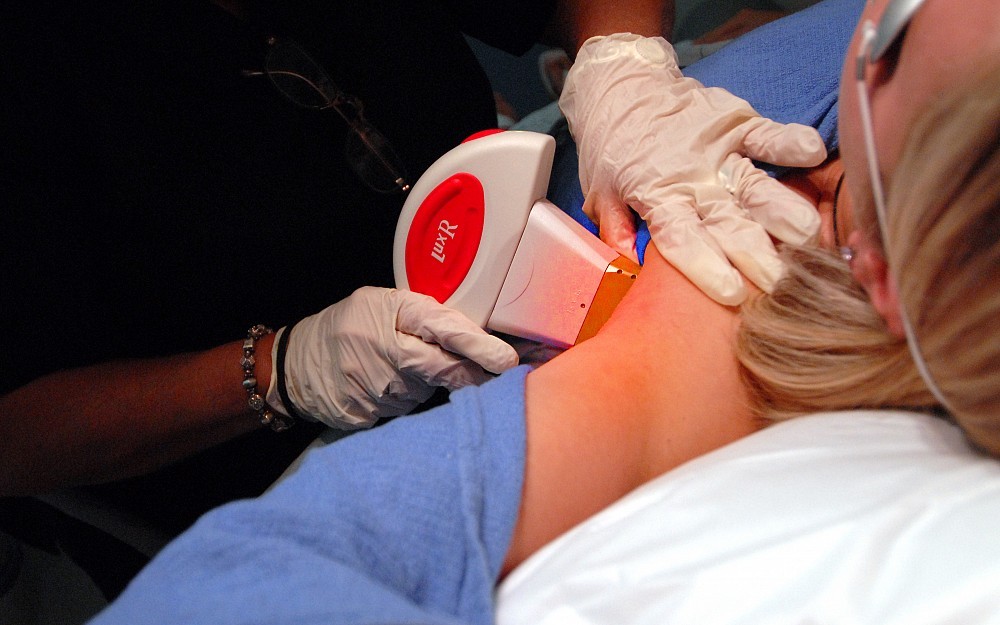
UC HEALTH LINE: Grooming Trends Lead to Many Hair Removal Options

CINCINNATIJust as clothing and hair styles trend in popular culture, so do grooming habits
such as with the recent rise in popularity of hair removal among both men and women.
"I think people are continually trying to find ways to save time, and the time benefit to removing one more step in personal grooming is enticing to people, says Suzanne Quinter, MD, an adjunct instructor with UCs dermatology department and dermatologist with UC Health.
Hair removal is practiced among cultures for a variety of reasonscultural, religious, medical, aesthetic and sexualand people in the United States are free to pursue whatever extent of removal they desire, says Quinter.
While there are many methods of addressing unwanted hair anywhere on the body (including shaving, waxing and chemical depilatories), the only permanent removal types are electrolysis and laser treatments, says Quinter.
Electrolysis is applied with a very fine needle-shaped electrode into each hair follicle to destroy the root. With laser treatment, light is absorbed by the pigment in the hair follicle, gently heating and instantly disabling the follicle.
What determines her recommendation for either electrolysis or laser treatment, Quinter says, is dependent upon the persons skin type. Laser treatment works best on people with dark, coarse hair and light skin, but is possible for people of color with dark hair. Electrolysis is another option for people of color with dark hair and persons with a majority of very light or gray hair.
Patients also need to be aware that both electrolysis and laser require multiple treatments before eradicating all the hair in the treated area permanently, says Quinter.
The side effects to hair removal can range from mild hair follicle irritation from shaving, to infected hair follicles or folliculitis, which can require an antibiotic to cure. People can also have irritation or burn-like reactions resulting from chemicals in depilatory creams.
Quinter says while there is an element of pain associated with electrolysis and laser, numbing medication can be applied beforehand and ice afterward. In rare instances, laser hair removal can cause hyperpigmentation (darkening of the skin).
Electrolysis equipment and lasers are regulated by the U.S Food and Drug Administration (FDA) Center for Devices and Radiological Health. The FDAs Office of Cosmetics and Colors in the Center for Food Safety and Applied Nutrition regulates chemical depilatories, waxes and shaving creams and gels.
Information and health tips on all methods can be found at www.fda.gov/consumer.
UC Health practitioners offer both electrolysis and laser hair removal. To make an appointment to consult with Quinter or another UC Health dermatologist or nurse practitioner, call 513-475-7630 or visit www.uchealth.com.

Tags
Related Stories
Cancer Center plays key role in lab research, clinical trials for new pancreatic cancer drug
September 1, 2026

WLWT and WCPO highlighted the contributions of University of Cincinnati Cancer Center researchers that helped lead to the recent FDA approval of daraxonrasib, a new treatment for pancreatic cancer.
Cancer Center physician receives $150,000 New Investigator Research Grant to study treatment-resistant leukemia
September 1, 2026
The University of Cincinnati Cancer Center’s Sarah Skuli, MD, PhD, received a two‑year, $150,000 Leukemia Research Foundation New Investigator Grant to study TP53‑mutated leukemia, a treatment‑resistant subtype with very poor outcomes.
Heavy social media use linked to depression
August 31, 2026

U.S. News and World Report, Yahoo! News, MSN, USA Today and other national media highlight a new study by the University of Cincinnati and Northwestern University that found a correlation between heavy social media use and depression in adults.