Researchers Win Funding for New Therapies for Gastroenteritis

CINCINNATIUniversity of Cincinnati (UC) researchers have received National Institutes of Health (NIH) funding to develop new therapies for gastroenteritis, a common cause of illness and death worldwide.
Jarek Meller, PhD, an associate professor in the UC Department of Environmental Healths Division of Epidemiology and Biostatistics, is the principal investigator on a project that received a two-year award of $394,257 from the NIHs National Institute of Allergy and Infectious Diseases.
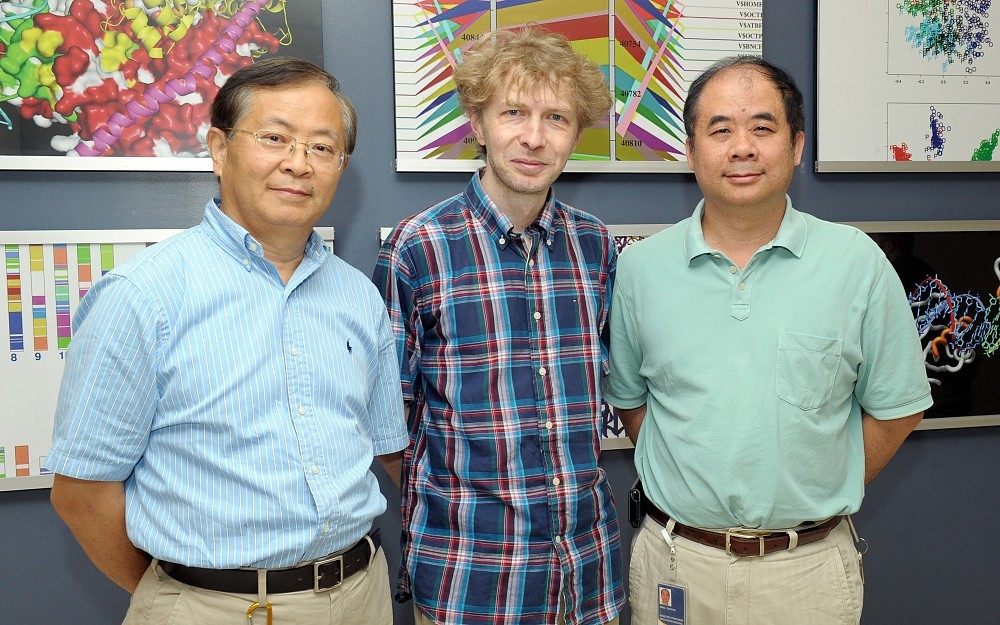
Meller will work with Jason Jiang, PhD, and Ming Tan, PhD, professor and assistant professor, respectively, in the UC Department of Pediatrics. Both are based in the Division of Infectious Diseases at Cincinnati Childrens Hospital Medical Center and have a long-standing collaboration with Meller, whose research is focused on developing and applying computational approaches for data mining, analysis and knowledge extraction from biomedical data.
The research project will focus on strategies to prevent the human norovirus (NV) infection, the most common cause of acute gastroenteritis (also known as food poisoning or stomach flu) in the United States. According to the U.S. Centers for Disease Control and Prevention, norovirus causes 19 million to 21 million illnesses annually and contributes to between 56,000 and 71,000 hospitalizations and 570 to 800 deaths.
Common symptoms of norovirus illness include stomach pain, nausea, vomiting and diarrhea, along with fever, headaches and body aches. It is not related to the flu, which is a respiratory illness caused by influenza virus. There is no specific medicine to treat it; as a viral (not bacterial) infection, it cannot be successfully treated with antibiotics.
Mellers team intends to use in silico (computer-aided) and in vitro screening to identify small molecules that can effectively destabilize or disrupt the assembly of the NV capsid, the protein shell that surrounds the virus. Theyll be looking for "hot spots within the capsid, with an eye toward identifying small molecules that would target such sites and effectively block NV-caused gastroenteritis.
These molecules, called allosteric inhibitors, can disrupt capsid assembly by targeting intermediate conformations of capsid proteins and protein-protein interaction interfaces within the capsid particles.
"Targeting NV capsid represents a novel strategy that has been successfully applied to other viruses, including HIV, in recent years, Meller says.
Meller notes that research could lead to medications that would be taken under specific circumstances when gastroenteritis is perceived as a threat; for example, when an outbreak occurs on a cruise ship or following a restaurant visit by a large group of family or friends who start exhibiting symptoms of gastroenteritis.
The project is currently underway and is scheduled to conclude July 31, 2015.
Tags
Related Stories
Cancer Center plays key role in lab research, clinical trials for new pancreatic cancer drug
September 1, 2026

WLWT and WCPO highlighted the contributions of University of Cincinnati Cancer Center researchers that helped lead to the recent FDA approval of daraxonrasib, a new treatment for pancreatic cancer.
Cancer Center physician receives $150,000 New Investigator Research Grant to study treatment-resistant leukemia
September 1, 2026
The University of Cincinnati Cancer Center’s Sarah Skuli, MD, PhD, received a two‑year, $150,000 Leukemia Research Foundation New Investigator Grant to study TP53‑mutated leukemia, a treatment‑resistant subtype with very poor outcomes.
Heavy social media use linked to depression
August 31, 2026

U.S. News and World Report, Yahoo! News, MSN, USA Today and other national media highlight a new study by the University of Cincinnati and Northwestern University that found a correlation between heavy social media use and depression in adults.