Psychology Expert Aids in Nebraska Court Ruling vs. Westboro Baptist Church

Last week, a federal court decision in Nebraska ruled in favor of upholding the states Funeral Picketing Law, after being challenged by the Westboro Baptist Church (WBC) that the law infringed upon their first amendment rights. UCs Scott Bresler, PhD, provided expert testimony for the case.
WBC named the governor of Nebraska, the Nebraska attorney general, and the Omaha chief of police in their lawsuit, with the assertion that the picketing law, which requires protestors to remain 500 feet from a funeral site, violates the first amendment of the Constitution.
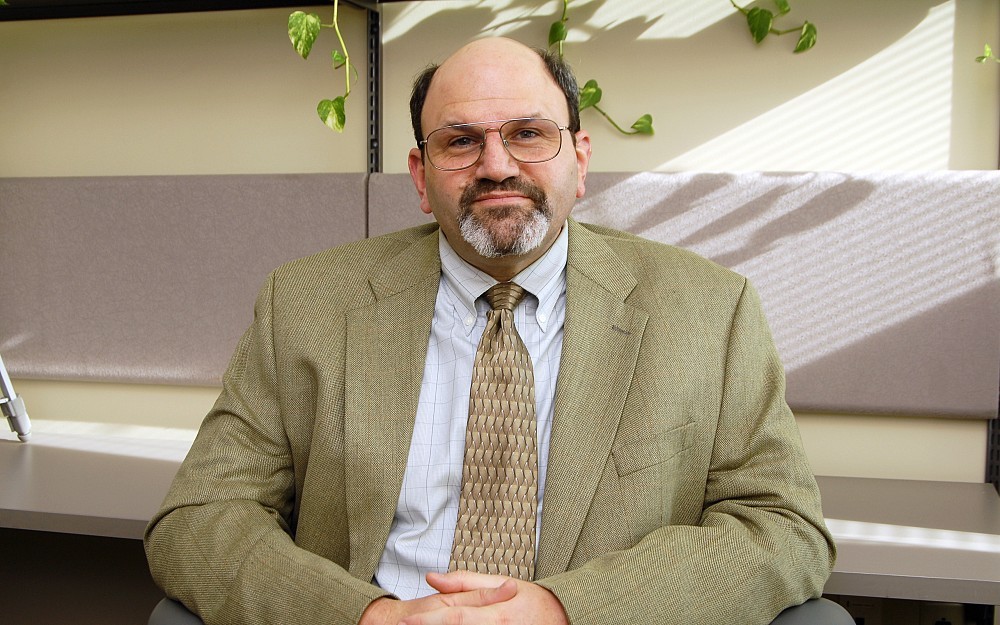
Bresler, associate professor of Clinical Psychiatry at the University of Cincinnati College of Medicine, was called upon by the Nebraska attorney generals office to understand how WBCs protests may have an emotional impact on the people targeted by this funeral picketing, families who have lost their loved ones (fallen soldiers).
"There have certainly been controversial cases challenging the first amendment before, groups that have the right to say what they want to say, however noxious, says Bresler. "In this case, instead of being an abstract argument, I wanted to talk with some of the families affected.
Bresler interviewed many Nebraskans who experienced picketers at the funerals of loved ones to assess the emotional impact of the picketing. "Over a three day period I met with family members, one after the other after the other, who had buried their sons, husbands and brothers, and I talked with these folks about what it was like to have people chanting things like More toe tags, please God.
One mother of a slain soldier he interviewed said she is still stuck with the image of a child holding a picket sign among the group protesting at her sons funeral. "Some could put it aside, saying, I hated it, but understand their right but some were profoundly disturbed and really haunted to this day, he says.
Bresler, who is also clinical director of the Division of Forensic Psychiatry, presented his findings from the interviews to a federal judge about the effect protests have on mourners at funerals. He testified that the families and friends are in a particularly vulnerable emotional condition when attending a funeral; they may suffer emotional injury by protestors at the funeral, and they are in need of access to the funeral unimpeded by protestors. Bresler added that mourning family members and friends generally feel victimized by funeral protestors, and keeping protestors at a distance of 500 feet from the funeral would help address the emotional needs of those grieving.
"Bereavement can be expressed emotionally, physically and behaviorally, Bresler noted in his testimony. "Intense grief can lead to adverse psychological reactions including acute stress disorder, posttraumatic stress disorder, and traumatic confusion.
Bresler says, even through cross-examination by the WBC lawyer, he grounded his conclusions in research and just "hoped the judge would hear it loud and clear.
Ultimately, the decision was upheld to maintain the 500-foot buffer zone law for those protesting or picketing at funerals, namely, the protests of the WBC. The Nebraska attorney generals office in a press release, emphasized that Nebraska has a substantial interest in "protecting the peace and privacy of funeral attendees so that they may express the respect accorded to the deceased.
The history of WBC protests at military funerals has been well documented, both in Nebraska and nationally. In 2006, a Nebraska state law was enacted establishing a 300-foot buffer zone for those protesting at funerals. In 2011, Nebraska law increased the buffer zone to 500 feet. The Westboro Baptist Church responded to Nebraskas law by suing Nebraskas governor, attorney general, and the Omaha chief of police.
The attorney generals office further stated that Nebraskas Funeral Picketing Law does not restrict WBC from expressing its protest message by ample, alternative methods, which should not include disrupting funerals.
Bresler travels the country serving as a forensic psychologist on high profile cases to provide evidence and testimony. His areas of expertise include risk of dangerousness, suspected false confessions, workplace violence and assessment of complicated clinical cases.
Related Stories
UC invests in the next generation of graduate leaders through fellowships focused on mentorship and research
September 3, 2026
The Next Lives Here Presidential Fellowship supports the recruitment of top doctoral students through competitive funding, mentorship and professional development.
Cancer Center plays key role in lab research, clinical trials for new pancreatic cancer drug
September 1, 2026

WLWT and WCPO highlighted the contributions of University of Cincinnati Cancer Center researchers that helped lead to the recent FDA approval of daraxonrasib, a new treatment for pancreatic cancer.
Cancer Center physician receives $150,000 New Investigator Research Grant to study treatment-resistant leukemia
September 1, 2026
The University of Cincinnati Cancer Center’s Sarah Skuli, MD, PhD, received a two‑year, $150,000 Leukemia Research Foundation New Investigator Grant to study TP53‑mutated leukemia, a treatment‑resistant subtype with very poor outcomes.