Outpatient Plaque Therapy for Eye Cancer Now Offered at UC

CINCINNATIUveal melanoma, a malignant tumor of the pigmented part of the eye and the second most common type of melanoma, is diagnosed in about 2,500 adults every year in the United States, and metastasis in this type of cancer occurs in about half of all cases.
For years, the University of Cincinnati (UC) Cancer Institute has provided plaque radiation treatment for these tumors but required inpatient hospital stays while the patient had the implant on his or her eye, disrupting routines and keeping them away from loved ones.
Recently, UC specialists have been offering brachytherapy as an outpatient procedure with the same, effective results.
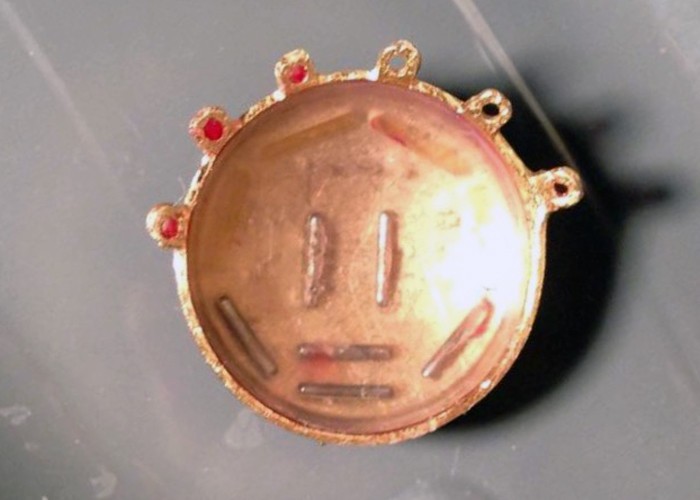
"We are thought to be the only facility locally offering outpatient plaque treatment, which is possible due to a joint effort by UC experts in ocular oncology and radiation oncology, who revised safety procedures related to the radiation treatment. This allows us to send patients out of the hospital with their implant, says Zélia Corrêa, MD, PhD, the Mary Knight Asbury Chair of Ophthalmic Pathology and Ocular Oncology, professor of ophthalmology at the UC College of Medicine and the director of ocular oncology within the UC Cancer Institute. "With plaque therapy, a small disc-shaped shield, known as a plaque, encasing small rice-shaped radioactive seeds is attached to the outside surface of the eye, overlying the tumor.
"The plaque is left in place for a few days and then removed; for the outpatient procedure, patients have a radiation wristband to alert others about the radiation, and a lead-coated eye patch which prevents radiation from leaving the eye. Brachytherapy is commonly used to treat ocular melanoma, and it is also used by other cancer doctors to treat different tumors including prostate, cervical cancer and head and neck cancerscancers with a single location that havent spread.
Correa says patients are either able to go home after the plaque is placed, if they live in the area, or if they are traveling from out of town, accommodations are made for them at the Musekamp Family Hope Lodge. They return at the scheduled date and time to have the implant removed from their eye.
"Were excited to offer this form of therapy for our patients, potentially saving them money and allowing them to receive treatment while outside of a hospital setting, she says, adding that patients are monitored closely during their treatment with the plaques. "This type of therapy is localized and precise, eliminating side effects for patients; we are able to tailor the dosage of radiation needed in each seed. This form of therapy has been shown to be just as beneficial as traditional radiation therapy for uveal melanomasand it is more convenient.
To schedule an appointment with Correa or a member of the UC Cancer Institutes Ocular Oncology Center, call 513-475-7300.

Zélia Corrêa, MD, PhD, the Mary Knight Asbury Chair of Ophthalmic Pathology and Ocular Oncology, professor of ophthalmology at the UC College of Medicine and the director of ocular oncology within the UC Cancer Institute

The plaque with radioactive seeds, used to treat ocular melanoma.

Zélia Corrêa, MD, PhD, the Mary Knight Asbury Chair of Ophthalmic Pathology and Ocular Oncology, professor of ophthalmology at the UC College of Medicine and the director of ocular oncology within the UC Cancer Institute
Related Stories
Cancer Center plays key role in lab research, clinical trials for new pancreatic cancer drug
September 1, 2026

WLWT and WCPO highlighted the contributions of University of Cincinnati Cancer Center researchers that helped lead to the recent FDA approval of daraxonrasib, a new treatment for pancreatic cancer.
Cancer Center physician receives $150,000 New Investigator Research Grant to study treatment-resistant leukemia
September 1, 2026
The University of Cincinnati Cancer Center’s Sarah Skuli, MD, PhD, received a two‑year, $150,000 Leukemia Research Foundation New Investigator Grant to study TP53‑mutated leukemia, a treatment‑resistant subtype with very poor outcomes.
Heavy social media use linked to depression
August 31, 2026

U.S. News and World Report, Yahoo! News, MSN, USA Today and other national media highlight a new study by the University of Cincinnati and Northwestern University that found a correlation between heavy social media use and depression in adults.