UPI: Promising pancreatic cancer treatment
Media highlights potential new cancer therapy that could be in clinical trials soon

A new multi-drug combination therapy for pancreatic cancer is inching toward clinical trials in humans, according to University of Cincinnati researchers.
The drug compound, called SapC-DOPS, combines chemotherapy with targeted therapy and is capable of killing the cells that cause a number of cancers, including pancreatic cancer, which is notoriously difficult to treat.
"Based on pre-clinical studies, it has the potential to improve pancreatic cancer treatment," Xiaoyang Qi, PhD, a professor of hematology oncology at the University of Cincinnati College of Medicine and member of the UC Cancer Center. Qi is a lead author on the study which was published in the academic journal Molecular Therapy.
The Cincinnati Enquirer also covered this research.
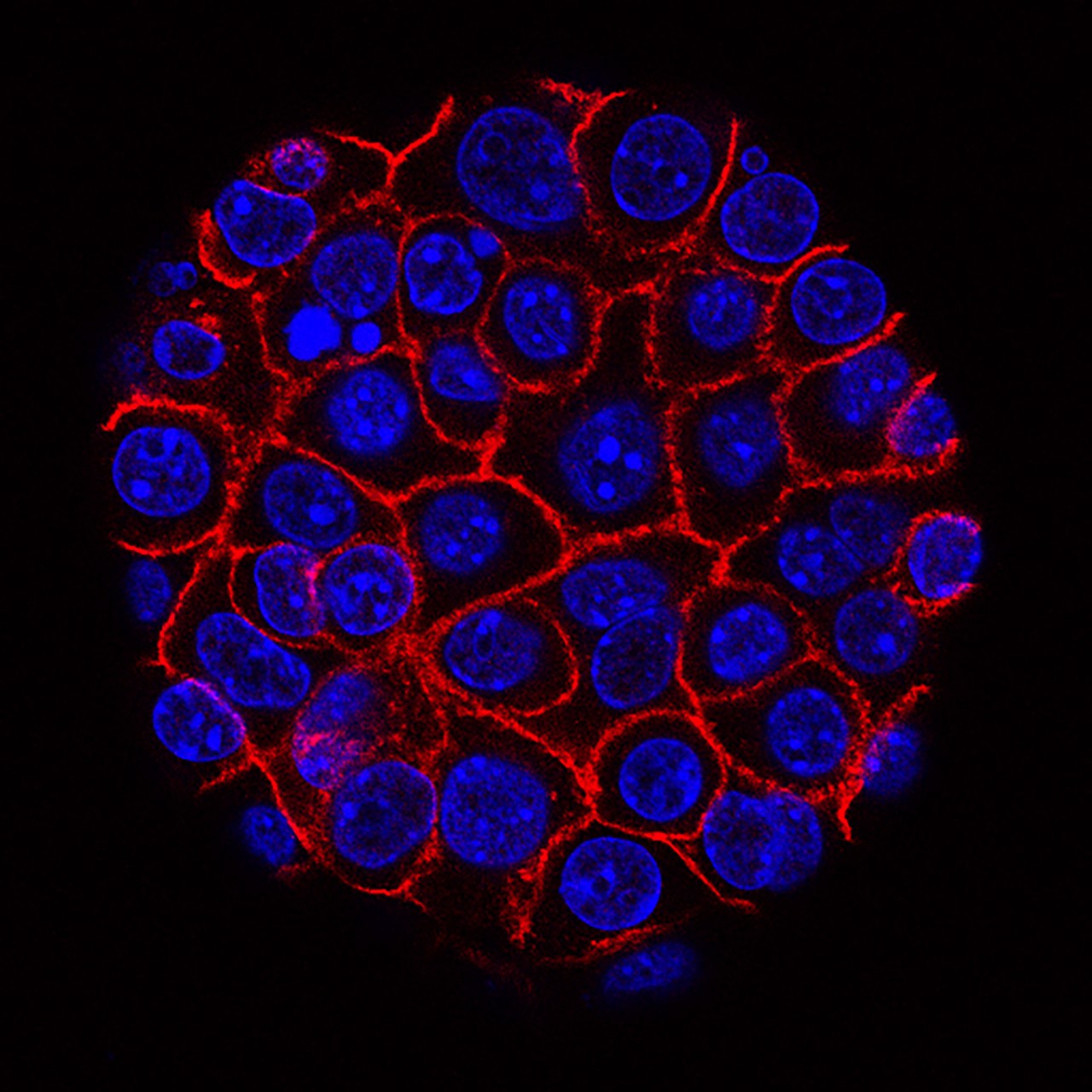
Featured photo of pancreatic cancer cells courtesy of National Institutes of Health. Credit/Min Yu/Eli and Edythe Broad Center for Regenerative Medicine and Stem Cell Research at USC
Next Lives Here
The University of Cincinnati is classified as a Research 1 institution by the Carnegie Commission and is ranked in the National Science Foundation's Top-35 public research universities. UC's graduate students and faculty investigate problems and innovate solutions with real-world impact. Next Lives Here.
Related Stories
Her book drive is changing literacy in Cincinnati
August 31, 2026

WCPO highlights a nonprofit dedicated to childhood literacy that has offers co-op positions to UC students.
Major grant expands apprenticeship opportunities at UC
August 31, 2026
UC will expand registered apprenticeship opportunities in AI, semiconductor, and nuclear-energy infrastructure through a major U.S. Department of Labor grant partnership led by JFF.
Heavy social media use linked to depression
August 31, 2026

U.S. News and World Report, Yahoo! News, MSN, USA Today and other national media highlight a new study by the University of Cincinnati and Northwestern University that found a correlation between heavy social media use and depression in adults.