WVXU: Cincinnati-designed ventilators on their way to Brazil and beyond
Nonprofit started by former P&G scientists had input from UC

WVXU recently reported on Venti-Now, a Cincinnati-based nonprofit that developed a simple automated ventilator. Some of those ventilators will soon be on the way to Brazil, which has a high number of COVID-19 cases, as well as Tanzania.
Venti-Now was launched early in the pandemic by two P&G scientists, John Molander and Art Koehler, with the aim to create an affordable, easy-to-use ventilator for low-resource countries. The company enlisted input from various University of Cincinnati experts, including Peter Campbell, professor of biomedical engineering at UC, along with two of his students, whose work was featured here.
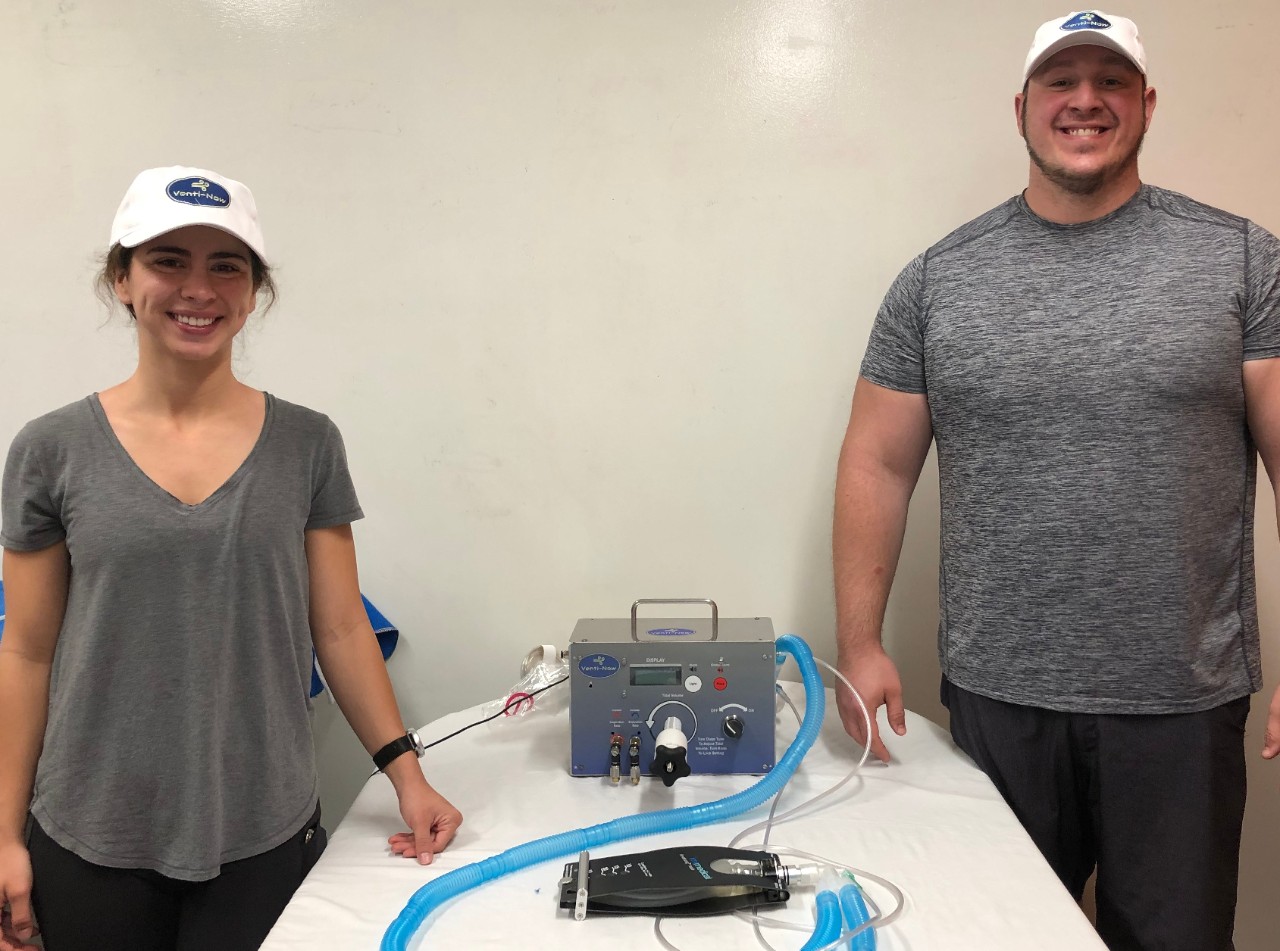
Biomedical engineering students, Johnathan Wisecarver and Jacquelyn Chapman, pose with the Venti-Now ventilator they helped create. Photo/provided.
WVXU reports that Venti-Now began to manufacture the ventilator devices at PMC Smart Solutions based in Blue Ash early in July. The units feature a simple bag-valve-mask design similar to what is used to manually help people breath on an ambulance ride. Venti-Now’s product automates the inflation of the bag.
Unlike most ventilators, Venti-Now’s device doesn’t require expensive oxygen tanks. Instead, it can be run off of compressor air, which makes it suitable for temporary emergency facilities and hospitals with or without air hookups. Many standard ventilators require trained personnel to operate, calibrate or fix the machines.
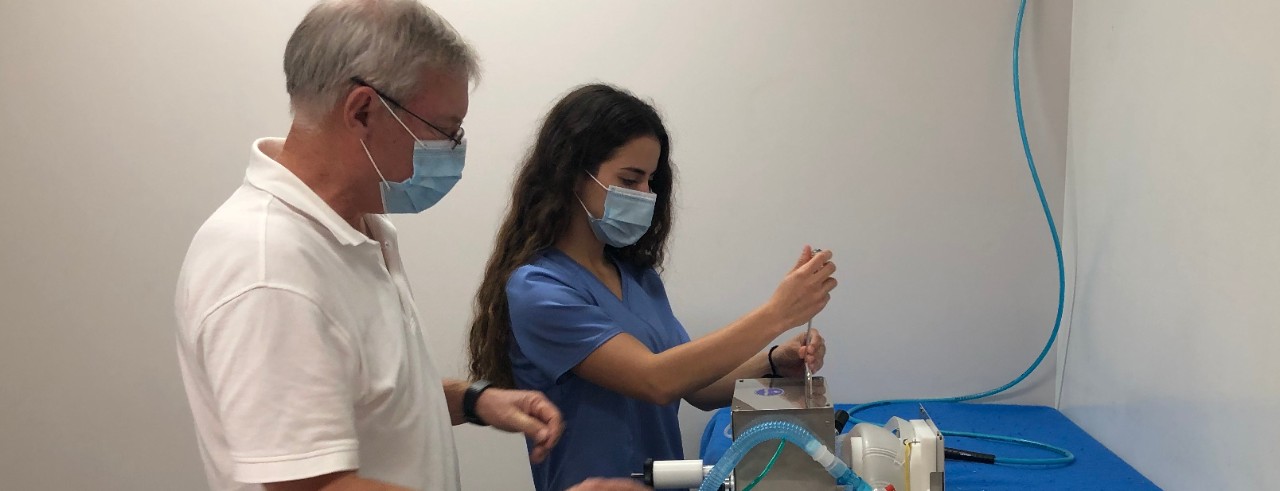
Featured image at top: Venti-Now founder John Molander and UC student Jacquelyn Chapman examine the ventilator. Photo/provided.
Related Stories
These teeny spiders are social media stars
August 28, 2026

The New York Times turned to a University of Cincinnati professor to explain the appeal of jumping spiders on social media.
An internal divide among unions on AI impacts the Wisconsin gubernatorial race
August 28, 2026

Anne Lofaso, a professor in the Donald P. Klekamp College of Law at UC, spoke with Wisconsin Public Radio, about the schism among unions over AI and whether it is a plus, a negative, or somewhere in between when looking at job creation.
UC, NKU renew longstanding partnership supporting Army ROTC cadets
August 26, 2026
The University of Cincinnati Army ROTC and Northern Kentucky University (NKU) have renewed a longstanding partnership that supports students preparing to become Army officers and leaders in their communities. The universities formalized the renewed agreement during a signing event Aug. 11 at NKU.