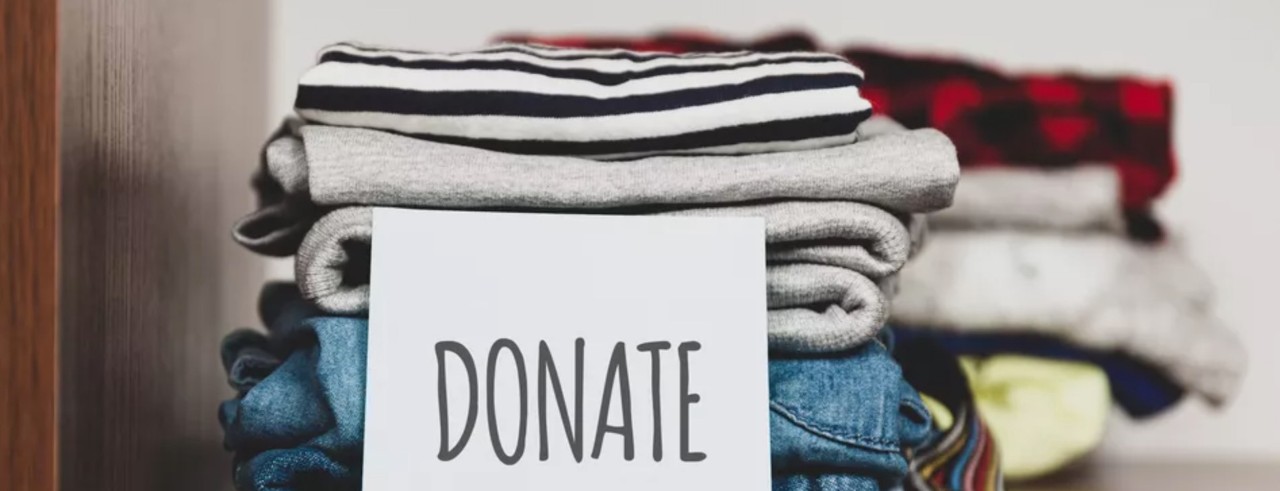
Mashable: How to donate clothes in the most ethical ways possible
UC's Liz Ricketts talks sustainable fashion and clothing donation

Liz Ricketts has seen where some of your donated used clothes end up.
The fashion designer and cofounder of the University of Cincinnati's Sustainable Fashion Initiative (a zero-waste effort within the university's fashion program) has spent years shuttling between the U.S. and Ghana since 2011. There, she's spent the bulk of her time in the Kantamanto Market, Ghana's largest secondhand clothing market, and possibly the biggest in West Africa, according to Rickett's nonprofit the OR Foundation, whose website will be up and running. Her U.S.-based foundation has worked in Ghana since 2009 and aims to challenge consumer behavior by educating people on the fashion industry.
Ricketts, an adjunct instructor in UC's College of Design, Architecture, Art, and Planning, spoke to Mashable about ethical clothing donation, including advice on which clothes to donate and which to repurpose, identifying the best organizations to donate to and how donate without creating more waste. Read the full story.
Related Stories
UC Clermont Calico Children's Theatre announces 2026 season
September 24, 2026
Calico Children’s Theatre at the University of Cincinnati Clermont College has announced its slate of performances for the 2026 season.
UC partners join communitywide effort to improve outcomes for children and families
September 24, 2026

WLWT Channel 5 covered a signing agreement ceremony for the newly formed Hamilton County Child & Family Systems Partner Collaborative dedicated to working more efficiently together to reduce barriers for families, connect them with support early on and improve delivery of services. UC Corrections Institute and the Donald P. Klekamp College of Law are among the organizations part of the collaborative.
UC part of $18 million initiative to expand behavioral health workforce in Ohio
September 23, 2026

The University of Cincinnati is participating in a new $18 million statewide scholarship program, as Cleveland.com recently reported, to address critical shortages of mental health and substance use treatment providers across Ohio.