Air Force officer talks digital enterprise at UC aerospace seminar
Col. Paul Harmer discusses how the Air Force uses emerging technologies to increase success on the front line


U.S. Air Force Col. Paul K. Harmer. Photo/Provided.
Every semester, the University of Cincinnati’s Department of Aerospace Engineering and Engineering Mechanics hosts graduate seminars to expose its students to a wide range of career and professional opportunities. Speakers from diverse backgrounds share their experiences with new technology in their profession.
“These seminars open students’ minds,” says Kelly Cohen, PhD, UC professor and interim head of the department. “When engineering students graduate, they have insight into the field.”
On Oct. 19, the department hosted U.S. Air Force Col. Paul K. Harmer, deputy director of engineering and technical management in the Materiel Command Headquarters at Wright-Patterson Air Force Base. In this role, Harmer assists in leading the development, training, processes, procedures and tool deployment for 14,000 military and civilian scientists, technicians and engineers who ensure the technical rigor of weapons system programs totaling $60 billion. At the UC talk, Harmer discussed the Air Force’s creation of a digital enterprise.
“The electrical things and IT things of the Information Age are embedded in our everyday products,” Harmer said. “Not only that, but these products are talking to each other, too.”
The world is undergoing a fourth industrial revolution, said Harmer, and it’s changing the way we design and build products. This revolution is based in the advancement of digital technology like cloud computing, cyber-physical systems and artificial intelligence. Digital enterprise refers to the incorporation of these technological advances into the Air Force’s operations and success.
To execute this reality, the Department of Defense has implemented a digital engineering strategy that is grounded in the development, integration and use of models to inform decision making, as well as the management of data and processes. The goal is transform the culture and workforce to adapt to and support this new, connected environment. By embracing digital advances, the Air Force can transform the way they engineer weapon systems and technologies, keeping our country and our troops safer.
Harmer also spent time discussing the many career options in the Air Force, ranging from research and development to testing and maintenance. When asked to give advice for students considering the engineering field and a career in the Air Force, Harmer highlighted two key aspects: education and training. “You need to get an engineering degree to learn and understand the fundamentals,” he said. “Once you get to your job, you’ll get trained on the specifics.”
With Wright-Patterson Air Force base only 50 miles up the road, the University of Cincinnati and its students have many opportunities to engage and collaborate with the Air Force’s cutting-edge technology. These graduate seminars provide the networking opportunities and insights to propel students into success after graduation.
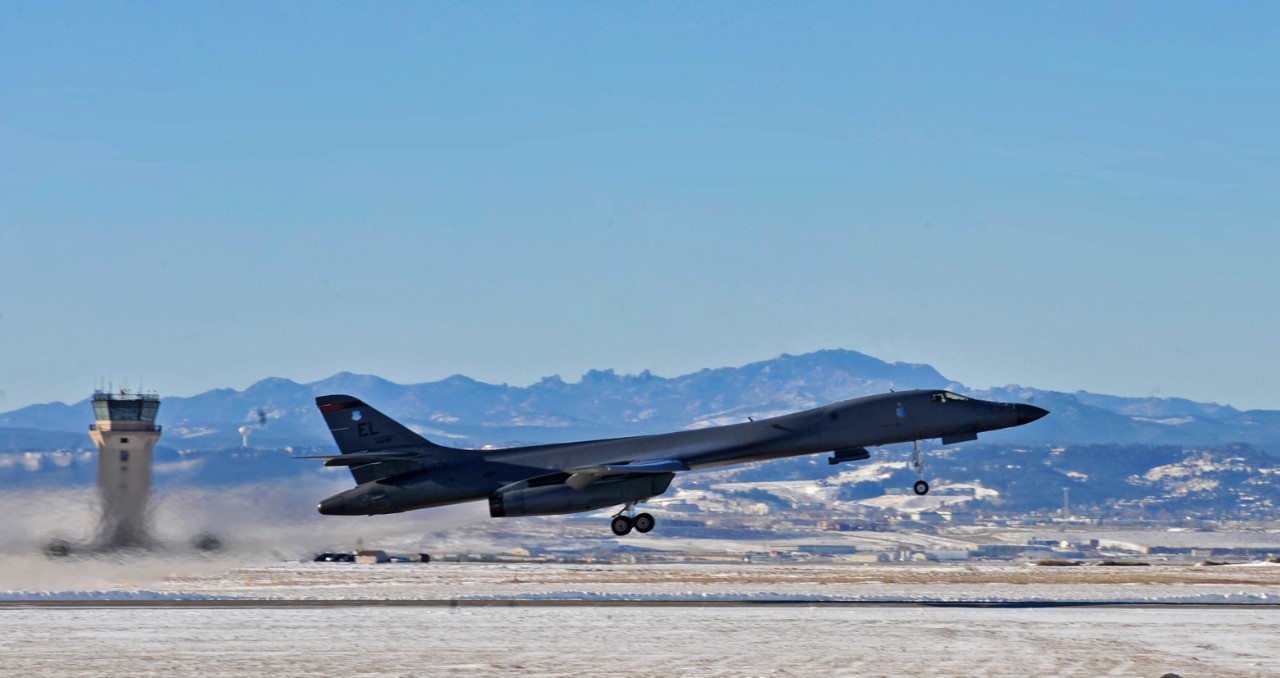
Featured image at top: A B-1B Lancer launches from Ellsworth Air Force Base. The B-1B is one of the many aircraft Harmer has performed flight test engineering on. Photo/Airman 1st Class James L. Miller/U.S. Air Force.
Become a Bearcat
Apply online or get more information about undergraduate enrollment by calling (513) 556-1100.
Related Stories
UC named a best employer in Ohio by Forbes
August 14, 2026

Forbes ranks the University of Cincinnati No. 24 on its 2026 America’s Best Employers By State list for Ohio, recognizing UC’s strong workplace culture and employee experience.
Career fairs and resources for every Bearcat
August 11, 2026
UC's fall career fairs connect Bearcats with co-ops, internships, and jobs — plus free resume help, career coaching, and prep resources at the Bearcat Promise Career Studio.
UC graduates cross finish line at commencement
August 7, 2026
The University of Cincinnati recognized 2,125 graduates in two ceremonies at summer commencement Friday on campus at Fifth Third Arena.