Learn more about the College of Medicine’s reaccreditation efforts online
LCME self-study task force holds first meeting

A new webpage with answers about the reaccreditation process for the University of Cincinnati (UC) College of Medicine is live at www.med.uc.edu/lcme/welcome.
The Liaison Committee on Medical Education (LCME) is the official accrediting body for medical schools in the United States and Canada. It has engaged the College of Medicine in collecting comprehensive data about the medical school, coordinating an institutional self-study and overseeing an independent student analysis, says Pamela Baker, PhD, associate dean of medical education and faculty accreditation lead. The self-study is approximately an 18-month process which will help the College of Medicine identify strengths, challenges and formulate improvements for the medical education program. The process will culminate with an on-site visit/review by the LCME site survey team on Oct. 20-23, 2019.
“The re-accreditation process is an important opportunity for an in-depth review and affords us an opportunity for members of our community to engage in thoughtful dialogue about our ongoing efforts to improve the quality of our medical educational program and ensure compliance with the LCME accreditation standards,” says College of Medicine Interim Dean Andrew Filak, MD. “Numerous faculty, administrators and staff are actively gathering data for our institutional self-study. While this is underway, our medical students are engaged in a parallel process of an independent student analysis, the results of which will be incorporated into our LCME self-study review and provide vital information for future improvements to our medical education program.”
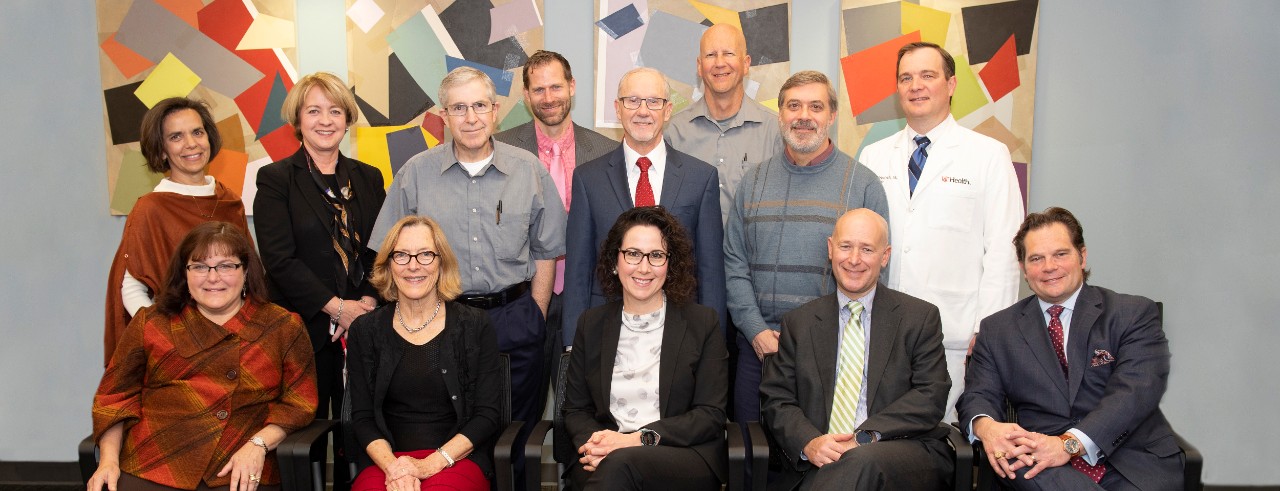
An LCME Self-Study Task Force designed to move the College of Medicine through the reaccreditation held its first meeting Oct. 29. Members of the task force, shown in the photo above this story include: (left to right top row) Aurora Bennett, MD; Mary Mahoney, MD; Michael Lieberman, PhD; Robert Neel, MD: Interim College of Medicine Dean Andrew Filak, MD; Steve Baxter, MD; Philip Diller, MD, PhD; Andrew Friedrich, MD; and (left to right bottom row) Dani Zander, MD; UC Provost Kristi Nelson, PhD; Pamela Baker, PhD; Neil Holsing; and Michael Archdeacon, MD; Other taskforce members not shown include UC Health CEO and President Richard Lofgren, MD; Chris Peltier, MD, Arthur Pancioli, MD, and two student representatives to be selected.
Individual members of the task force also will chair six subcommittees designed to provide detailed answers to LCME on a host of topics.
Chairs for the subcommittees are:
- Michael Lieberman, PhD, for subcommittee 1 focusing on mission, planning organization and integrity along with leadership, administration and faculty preparation, productivity participation and policies;
- Michael Archdeacon, MD, for subcommittee 2 focusing on academic and learning environments;
- Dani Zander, MD, for subcommittee 3 focusing on educational resources and infrastructure;
- Mary Mahoney, MD, for subcommittee 4 focusing on competencies, curricular objectives and curricular design and content;
- Arthur Pancioli, MD, for subcommittee 5 focusing on curricular management, evaluation and enhancement along with teaching, supervision, assessment and student patient safety; and
- Andrew Friedrich, MD, for subcommittee 6 focusing on medical student selection, assignment and progress along with medical student academic support, career advising and educational records, medical student health services, personal counseling and financial aid services.
Baker says the College of Medicine will conduct two mock site visits (dates to be announced) to prepare faculty and students and staff for what to expect during the LCME Survey Team site visit.
The self-study process will conclude in July 2019 with a 35-page Self-Study Summary Report to the LCME as well as the completed Data Collection Instrument (with appropriate appendices) and the Independent Student Analysis Report.
Related Stories
Designing with cancer patients' needs in focus
August 27, 2026
Kristina Shin is designing garments that prioritize the comfort, function and confidence of breast cancer patients, addressing a need often overlooked by traditional fashion.
UC, NKU renew longstanding partnership supporting Army ROTC cadets
August 26, 2026
The University of Cincinnati Army ROTC and Northern Kentucky University (NKU) have renewed a longstanding partnership that supports students preparing to become Army officers and leaders in their communities. The universities formalized the renewed agreement during a signing event Aug. 11 at NKU.
Funding expands UC research into weight gain side effects of bipolar medication
August 26, 2026
University of Cincinnati researchers have been approved for funding by the Patient-Centered Outcomes Research Institute (PCORI) to expand the implementation of healthy lifestyle interventions and metformin prescription to help manage weight gain in overweight or obese youth taking second-generation antipsychotic medications.