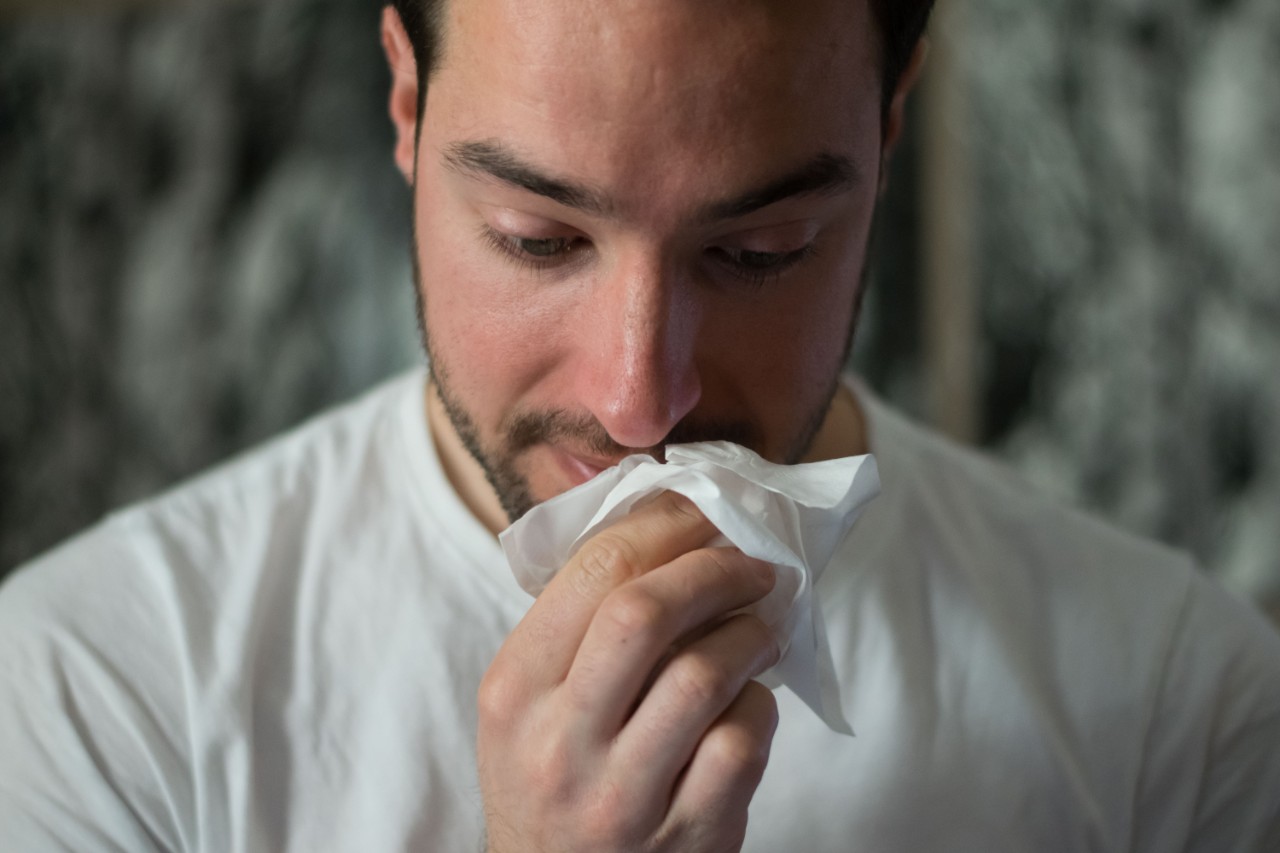
Health Magazine: Why do I suddenly have allergies?
UC allergist says genetics and environment play a role in allergies

A journalist from Heath spoke with Dr. Jonathan Bernstein, professor in UC Department of Internal Medicine, about the supposedly sudden appearance of allergies in some individuals despite decades of not being bothered with a condition that affects more than 50 million Americans, according to the Asthma and Allergy Foundation.
Technically speaking, you aren’t experiencing a new allergy, Bernstein told Health. It's more likely that you've had the allergy for a while, but you're only now experiencing symptoms. So, what gives? There's a process that can occur in the body called sensitization, Dr. Bernstein explains where your body produces an antibody after having contact with an allergen, but you don’t experience symptoms. Eventually, those antibodies are activated, albeit it could take some time.
Related Stories
President Pinto’s 2nd glow party brings first-year Bearcats together
September 20, 2026
UC President Neville Pinto and team hosted the second annual Bright Beginnings glow party for first-year students
This September, give blood for local patients fighting cancer and sickle cell disease
September 18, 2026
September is dedicated to raising awareness of several serious diseases, including sickle cell disease and childhood cancer. For patients in Greater Cincinnati fighting these diseases, awareness is only part of the equation. They also need lifesaving blood products.
UC emergency medicine physicians safely eliminate thousands of unnecessary CT scans
September 18, 2026
A University of Cincinnati emergency medicine quality improvement campaign avoids 3,500-plus head and cervical spine CT scans, saving $6.2 million in patient charges, more than 14,000 hours of waiting time and significant radiation exposure with no patient harm.