Cincinnati Enquirer: UC College of Medicine launches addiction research center
The center is devoted to the science of addiction and hopes to help end stigma

A research center devoted to the science of addiction and determined to make a national impact has launched at the University of Cincinnati College of Medicine.
The UC Center for Addiction Research is an endeavor "to expand the university’s scope as a national leader in addiction science," officials said.
The center's director is Theresa Winhusen, PhD, vice chair for addiction sciences in the Psychiatry and Behavioral Neurosciences department at the UC College of Medicine.
"This is a chance to take all the work that we've been doing to the next level," says Winhusen, who's been engaged in addiction research for more than 20 years.
Read the full story. [This article is password protected.]
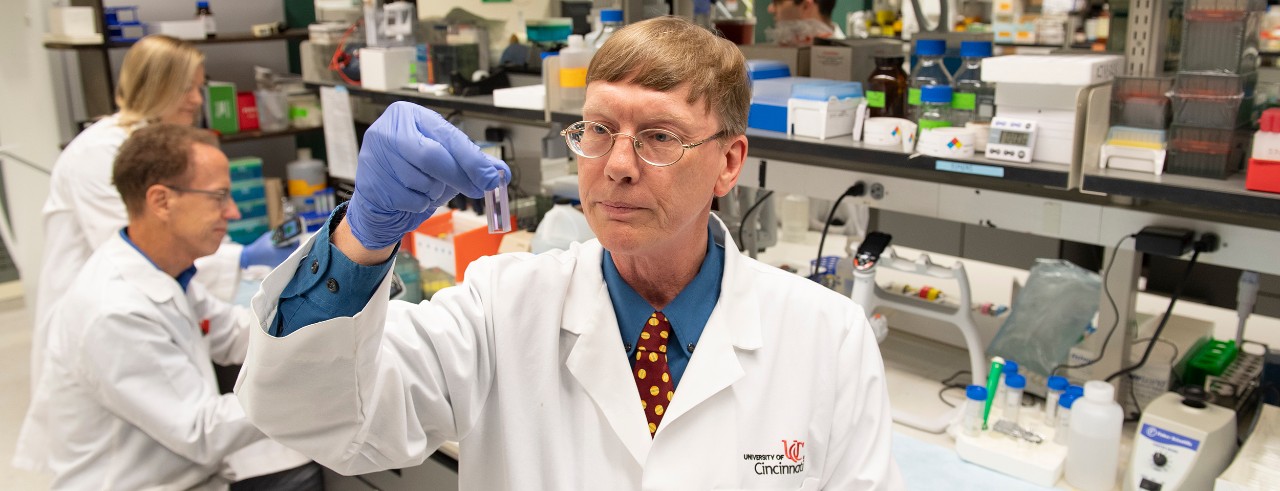
Featured photo of Andrew Norman, PhD, a leader of one of the cores of the Center for Addiction Research, in his lab. Photo credit/Colleen Kelley/UC Creative + Brand
Next Lives Here
The University of Cincinnati is classified as a Research 1 institution by the Carnegie Commission and is ranked in the National Science Foundation's Top-35 public research universities. UC's graduate students and faculty investigate problems and innovate solutions with real-world impact. Next Lives Here.
Related Stories
These teeny spiders are social media stars
August 28, 2026

The New York Times turned to a University of Cincinnati professor to explain the appeal of jumping spiders on social media.
An internal divide among unions on AI impacts the Wisconsin gubernatorial race
August 28, 2026

Anne Lofaso, a professor in the Donald P. Klekamp College of Law at UC, spoke with Wisconsin Public Radio, about the schism among unions over AI and whether it is a plus, a negative, or somewhere in between when looking at job creation.
On-site training in Speech & Hearing Clinic sets UC’s programs apart
August 27, 2026
At the University of Cincinnati’s Speech & Hearing Clinic, Doctor of Audiology and Speech-Language Pathology graduate students gain real-world experience while providing free speech and hearing services to the community.