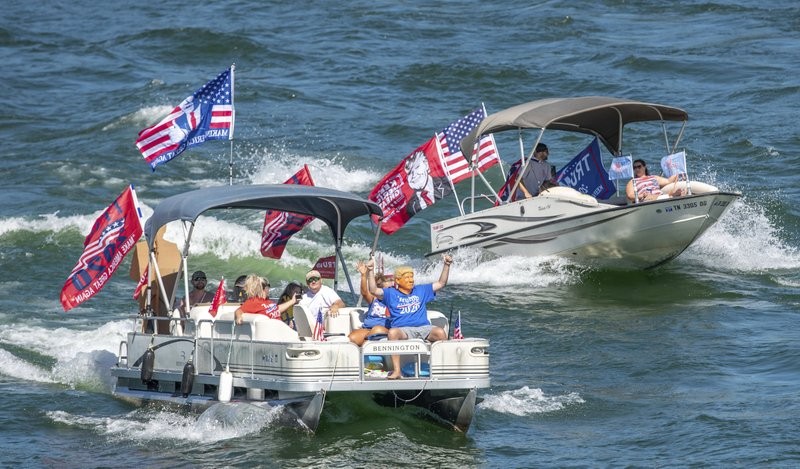
AP: Boat parades, road rallies buoy Trump
UC political scientist David Niven cited in article on parades and Trump supporters

Multiple news outlets, including U.S. News & World Report, picked up an Associated Press article reporting on how the recent surge of parades — by boat, car and foot — are just one of the many ways grassroots supporters of President Donald Trump show their enthusiasm for the 2020 Republican candidate.
David Niven, an associate professor of political science at the University of Cincinnati, contributed his opinion in the article.
Niven stated that the parades aren’t about spreading the message as much as they are reassuring the president’s backers with “a sea of Trump flags whether they’re on the road or the river.”
Niven teaches American politics and conducts research on campaigns, political communication and death penalty policy.
The article also appeared in:
Featured image at top Trump boat parade/AP
Impact Lives Here
The University of Cincinnati is leading public urban universities into a new era of innovation and impact. Our faculty, staff and students are saving lives, changing outcomes and bending the future in our city's direction. Next Lives Here.
Related Stories
Cancer Center director charts future based on collaboration, AI
August 10, 2026

David Gius, MD, PhD, was featured in a Cincinnati Business Courier article and The Cancer Letter’s “The Directors" podcast discussing his priorities and goals as he recently took the helm as director of the University of Cincinnati Cancer Center.
UC graduates cross finish line at commencement
August 7, 2026
The University of Cincinnati recognized 2,125 graduates in two ceremonies at summer commencement Friday on campus at Fifth Third Arena.
Co-op students survey fish to track stream restoration
August 7, 2026

A fish survey at the University of Cincinnati is showing how efforts to restore urban waterways are working to bring back aquatic life.