WVXU: UC observatory could help protect drinking water
UC assistant professor Reza Soltanian is studying water pollution

WVXU spoke to a University of Cincinnati hydro-geologist about a project to study how river pollution affects underground sources of drinking water.
UC College of Arts and Sciences assistant professor Reza Soltanian and his students spent the summer installing new sensors at the Theis Environmental Monitoring and Modeling Site along the Great Miami River in Crosby Township.
With new monitoring wells and sensors, UC has created one of the most sophisticated water-monitoring projects of its kind in partnership with Duke Energy and Great Parks of Hamilton County. It can monitor pollution and track the flow of river water into the ground – a source of drinking water for more than 2 million people in southwest Ohio.
"We're trying to monitor all the chemicals coming from the Great Miami Valley Watershed that drains into the Ohio River," Soltanian said.
Postdoctoral researcher Corey Wallace is working on the project through a National Science Foundation grant.
"This is kind of flagship site. If we can show the capabilities of all these different sensors and technologies, our hope is they can apply them to other critical zones around the country to get a better understanding of what's going on in their groundwater," Wallace told WVXU.
"What we are finding as we are doing our research is you have to have a concrete, real-time measurement of the things happening in the water," Soltanian said.
For example, the observatory has the ability to track a pollution plume if a spill occurs upstream, he said.
Likewise, the observatory can track and transmit data on pollution and water flow even when the entire site along the river is underwater, which happens occasionally during spring floods.
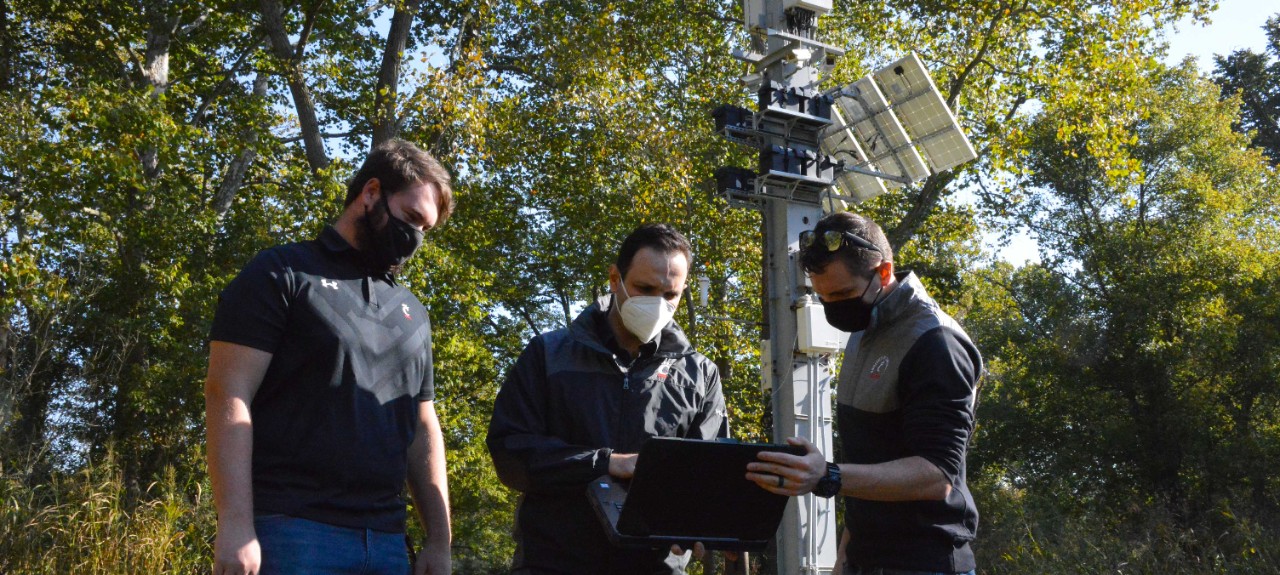
Featured image at top: UC student Tyler McGarr, left, UC assistant professor Reza Soltanian and postdoctoral fellow Corey Wallace check a live feed of data streaming from UC's Theis Environmental Monitoring and Modeling Site. Photo/Michael Miller

UC assistant professor Reza Soltanian is helping to understand how rivers influence drinking water at UC's groundwater observatory. Photo/Michael Miller
Related Stories
The subtle changes in hearing you should never ignore
July 24, 2026

It’s easy to dismiss changes in hearing as minor. But as The Washington Post recently reported, these symptoms could also signal a medical emergency that many people don’t recognize — known as sudden sensorineural hearing loss, a rapid decline in hearing that occurs suddenly or over a few days.
UC experts say proper produce washing is key defense against Cyclospora
July 24, 2026

Hamilton County Public Health reports confirmed cases of cyclosporiasis, as concerns persist. Cyclospora is a parasite that can cause a stomach illness lasting days — sometimes even weeks. University of Cincinnati medical experts say it is usually linked to contaminated water or food, often fresh produce.
What are the options for male birth control?
July 24, 2026
Despite major advances in contraception during the past several decades, responsibility for pregnancy prevention falls largely on women. As recently reported in Endocrinology Advisor, a new generation of male contraceptive candidates is advancing into early- and mid-stage clinical trials.