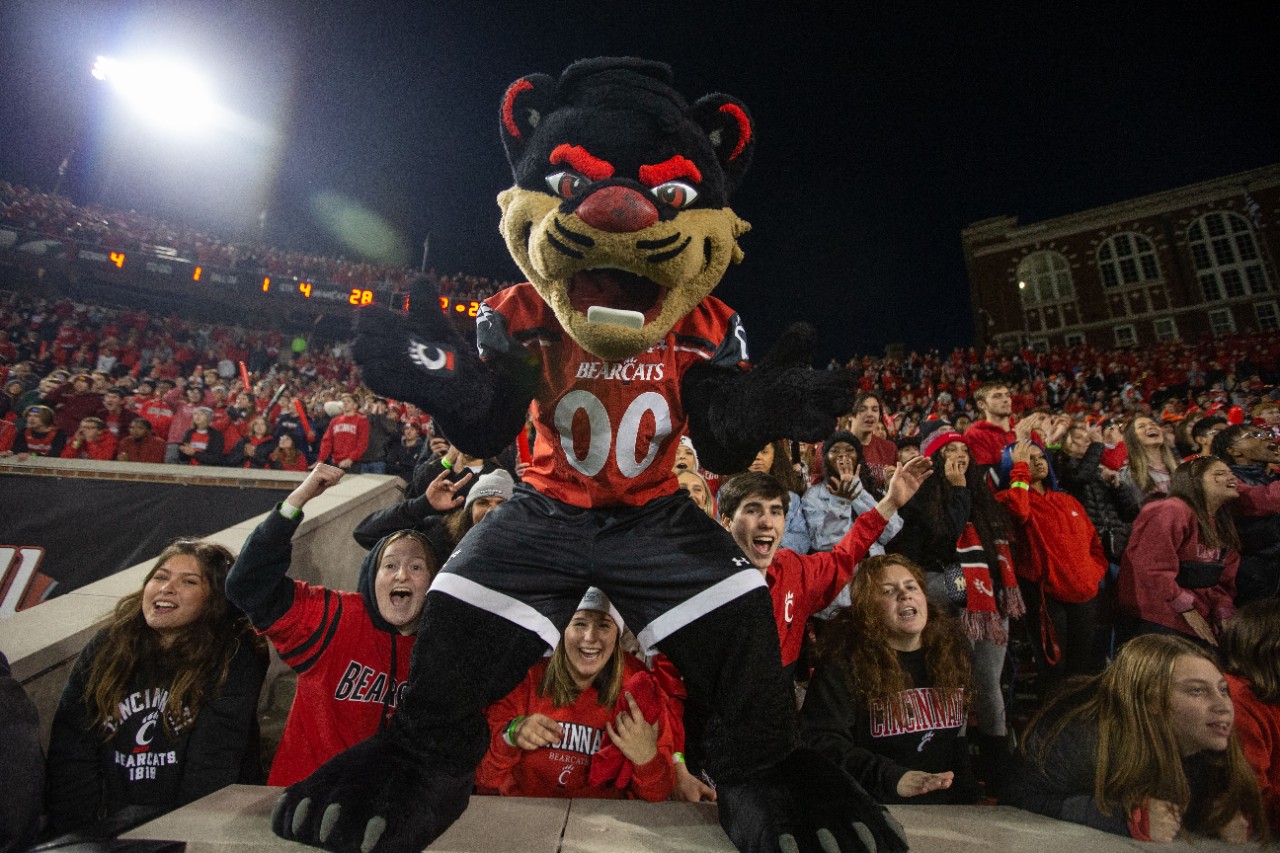
WCPO: UC's first ever mascot coach for Bearcat is a former wearer of the suit himself
So, what is like to be Bearcat?

Lips are sealed about Bearcat. But Chris Helmers, UC Bearcat mascot coach, shared with UC fans what it is like to supervise a team of students who try out for a spot as the UC Bearcat. Helmers, who donned the mascot suit, as a student spoke with WCPO about Bearcat, whose notoriety only grew as the Cincinnati Bearcat football team took on the University of Alabama in the Cotton Bowl Football Playoff.
The term “UC Bearcat” dates back to 1914 and seems to have first appeared in the campus newspaper following a football game between UC and the University of Kentucky Wildcats. The name was inspired by a cheer and play on words for UC star player Leonard K. “Teddy” Baehr. A chant created during the game, “They may be Wildcats, but we have a Baehr-cat on our side,” eventually led to the name being memorialized in a cartoon published in the student newspaper following Cincinnati’s win. The cartoon, by John "Paddy" Reece, depicted a bedraggled Kentucky Wildcat being chased by a creature labeled "Cincinnati Bear Cats."
Tags
Related Stories
These teeny spiders are social media stars
August 28, 2026

The New York Times turned to a University of Cincinnati professor to explain the appeal of jumping spiders on social media.
An internal divide among unions on AI impacts the Wisconsin gubernatorial race
August 28, 2026

Anne Lofaso, a professor in the Donald P. Klekamp College of Law at UC, spoke with Wisconsin Public Radio, about the schism among unions over AI and whether it is a plus, a negative, or somewhere in between when looking at job creation.
One in four NFL players had CTE at death
August 25, 2026

Forbes cites research on concussions and football helmets by the University of Cincinnati in a report that found one in four NFL players had brain damage at death.