Healthline: New HIV variant discovered: May be more infectious and severe
UC expert says current treatments are still effective

New research from the University of Oxford finds a new variant of HIV, the virus that causes AIDS, that is potentially more infectious and could more seriously affect the immune system. So far, 109 people, most of whom live in the Netherlands, have the variant.
The new strain, called the VB variant, damages the immune system, weakening people’s ability to fight everyday infections and diseases much faster than the previous HIV strains, scientists say. It also means that people who contract the new variant may develop AIDS faster.
In a story published by Healthline, Carl Fichtenbaum, MD, of the Division of Infectious Diseases at the UC College of Medicine was one of the experts cited reacting to this new variant.

Carl Fichtenbaum, MD, of the Division of Infectious Diseases at the UC College of Medicine/Photo/Joe Fuqua II/UC Creative + Brand
Fichtenbaum told Healthline that it has been known for decades that some individuals get sicker quicker than others.
“The amount of virus measured in a drop of blood is a surrogate of disease progression. The higher the amount, the more likely someone will progress and become ill,” Fichtenbaum told Healthline.
“We suspect many times this is because the type of HIV they got was more aggressive or virulent,” he said. “Our practice is the same regardless of variant — get tested right away and start treatment.”
He noted that there is “no evidence” that the current treatments won’t work.
Fichtenbaum explained that reducing the risk of infection begins with sex with a condom or other barrier method.
“Know your status of HIV and those you have sex with by getting tested first; use condoms for sex; don’t share any needles or paraphernalia for injection drug use,” he said. “Those at higher risk can use PrEP or Pre-exposure prophylaxis.”
Fichtenbaum said FDA-approved treatments for people living with HIV include a tenofovir/emtricitabine combination tablet daily and cabotegravir injections every 2 months.
“Those individuals that have HIV can take their medications and be ‘undetectable’ on their viral load, which eliminates the chance of HIV transmission,” he said. “Hence the slogan U=U; undetectable equals untransmittable.”
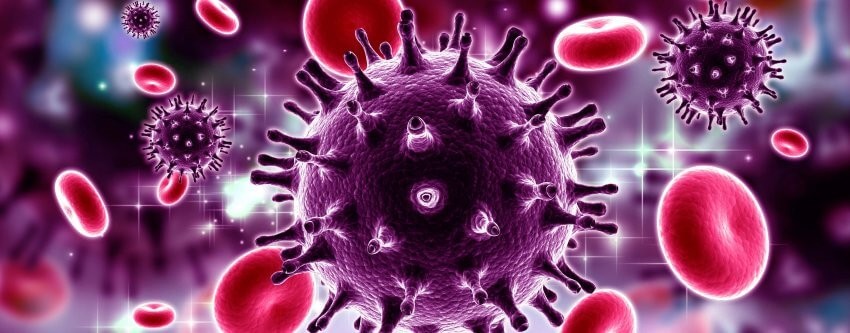
Lead image of HIV cell/Shutterstock
Next Lives Here
The University of Cincinnati is classified as a Research 1 institution by the Carnegie Commission and is ranked in the National Science Foundation's Top-35 public research universities. UC's medical, graduate and undergraduate students and faculty investigate problems and innovate solutions with real-world impact. Next Lives Here.
Related Stories
These teeny spiders are social media stars
August 28, 2026

The New York Times turned to a University of Cincinnati professor to explain the appeal of jumping spiders on social media.
An internal divide among unions on AI impacts the Wisconsin gubernatorial race
August 28, 2026

Anne Lofaso, a professor in the Donald P. Klekamp College of Law at UC, spoke with Wisconsin Public Radio, about the schism among unions over AI and whether it is a plus, a negative, or somewhere in between when looking at job creation.
On-site training in Speech & Hearing Clinic sets UC’s programs apart
August 27, 2026
At the University of Cincinnati’s Speech & Hearing Clinic, Doctor of Audiology and Speech-Language Pathology graduate students gain real-world experience while providing free speech and hearing services to the community.