Who’s qualified to serve on the U.S. Supreme Court?
UC College of Law Dean Verna Williams offers thoughts on President Biden’s options

President Joseph Biden has pledged to nominate the first Black woman to the U.S. Supreme Court to replace Justice Stephen Breyer, who announced plans to retire earlier this year. This promise has raised questions about the qualifications of the as yet unnamed nominee.
Since the U.S. Supreme Court first assembled in 1790, a total of 115 people have served as justices; of that number, 108 were white men. Only two African Americans, both males, along with one Hispanic woman and four white women have served on the high court in 232 years.
“The Supreme Court is a public institution; in a pluralistic society such as ours, it must contain diverse voices,” explains Verna Williams, Dean and Nippert Professor of Law at the University of Cincinnati College of Law. “A diverse bench is essential to the court’s credibility and legitimacy.”
“Justices decide cases affecting the lives of real people. In addition to business matters, the court resolves contentious issues dealing with criminal law, voting rights, as well as education and employment—matters that impact the spectrum of American life,” says Williams. “The court should include someone who not only understands the law but also how the law can reinforce subordination, just as the late Justice Thurgood Marshall did.”
Some commentators have said that President Biden’s vow to pick a Black woman will mean nominees will be less than qualified to take the seat on the bench.
“That argument ignores the fact that after civil rights laws prohibited the practices that excluded qualified women and people of color, there now is a deep bench of Black women with excellent credentials and qualifications,” says Williams. “These women include sitting jurists, law deans, legal academics, and practicing attorneys.”
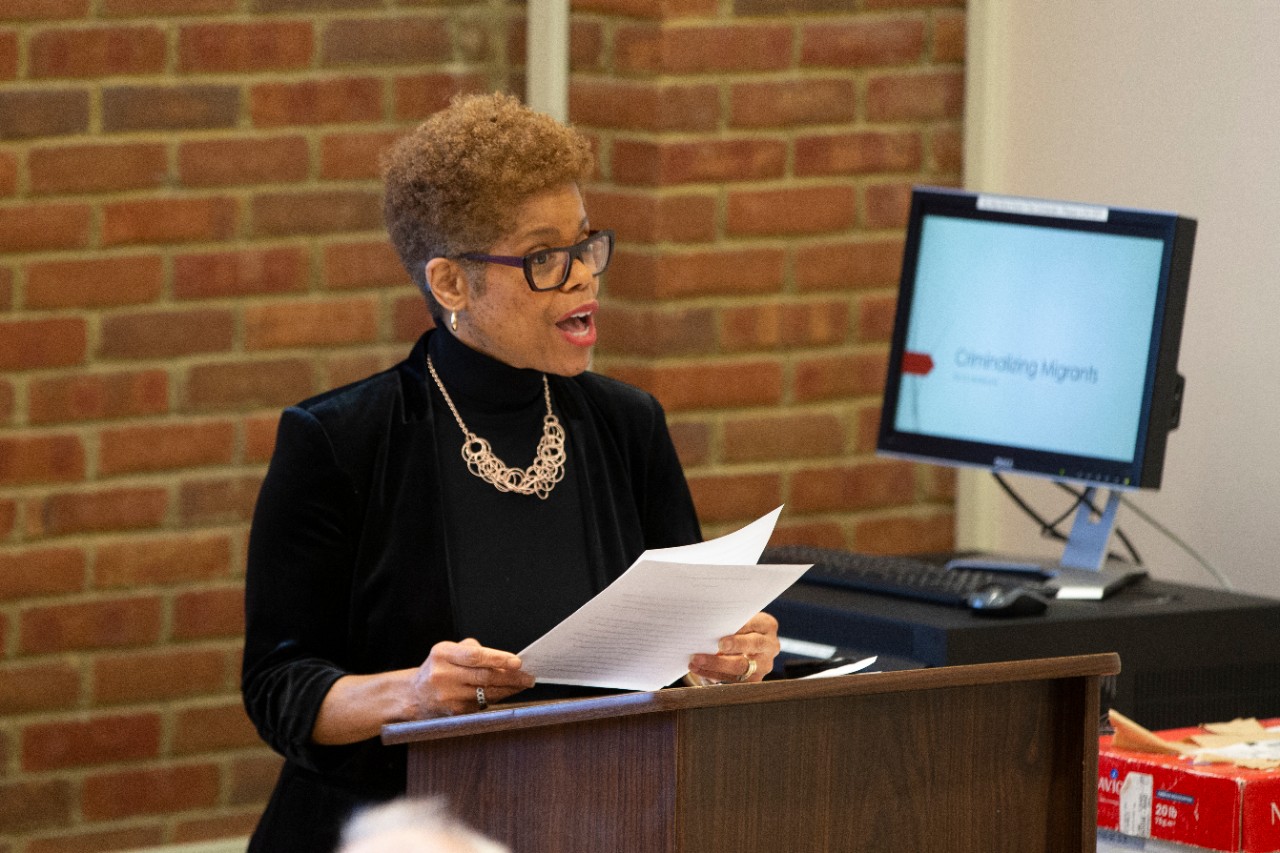
UC College of Law Dean Verna Williams shown at the podium. Photo by UC Creative + Brand.
The president has reportedly been studying materials from a list of prospective candidates, including Judge Ketanji Brown Jackson of the U.S. Court of Appeals for the District of Columbia Circuit, California Supreme Court Justice Leondra Kruger and South Carolina U.S. District Judge J. Michelle Childs.
“The current discourse suggests that despite all the progress we’ve made as a country, many people still see Black women as per se unqualified,” says Williams. “But if you look at any of the women President Biden is considering, they are eminently qualified under any metric.”
Williams says discussions about “merit” when discussing Supreme Court picks often ignore an ugly truth about an American system which has often denied people of color and women access to legal education or legal employment, as the former Justice Sandra Day O’Connor and the late Justice Ruth Bader Ginsburg could attest. Despite graduating from top law schools with stellar grades, law firms saw them as candidates for legal secretaries, not attorneys, says Williams.
There is an assumption that in the past race and sex simply played no part in appointing justices -- that only the most qualified were chosen, according to Williams.
“Because we have a system that relied on race or sex to deny access to avenues leading to the high court, race and sex have always been part of the picture even if we didn’t talk about them,” says Williams.
Williams is among a handful of Black women who have argued before the U.S. Supreme Court. She joined the UC faculty in 2001 and is a cum laude graduate of both Harvard Law School and Georgetown University, where she earned her bachelor’s degree. Before joining the College of Law, Dean Williams was vice president and director of educational opportunities at the National Women’s Law Center, where she focused on issues of gender equity in education.
During her time at the Center, Williams was lead counsel and successfully argued before the U.S. Supreme Court the case Davis v. Monroe County Board of Education, which established that Title IX requires educational institutions to respond to and address known complaints of student-to-student sexual harassment.
Williams also clerked for David S. Nelson, U.S. District Judge and the first African American to serve as a federal judge in Massachusetts. After the clerkship, she practiced law at the Washington, D.C., office of Sidley Austin and the U.S. Department of Justice.
Williams shared some thoughts about the Supreme Court nomination process with Politico. Read the full story online.
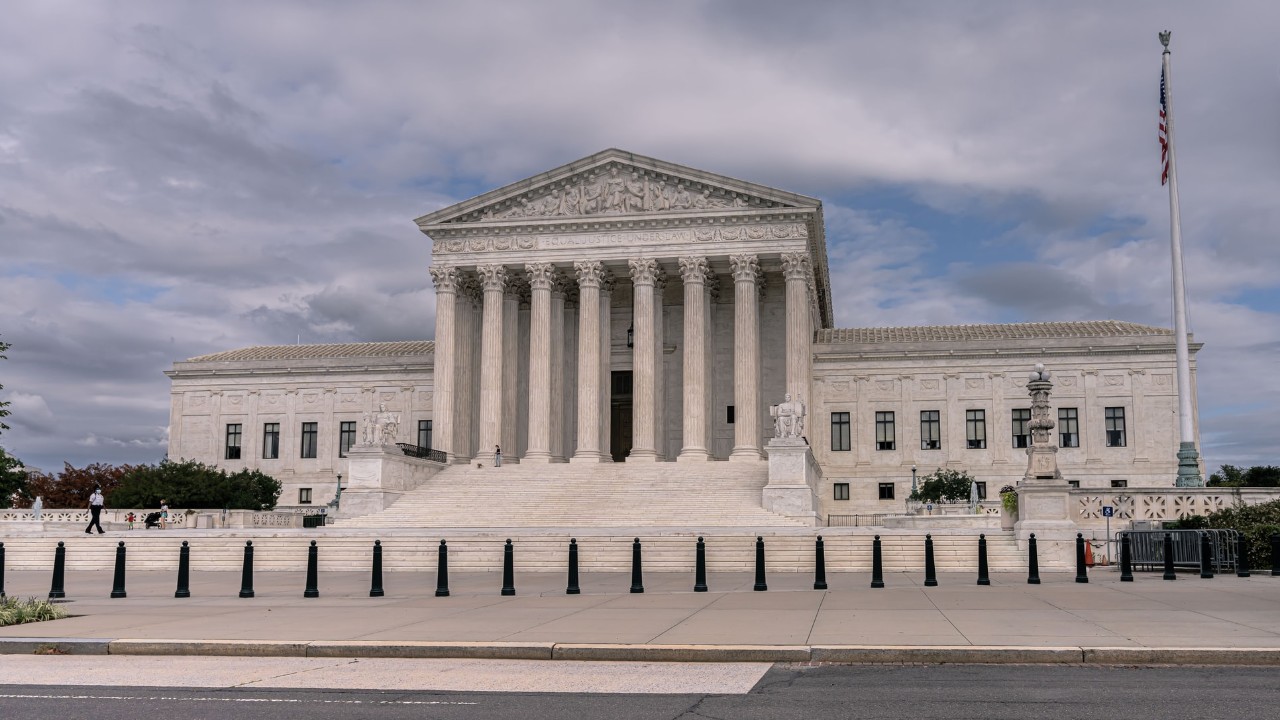
Featured image of the U.S. Supreme Court building courtesy of Unsplash.
Related Stories
Cancer Center plays key role in lab research, clinical trials for new pancreatic cancer drug
September 1, 2026

WLWT and WCPO highlighted the contributions of University of Cincinnati Cancer Center researchers that helped lead to the recent FDA approval of daraxonrasib, a new treatment for pancreatic cancer.
An expert pieced together this Roman document like a puzzle
September 1, 2026

National media highlighted a new project by UC Classics Assistant Professor Matthijs Wibier to piece together and translate an ancient Roman text from fragments buried in the desert for more than 1,600 years.
Her book drive is changing literacy in Cincinnati
August 31, 2026

WCPO highlights a nonprofit dedicated to childhood literacy that has offers co-op positions to UC students.