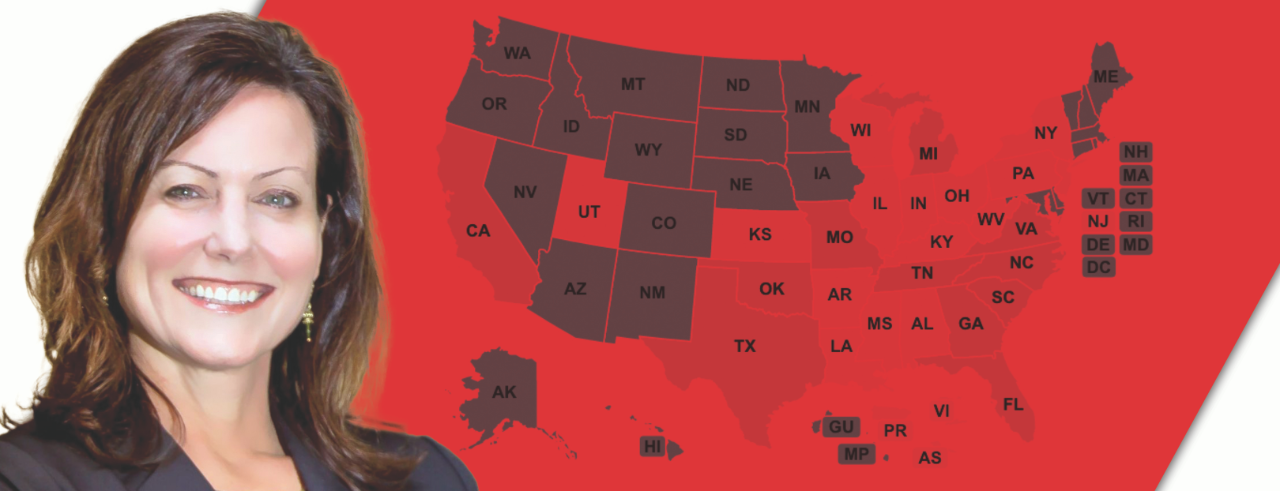
AANP President: NPs have proven their value, so let's update state laws
In a UC College of Nursing webinar, April Kapu advocates for nationwide full practice authority
Decades of research shows nurse practitioners provide quality, cost-effective and accessible health care — and this was reinforced during the pandemic. So, why not modernize laws across the U.S. to ensure nurses can practice to the full extent of their education, training and certification?
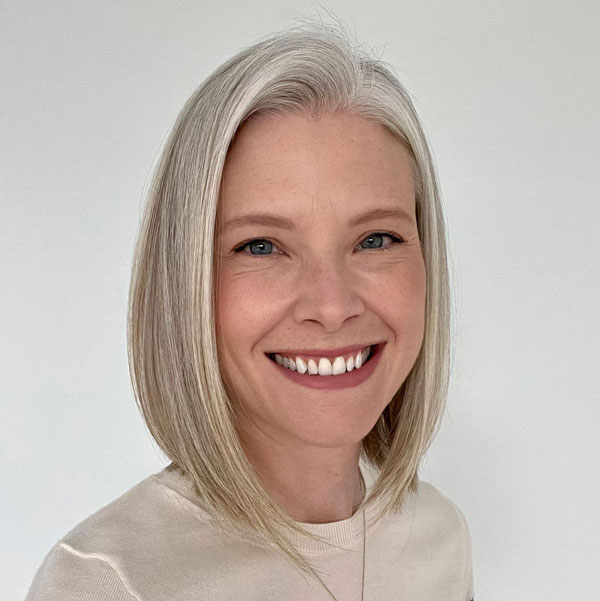
April Kapu, DNP, APRN, ACNP-BC, FAANP, FCCM, FAAN, president of the American Association of Nurse Practitioners stressed this in a March 29 webinar hosted by the University of Cincinnati College of Nursing. The webinar focused on full practice authority and its impact on nurse practitioners, patients and the health care system.
"What we know is that in the 24 states plus D.C. that have full practice authority, we are seeing better access to care and better patient outcomes, because there are no longer the unnecessary barriers to care and patients have full and direct access to nurse practitioner care," Kapu said.
Nurse practitioners must earn a master’s or doctorate degree from an accredited institution and pass rigorous national certification exams to practice. But the extent to which they can provide patient care is governed by states, and some states reduce or restrict nurse practitioners' authority. Kapu likens this to earning a driver's license, only to have restrictions on where you can drive or requirements that your neighbor regularly review your performance after you have driven.
"Those types of government-regulated restrictions are really unnecessary, because you have that license and the authority," Kapu says.
In states with full practice authority, nurse practitioners can diagnose patients, order and interpret diagnostic tests and initiate and manage treatments, which includes prescribing medications, under the exclusive licensure of a state's nursing board. Many states, amid surges in COVID-19 cases and a shortage of health workers, enacted executive orders that granted nurse practitioners temporary full practice authority with positive results.
"We needed everyone to be able to provide care to the front lines, and guess what, we provided great care, high quality care, accessible care," Kapu said.
In 2021, two states — Massachusetts and Delaware — made this a permanent change, but many others retired the executive orders. Kapu paraphrased research that said the return to restrictions in these states did not align with empirical evidence that shows an improvement in patient outcomes and care access where nurse practitioners have full practice authority.
"What makes sense is that we update and modernize our laws so that we can practice to the full extent and we can provide that very valuable care that we were able to provide for a short while during the executive orders," she said.
In closing, Kapu calls on nurse practitioners to speak up and share the meaning of full practice authority and evidence that supports removing barriers to practice.
Learn More
Considering becoming a nurse practitioner either at the master's or doctorate level? Discover UC College of Nursing's graduate programs, many of which are offered fully online.
Related Stories
Driven by curiosity, guided by care
May 14, 2026
Max Wilson, a University of Cincinnati College of Allied Health Sciences health sciences major on the pre-physician assistant track, found his path expanding beyond the classroom and into hands-on research focused on human performance and patient care.
New cohort of nursing students get ready to join co-ops
May 14, 2026
A new chapter is beginning for more than 100 University of Cincinnati College of Nursing rising seniors as they embark on one of the most distinctive experiences in undergraduate nursing education: the UC Nursing Co-op Program. The incoming cohort will fan out across Cincinnati's premier healthcare institutions, stepping into some of the most dynamic and specialized clinical environments in the region. Placement sites include UC Medical Center (UCMC), West Chester Hospital, Cincinnati Children's Hospital Medical Center (CCHMC) Burnet, College Hill, and Liberty campus.
Is a colonoscopy painful?
May 13, 2026

The University of Cincinnati's Susan Kais, MD, assistant professor of clinical medicine in the Division of Gastroenterology and Hepatology in the College of Medicine and UC Health gastroenterologist, recently appeared on the ARC Cincinnati morning program on Local 12/WKRC-TV to answer common questions from viewers about colonoscopies and to dispel myths.