Cincinnati.com: Greater Cincinnati lags in COVID-19 vaccines. So, should you get a second booster?
UC expert says healthy people over 65 should feel comfortable getting boosted

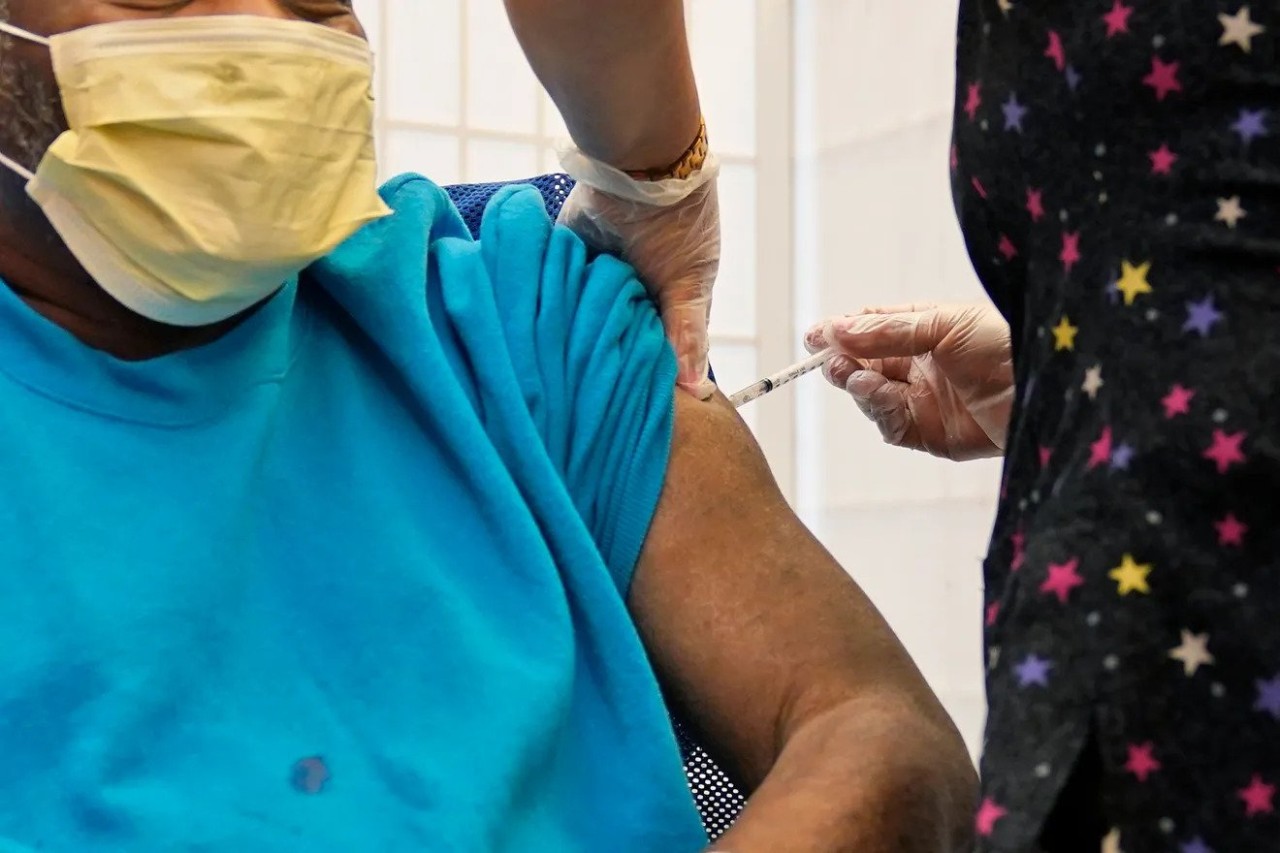
The Centers for Disease Control and Prevention is updating its recommendations to allow certain immunocompromised individuals and people over 50 to be eligible for another COVID-19 booster if four months have passed since their first. Cincinnati.com reported a handful of the 16 counties in the Cincinnati region lag in the nation in getting boosters, even though most counties lag the nation in vaccination rates. Two counties, Hamilton and Warren, have booster rates just above 50%.

Louito Edje, MD, associate dean of graduate medical education at the UC College of Medicine/Photo/Colleen Kelley/UC Creative + Brand
Cincinnati.com talked to several local experts for a story, including Louito Edje, MD, associate dean for graduate medical education at the UC College of Medicine.
Edje said anyone healthy and over 65 should feel comfortable getting boosted without consulting their primary care provider. But, she added, if there's any question about whether they're at high risk, they should talk to their doctor first.
As for those 50 to 65 years old, Edje said, "We just don't have the data to support everyone getting a fourth dose." But she pointed out that if a person is at high risk for COVID-19, an additional shot is a good idea.
Lead photo/Seth Wenig/AP
Next Lives Here
The University of Cincinnati is classified as a Research 1 institution by the Carnegie Commission and is ranked in the National Science Foundation's Top-35 public research universities. UC's medical, graduate and undergraduate students and faculty investigate problems and innovate solutions with real-world impact. Next Lives Here.
Related Stories
These teeny spiders are social media stars
August 28, 2026

The New York Times turned to a University of Cincinnati professor to explain the appeal of jumping spiders on social media.
An internal divide among unions on AI impacts the Wisconsin gubernatorial race
August 28, 2026

Anne Lofaso, a professor in the Donald P. Klekamp College of Law at UC, spoke with Wisconsin Public Radio, about the schism among unions over AI and whether it is a plus, a negative, or somewhere in between when looking at job creation.
On-site training in Speech & Hearing Clinic sets UC’s programs apart
August 27, 2026
At the University of Cincinnati’s Speech & Hearing Clinic, Doctor of Audiology and Speech-Language Pathology graduate students gain real-world experience while providing free speech and hearing services to the community.