UC research featured as cover story of neuroscience journal

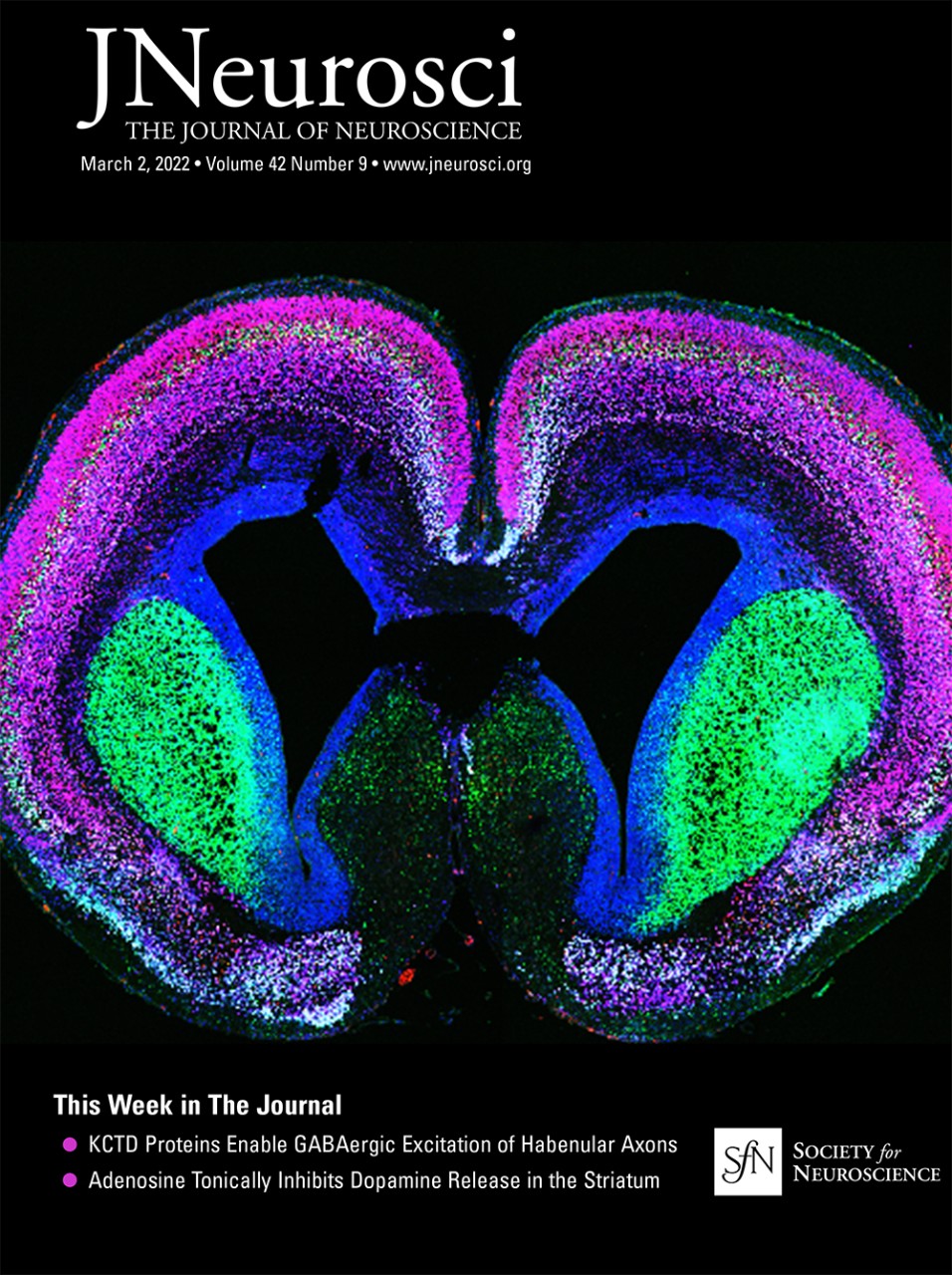
The cover of the March 2022 volume of the Journal of Neuroscience may at first glance look like a piece of pointillism artwork. Its brilliant colors of magenta, blue and green grabbed the eyes of the journal's editors, who decided to put it on the front page.
June Goto, PhD, assistant professor with the division of pediatric neurosurgery in the University of Cincinnati's College of Medicine and the study's main author, describes what the image actually is.
"This is a beautiful picture of a normal-looking brain before the onset of hydrocephalus," Goto says. "The colors indicate the different layers of cortical cerebral cortex."
The chosen image shows a section of the brain from a mouse 18 days after fertilization (E18). At this point, the mouse's cortical layers are well retained, but will start to thin after its birth.
Goto and Francesco Mangano, DO, professor and Mary Jane and Bob Tritsch Chair of Pediatric Neurosurgery and also one of the study's authors, picked several images for submission to the journal, but ultimately decided on the featured image.
"It was very surprising," Goto says of her first cover article.

Journal of Neuroscience Features CCHMC Research on Cover. Courtesy of Journal of Neuroscience.
The study itself looked at the effect of anti-inflammatory drug treatment on a neonatal hydrocephalus model. Although it did not largely improve the ventricular site, it did significantly improve the neuronal cell development.
"It was a great surprise for us because it had such drastic functional and developmental effect," said Goto, "even though you don't see much improvement in the anatomy itself."
The results of this study excite Goto, who says this published article is just the beginning.
"I'd like to address whether using anti-inflammatory drugs can actually improve the neurological symptoms of hydrocephalus," she said.
Goto will investigate that next and hopes to publish the results within two years.
Featured photo at top courtesy of the Journal of Neuroscience.
Related Stories
UC radiation oncologist speaks with Local 12 news about clinical trial for head and neck cancer treatment
August 10, 2026

Dr. Sara Medek, a UC radiation oncology professor, speaks with Local 12 news about a new clinical trial aimed at reducing radiation in certain areas while still treating cancer effectively but with fewer painful side effects.
Cancer Center director charts future based on collaboration, AI
August 10, 2026

David Gius, MD, PhD, was featured in a Cincinnati Business Courier article and The Cancer Letter’s “The Directors" podcast discussing his priorities and goals as he recently took the helm as director of the University of Cincinnati Cancer Center.
UC graduates cross finish line at commencement
August 7, 2026
The University of Cincinnati recognized 2,125 graduates in two ceremonies at summer commencement Friday on campus at Fifth Third Arena.