UC research creates Kidney Transplant Equity Index
Goal is to establish best practices in kidney transplant

New research out of the University of Cincinnati established the Kidney Transplant Equity Index (KTEI), examining the number of minority patients transplanted at a kidney transplant center relative to the prevalence of minority patients on dialysis in each center’s health service area.
From 2013-18, custom databases from the United States Renal Data System and United Network for Organ Sharing were merged to calculate the KTEI. Markers of socioeconomic status, obtained from the U.S. Census Bureau, and recipient outcomes were compared between high KTEI centers and low KTEI centers.
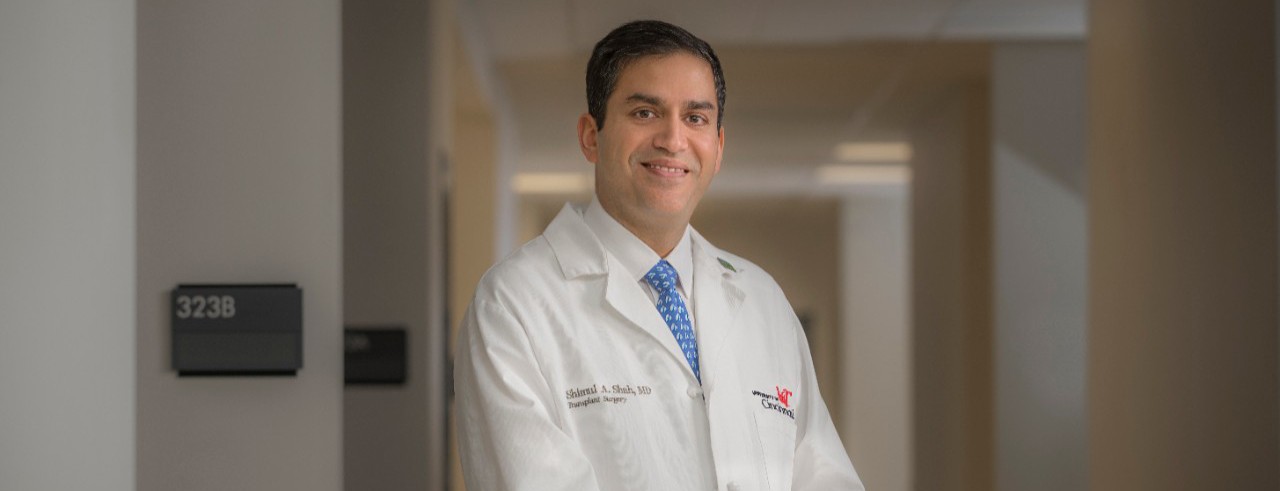
“This is a group in dire need of care, so bringing awareness to this is very important,” says Shimul Shah, MD, the James and Catherine Orr Endowed Chair of Liver Transplantation and professor in the Department of Surgery in the UC College of Medicine. “Our ultimate goal here is to make this a topic that people are looking at and understand for their programs and why it's important. Then secondly [we are] trying to figure out what are the differences between programs that are doing well versus programs that aren't doing well and trying to help the programs that aren't doing well get to that level.”
The data analysis examined 249 unique transplant centers in the United States that performed almost 112,000 transplants during the study period.

Aaron Delman, MD, clinical instructor in the Department of Surgery/Photo/Steve Wiesner/Department of Surgery
“Unfortunately, disparities based on race and ethnicity exist throughout the entire transplant process, starting with delays in diagnosis and continuing with delays in referral for transplant evaluation,” says Aaron Delman, MD, a clinical instructor in the Department of Surgery in the UC College of Medicine. “We wanted to take a closer look at how well each individual center gets patients through that process and closer to their transplant faster.”
Delman says the research team wanted to find out more about the centers that did a good job of transplanting in lower socioeconomic and racial and ethnic minority patients.
“Do they have better connections with their nephrologists, do they have better connections with the community, is their team as a whole more understanding from a social work perspective?” asks Delman. “We want to go to those centers and figure out what they are doing better than everybody else and then translate that nationally. If a hospital system sees that there are tangible interventions to improve their KTEI, they might be more willing to provide the financial capital to increase investment in programs that improve equitable access to transplantation.”
The KTEI is the first metric to quantify minority access to kidney transplant incorporating the pre-listing end-stage renal disease prevalence individualized to transplant centers. KTEIs uncover significant national variation in transplant practices and identify highly equitable centers.
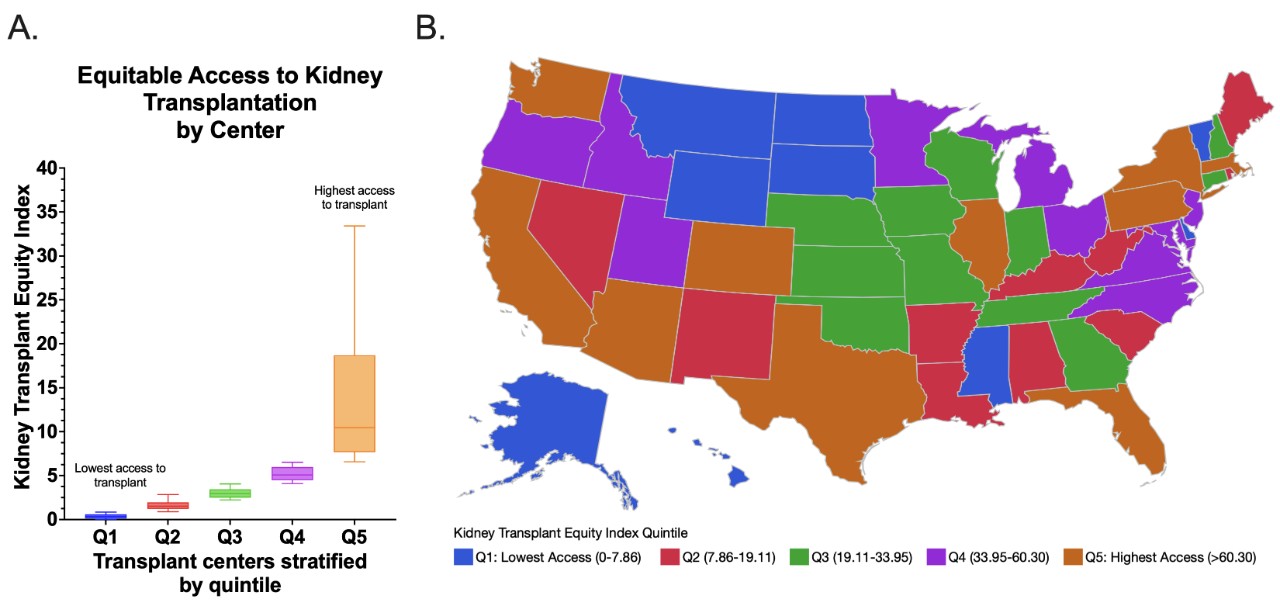
Equitable access to kidney transplantation by center
Delman says the next tangible step is to build a team of people interested in this across the country and then work with the United Network for Organ Sharing to establish best practices. That process would include site visits, surveys and mixed method ways of evaluating what the top centers are doing well in providing good access to transplant for their community and how that can be scaled up.
“We can learn from the best centers across the country,” Delman says. “We know right now everyone’s practices are different. We want to figure out who's doing it well and how, and then translate that nationally. It’s not about who's good and who's bad, it's really about how do we all get better — how do we all improve.”
Impact Lives Here
The University of Cincinnati is leading public urban universities into a new era of innovation and impact. Our faculty, staff and students are saving lives, changing outcomes and bending the future in our city's direction. Next Lives Here.
Related Stories
On-site training in Speech & Hearing Clinic sets UC’s programs apart
August 27, 2026
At the University of Cincinnati’s Speech & Hearing Clinic, Doctor of Audiology and Speech-Language Pathology graduate students gain real-world experience while providing free speech and hearing services to the community.
Developing the cities of tomorrow through pedestrian urbanism
August 27, 2026
Hyesun Jeong’s internationally recognized book explores how pedestrian-friendly design, culture and everyday urban life can create more sustainable cities, while her teaching and community-engaged design work bring those ideas from research into practice.
DAAP professor and artist turns grass clippings into biodegradable art
August 27, 2026
Through biodegradable bioplastic made from grass clippings, Supermrin shows how creativity can connect science, sustainability and everyday life.