Spectrum News: New research looks at racial disparities in kidney transplants
UC research shows barriers for minority transplant patients

Research out of the University of Cincinnati established the Kidney Transplant Equity Index (KTEI), examining the number of minority patients transplanted at a kidney transplant center relative to the prevalence of minority patients on dialysis in each center’s health service area.
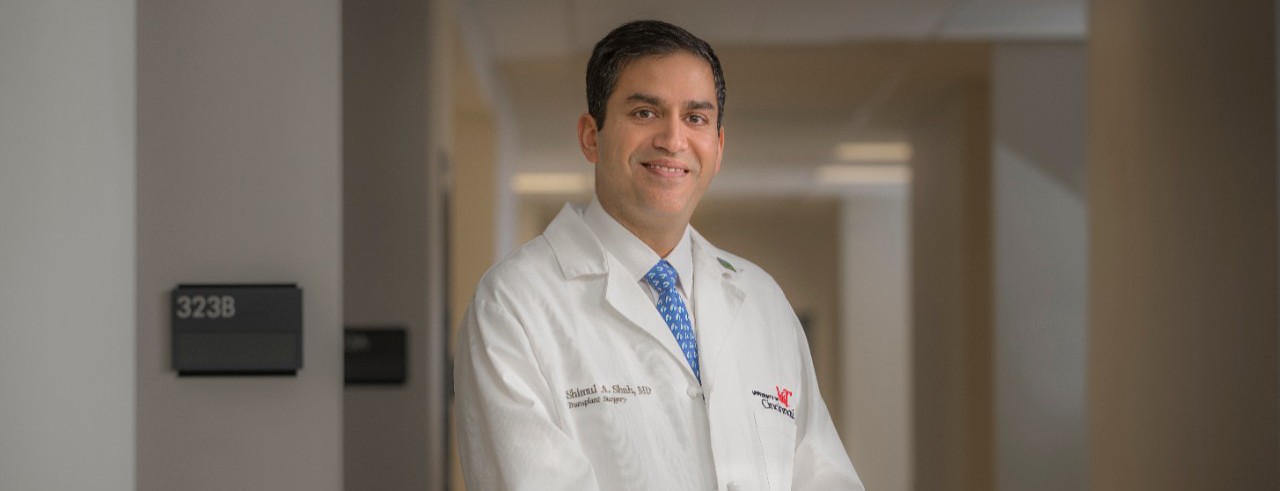
Spectrum News produced a story covering the study, interviewing Shimul Shah, MD, the James and Catherine Orr Endowed Chair of Liver Transplantation and professor in the Department of Surgery in the UC College of Medicine. Shah's research discovered transplant centers are one of the determining factors for minorities waiting to get a transplant.
“Are there things that we are doing that are working?” said Shah. “Are there things that we’re doing that aren’t working, and how can we learn best practices? So those are kind of the next steps for our research over the next coming years."
If federal funding is approved, Shah and his team will work on a five-year project to learn best practices to help minorities get their kidney transplants.
Next Lives Here
The University of Cincinnati is classified as a Research 1 institution by the Carnegie Commission and is ranked in the National Science Foundation's Top-35 public research universities. UC's graduate students and faculty investigate problems and innovate solutions with real-world impact. Next Lives Here.
Related Stories
Cancer Center plays key role in lab research, clinical trials for new pancreatic cancer drug
September 1, 2026

WLWT and WCPO highlighted the contributions of University of Cincinnati Cancer Center researchers that helped lead to the recent FDA approval of daraxonrasib, a new treatment for pancreatic cancer.
An expert pieced together this Roman document like a puzzle
September 1, 2026

National media highlighted a new project by UC Classics Assistant Professor Matthijs Wibier to piece together and translate an ancient Roman text from fragments buried in the desert for more than 1,600 years.
Cancer Center physician receives $150,000 New Investigator Research Grant to study treatment-resistant leukemia
September 1, 2026
The University of Cincinnati Cancer Center’s Sarah Skuli, MD, PhD, received a two‑year, $150,000 Leukemia Research Foundation New Investigator Grant to study TP53‑mutated leukemia, a treatment‑resistant subtype with very poor outcomes.