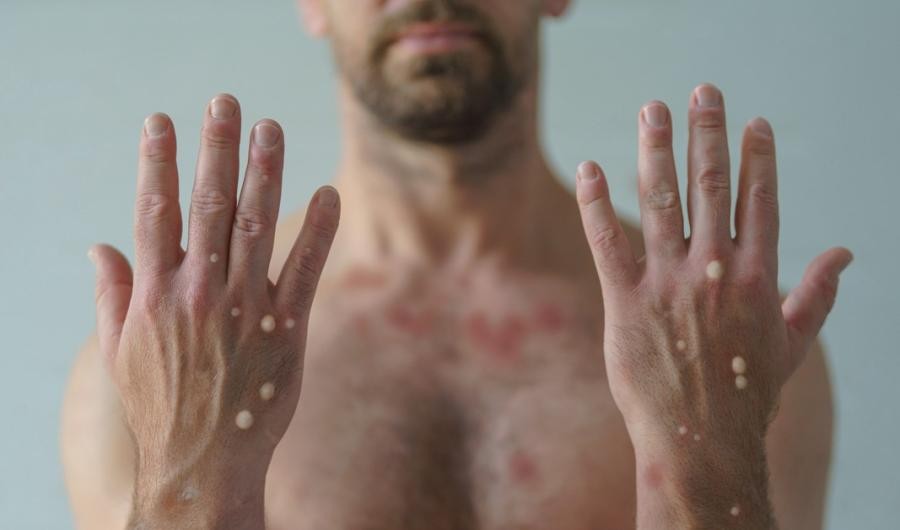
NPR: Zoonotic diseases like COVID-19 and monkeypox will become more common, experts say
UC expert says public policy decisions will need to address the spread of these diseases

Cases of monkeypox are on the rise around world, reaching more than 67,000, including more than 25,000 in the United States. NPR reported that researchers say these types of viruses, known as zoonotic diseases, or ones that spread between humans and animals, will become increasingly commonplace as factors such as the destruction of animal habitats and human expansion into previously uninhabited areas intensify.
In a story on zoonotic diseases, NPR cited several experts including Carl Fichtenbaum, MD, of the Division of Infectious Diseases in the Department of Internal Medicine at the UC College of Medicine.

Carl Fichtenbaum, MD, of the Division of Infectious Diseases at the UC College of Medicine/Photo/Joe Fuqua II/UC Marketing + Brand
According to the Centers for Disease Control and Prevention, monkeypox was first found in monkeys in 1958 and in humans in 1970.
Factors such as deforestation, population growth and animal breeding have removed the boundaries between where humans and wild animals live, bringing them into closer contact.
Since 1990, about 1 billion acres of forest have been cleared. Besides the impact on the climate, deforestation means a loss of habitat that often ends up driving wildlife nearer to people.
Fichtenbaum said those changing patterns in animal migration and reproduction can influence how pathogens behave in their natural host, possibly becoming more contagious in the process.
"Depending on the particular germ, when it has an opportunity to do this multiple times, the germ adapts to the new species," he said.
Fichtenbaum agreed with another expert cited in the story who said scientists must survey zoonotic diseases around the world because no one knows which region is going to trigger the next pandemic. He added that with the thousands of germs in the ecosphere, it's hard to know which ones will spread to pandemic-level proportions.
"I think it would be really disingenuous if someone says, 'Well, I can predict that this germ is going to be the next big germ,'" he said. "I think we're not very good at that, in the same way that we're not very good at predicting earthquakes."
Next Lives Here
The University of Cincinnati is classified as a Research 1 institution by the Carnegie Commission and is ranked in the National Science Foundation's Top-35 public research universities. UC's graduate students and faculty investigate problems and innovate solutions with real-world impact. Next Lives Here.
Related Stories
Is Cincinnati building new homes fast enough?
September 22, 2026

Gary Painter, professor and academic director of the Real Estate Center at UC's Lindner College of Business, offers comments on affordability issues in Cincinnati.
'Discovery, mentorship, momentum': UC College of Medicine's graduate programs celebrate year of success
September 22, 2026
From new mentorship honors to a growing research pipeline, see how the University of Cincinnati College of Medicine's graduate programs made this a standout year.
Tina Cheng, MD, receives American Academy of Pediatrics’ highest honor
September 22, 2026
UC Pediatrics chair Tina Cheng, MD, has received the American Academy of Pediatrics' highest honor for her decades of advancing child health.