UC Brain Tumor Center hosts Clinical Research Retreat
The University of Cincinnati Brain Tumor Center (BTC) held its second-annual Clinical Research Retreat on Sept. 30.
Hosted by Soma Sengupta MD, PhD, FRCP, associate director of the BTC, in collaboration with director Mario Zuccarello, MD, and associate director David Plas, PhD, the virtual event brought researchers from around the country together to discuss advancements in neuro-oncology clinical research. This was the first year the retreat was a CME event.
“It fosters collaborations in clinical trials and research and ultimately helps patients and their families,” said Sengupta, associate professor in neurology, director of neuro-oncology clinical trials and a UC Health neuro-oncologist, funded by the Harold C. Schott Endowed Chair in Molecular Therapeutics (Neurosurgery) and the Pam and Tom Mischell Funds.
The event included presentations from researchers representing 10 institutions across the country.
Presentations from UC researchers included Kyle Wang, MD, on a multi-institutional study exploring radiation necrosis in the era of immunotherapy; Norberto Andaluz, MD, on hearing preservation strategies in acoustic neuroma surgery; Lalanthica Yogendran, MD, on much-needed work in advance care planning and advanced directive in patients with glioblastomas; and Sengupta on the ARC of glioblastoma collaboration.
Cincinnati Children’s Hospital Medical Center’s Richard T. Graham, MD, spoke on targeted molecular therapy for pediatric high-grade tumors with fusions.
Ohio State University researcher presentations included Clement Pillainayagam, MD, and his team on new advances and care pathways for patients with Von Hippel-Lindau disease; and Joshua Palmer, MD, on various radiation trials and strategies to improve quality of life and cognition for patients with brain metastasis.
MD Anderson Cancer Center’s Vidya Gopalakrishnan, PhD, presented on a novel therapy her group recently discovered for patients with diffuse midline gliomas.
Jonathan H. Sherman, MD, FAANS, FACS, of West Virginia University, talked about the patient-centric approach of virtual reality and demonstrated pre- and post-operative changes in patients’ brain tumor surgeries.
Cleveland Clinic presentations included Juyeun Lee, PhD, DVM, on sex differences in the glioblastoma immune response and opportunities for more effective combination immunotherapies; and David Peereboom, MD, discussing the landscape of neuro-oncology trials and potential possible collaborations with other institutions. Sengupta said the UC neuro-oncology team will be collaborating with Cleveland Clinic researchers on a recurrent meningioma trial.
The University of Wisconsin’s Mahua Dey, MD, presented data on radiation-treated brain metastases and the molecular pathways involved after radiation. Costas Arvanitis, PhD, of Georgia Tech, discussed focused ultrasound technology in glioblastoma.
Santosh Kesari, MD, PhD, of Pacific Neuroscience Institute and Saint John’s Cancer Institute, discussed personalized medicine for brain cancer, the landscape of targeted agents in primary tumors and the path researchers should be taking moving forward.
University of Southern California Keck School of Medicine researcher Josh Neman-Ebrahim, PhD, spoke on breast-brain metastasis and breast cancer brain fog, and USC’s Frances Chow, MD, presented on an upcoming clinical trial and neuro-oncology drug development through the NCI Cancer Therapy Evaluation Program.
Sengupta said there are plans next year to combine the Clinical Research Retreat with the Schott Chair Lecture to create a one-day major event in 2023.
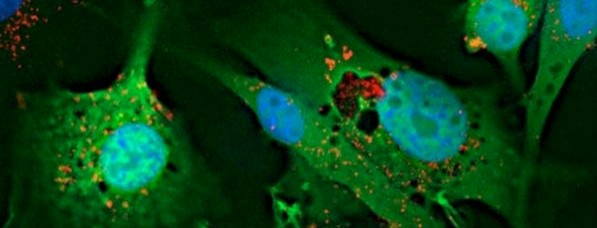
Featured photo at top of glioblastoma cells in culture courtesy of National Cancer Institute.
Related Stories
Get to know CCM’s newest faculty and staff members
September 2, 2026
UC’s College-Conservatory of Music will welcome a variety of new faculty and staff members to its roster of distinguished performing and media arts experts, researchers and educators this fall.
Cancer Center plays key role in lab research, clinical trials for new pancreatic cancer drug
September 1, 2026

WLWT and WCPO highlighted the contributions of University of Cincinnati Cancer Center researchers that helped lead to the recent FDA approval of daraxonrasib, a new treatment for pancreatic cancer.
An expert pieced together this Roman document like a puzzle
September 1, 2026

National media highlighted a new project by UC Classics Assistant Professor Matthijs Wibier to piece together and translate an ancient Roman text from fragments buried in the desert for more than 1,600 years.