
Fox19: Getting your sleep pattern back on track after daylight saving time
UC sleep medicine expert provides tips for getting your body acclimated to the time change

Daylight saving time ended this past week, as we turned the clocks back an hour. The time change each spring and fall can have implications on our health.
According to a 2020 study from the National Institute of Health, the annual beginning and ending of daylight saving time impacts a quarter of the world population and disturbs people's work and rest schedules and "possibly the body's biological clock."
In a story on the time change, Fox19 TV interviewed Ann Romaker, MD, of the Division of Pulmonary, Critical Care and Sleep Medicine in the UC College of Medicine, and the director of the UC Health Sleep Medicine Center.
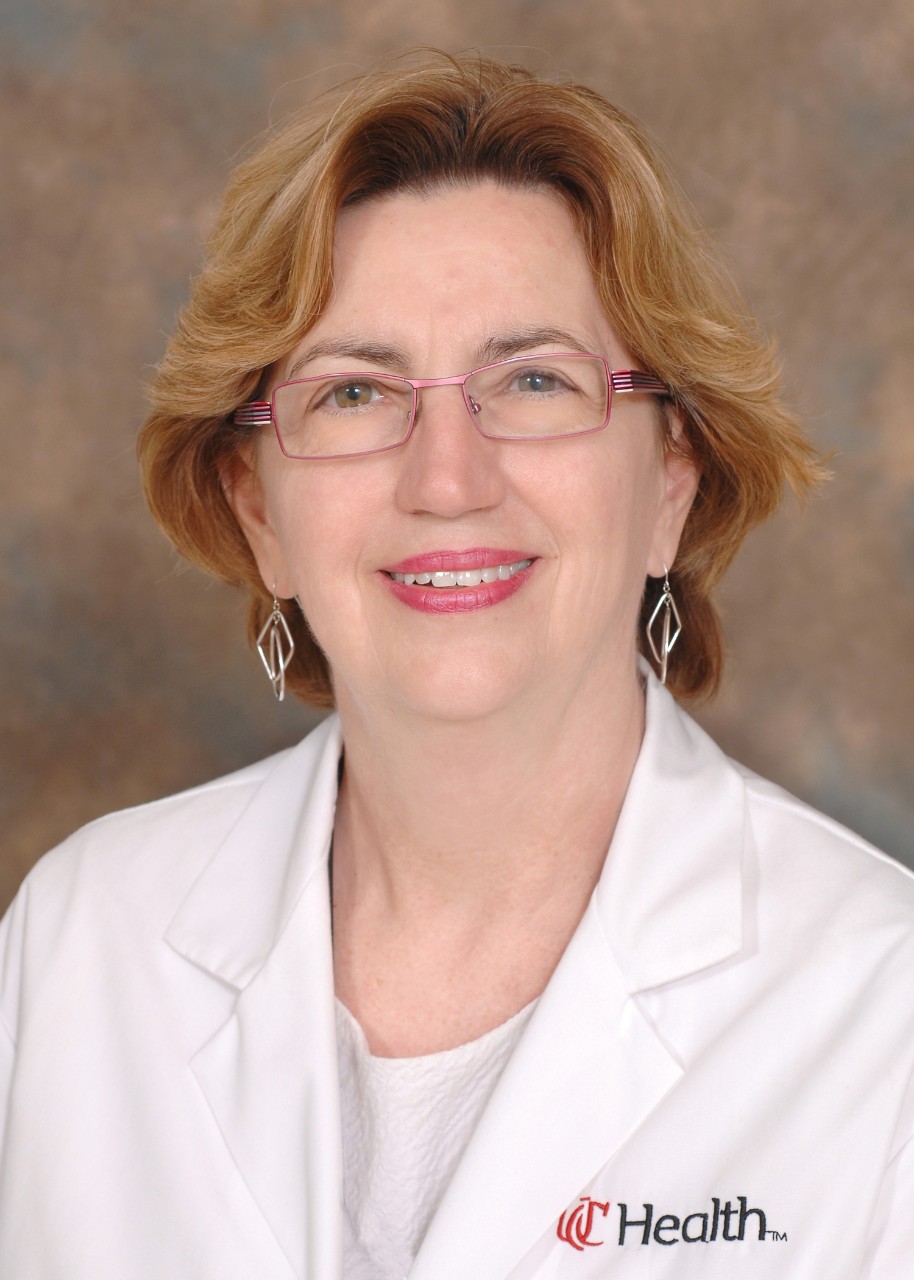
Ann Romaker, MD, of the Division of Pulmonary, Critical Care and Sleep Medicine at the UC College of Medicine/Photo/Colleen Kelley/UC Marketing + Brand
"The best thing to do is to get sun exposure when we first get up, and for those of us who stay indoors, when we first get up, get light exposure and turn on all the lights in the room that we're in, so we have bright light for at least for first 30-60 minutes when we get up," Romaker said. "That signal of the light first thing in the morning is what tells us to be sleepy about 16 hours later and helps us get trained to the new clocks."
She suggested for people who have trouble making that adjustment, taking melatonin three to five hours before going to bed.
She said the time change can result in health problems for a lot of people.
"Heart and strokes both go up in the weeks after we make the change," Romaker said. "It's especially prominent in the spring but it happens after both changes as does an increase in accidents. People are driving at a different time, the sun is hitting at a different angle than they were used to. There's lots of things that we need to pay attention to."
Watch the entire interview here.
Lead image: Gerd Altmann/Pixabay
Related Stories
Get to know CCM’s newest faculty and staff members
July 29, 2026
UC’s College-Conservatory of Music will welcome a variety of new faculty and staff members to its roster of distinguished performing and media arts experts, researchers and educators this fall.
UC co-op helps build career pathways at AtriCure
July 28, 2026
AtriCure, a global medical device company in Mason, Ohio, is UC’s largest biomedical engineering co-op employer, turning University of Cincinnati co-op students into full-time innovators.
CCM welcomes new musical theatre faculty member Avery Bargassé
July 28, 2026
UC College-Conservatory of Music Dean Pete Jutras has announced the appointment of Avery Bargassé as CCM's new Assistant Professor Educator of Musical Theatre Voice. His faculty appointment officially begins on Aug. 15, 2026. Bargassé is a versatile vocalist, recording artist and voice teacher whose career spans television, popular music and classical singing. He approaches teaching from a whole-person perspective, helping students develop healthy, flexible technique that supports expressive communication across styles.