
Ohio outlaws ubiquitous pear trees
Once a suburban favorite, flowering pear trees are driving out native plants in Eastern forests

Ohio this year has banned the sale of Callery pear trees that are crowding out native wild plants in many forests across the country.
Ohio is the first of several states taking steps to eradicate the once-popular ornamental trees, known for their white spring blossoms. A similar ban will go into effect in South Carolina starting in 2024.
In 2018, Ohio gave landscapers, growers, and nurseries five years of notice that the ban was coming so they could replace their inventories without causing financial harm.
University of Cincinnati biologist Theresa Culley said once established, pear trees are hard to remove. UC manages a southwest Ohio forest known as the Harris Benedict Nature Preserve, where Callery pear trees are sprouting in clearings.
“Seedlings of pear trees are now also showing up in the forest understory. They are very difficult to remove because they have a very long taproot,” Culley said.
Culley said the pear trees grow quickly and tolerate a variety of wet, dry, sunny or shady conditions.
“They’re extremely hardy. They can grow pretty much anywhere. They have abundant flowers that attract all kinds of pollinators so they end up with abundant fruit that birds disperse,” said Culley, who is head of UC’s Department of Biological Sciences.
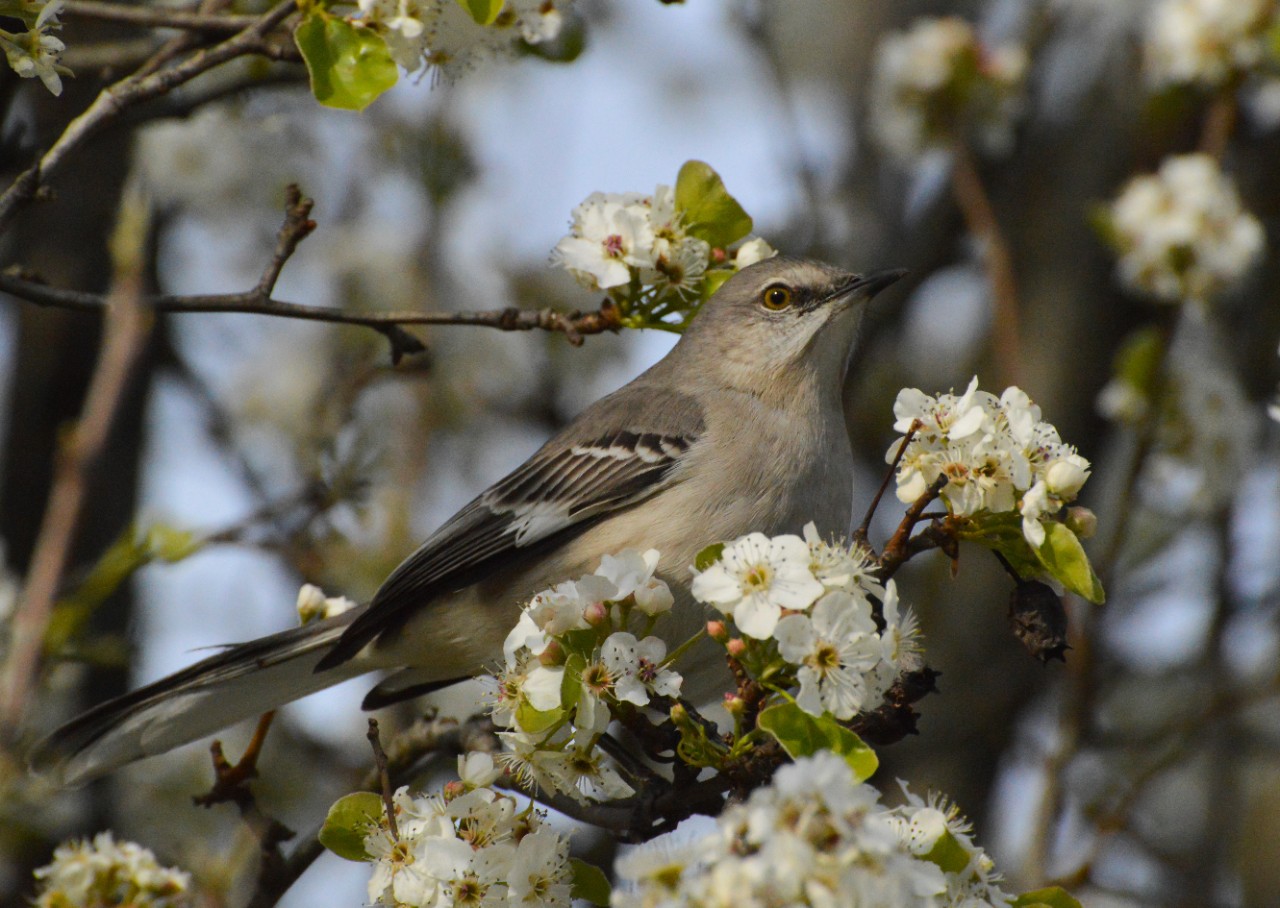
A mockingbird sits in a Callery pear tree. Birds help disperse seeds from neighborhoods to forests. Photo/Michael Miller
Culley serves on the Ohio Invasive Plants Council and also is a member of the Ohio Invasive Plant Advisory Committee, which advises the Ohio Department of Agriculture on regulation.
To date, the committee has identified more than three dozen nonnative plants that are not permitted to be sold or planted in the state because of their potential to cause economic or environmental harm. These include purple loosestrife, Japanese stiltgrass and amur honeysuckle, another plant that is taking over many Ohio forests.
“We’re proud to be the first to deal with this invasive plant,” said Jennifer Windus, president of the Ohio Invasive Plants Council. “South Carolina is next. I think we started something.”
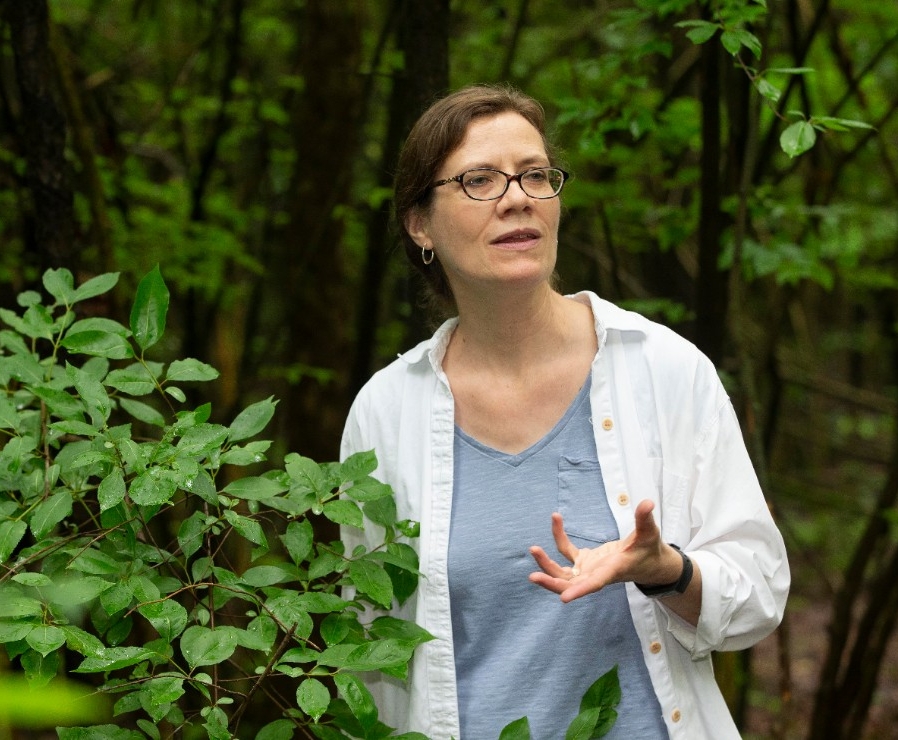
UC biologist Theresa Culley says Callery pear trees are growing wild in forests across the eastern United States. Photo/Joseph Fuqua II/UC
William Kyle Natorp, president and CEO of the Cincinnati nursery Natorp’s, said many property owners have already replaced pear trees.
“Customer demand disappeared when it was realized that this plant was an invasive issue. Our nursery stopped producing these trees. I think most nurseries did the same,” he said.
Natorp said growers offer a wide selection of alternatives to meet any growing condition.
“Ideally, a mix of trees is the best choice when planting multiple plants. This diversity helps protect against a future unknown disease or pest like the emerald ash borer,” Natorp said.
The emerald ash borer is a nonnative, invasive beetle that has killed tens of millions of trees across 30 states, according to the U.S. Department of Agriculture.
South Carolina and Pennsylvania are pursuing similar measures to curb the spread of pear trees.
“Other states have already responded similarly to Ohio and I would expect this to continue countrywide,” Natorp said.
UC’s Culley said Ohio is watching for other looming threats from nonnative, invasive species. Warmer winters mean some plants are creeping farther north. Culley said she has a personal interest in preventing the spread of invasive species.
“I’m also a gardener, so I want to know what to plant and not harm our natural areas,” she said.
Featured image at top: UC professor Theresa Culley serves on the Ohio Invasive Plants Council. Photo/Joseph Fuqua II/UC

Theresa Culley, head of UC's Department of Biological Sciences, stands in a grove of Callery pear trees at the Harris Benedict Nature Preserve. Photo/Joseph Fuqua II/UC
Impact Lives Here
The University of Cincinnati is classified as a Research 1 institution by the Carnegie Commission and is ranked in the National Science Foundation's Top-35 public research universities. UC's graduate students and faculty investigate problems and innovate solutions with real-world impact. Next Lives Here.
Related Stories
UC study correlates increased physical activity with slower Parkinson’s progression
October 7, 2026
Higher levels of physical activity were associated with slower declines in thinking and memory as well as slower worsening of movement symptoms for people with Parkinson’s disease, according to a new study led by University of Cincinnati researchers published Oct. 7, 2026, in Neurology.
Should we appreciate bats?
October 6, 2026
UC associate professor Joe Johnson explains why bats matter during Bat Appreciation Month and invites the public to Ohio Bat Fest, where families can learn about bat conservation, ecology and wildlife research.
UC Clermont's Valentine Johns expands student support through AI
October 6, 2026
Valentine Johns, PhD, associate director of the UC Clermont College Learning Commons, was inspired to champion artificial intelligence through its potential to make academic support more accessible and responsive to students’ needs.