National publications highlight UC stroke research

A number of national news publications highlighted research presented by the University of Cincinnati's Eva Mistry, MBBS, at the International Stroke Conference 2023.
Mistry presented the results of the BEST-II trial, which found using blood pressure medications to lower the top number of blood pressure readings (systolic blood pressure) may not be safe or effective among people who have an acute ischemic stroke and undergo a successful mechanical clot removal.
"This line of inquiry is probably not worth pursuing," Mistry, assistant professor in the Department of Neurology and Rehabilitation medicine in UC’s College of Medicine and a UC Health physician at the UC Gardner Neuroscience Institute, told Medscape. "If lowering blood pressure improves outcomes, that improvement is fairly marginal, and there are trends that suggest that, in fact, it might be harmful."
Read the Neurology Live article.
Read more about Mistry's research.
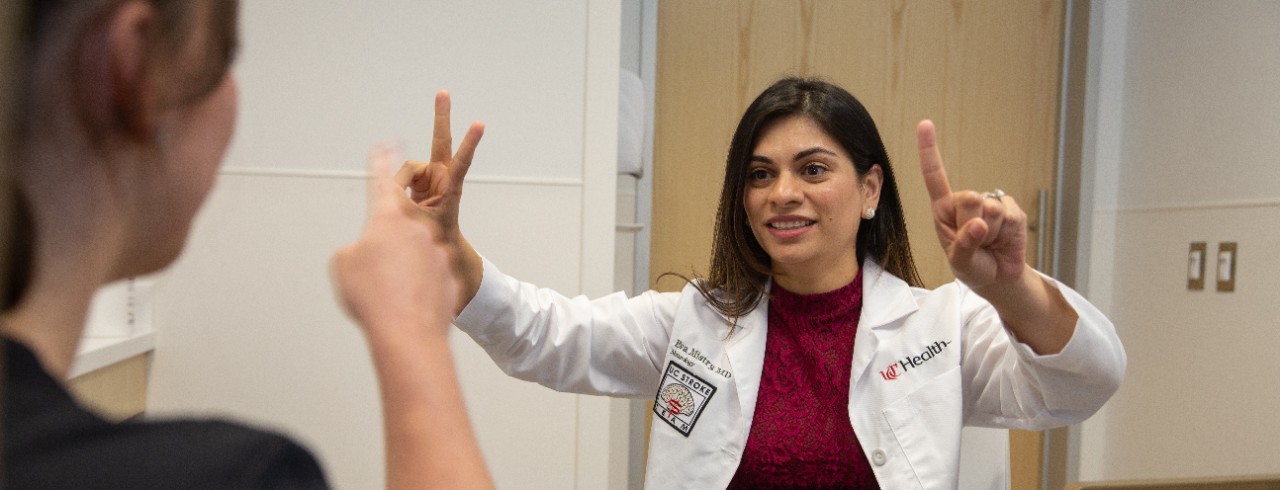
Featured photo at top of Dr. Mistry with a patient. Photo/Andrew Higley/UC Marketing + Brand.
Related Stories
Bidirectional link between oral, kidney health calls for patient education, access
August 4, 2026

Despite growing awareness of the connection between oral health and chronic health conditions, patient awareness and access to dental care remain limited, according to University of Cincinnati experts who recently spoke with Healio | Nephrology News & Issues.
'Be human in it': UC College of Medicine welcomes Class of 2030 at 31st White Coat Ceremony
August 4, 2026
The University of Cincinnati College of Medicine welcomed 185 first-year medical students in the Class of 2030 at the 31st annual White Coat Ceremony.
UC-built detector at CERN looks for enticing evidence to explain dark matter
August 4, 2026
A physicist from the University of Cincinnati and his research partners from around the world conducted an experiment at CERN’s Large Hadron Collider in Switzerland to look for evidence that might help explain one of science’s most baffling questions: dark matter.