Conecta: 10 facts you may not know about hearing loss
UC expert says preventing hearing loss starts at an early age

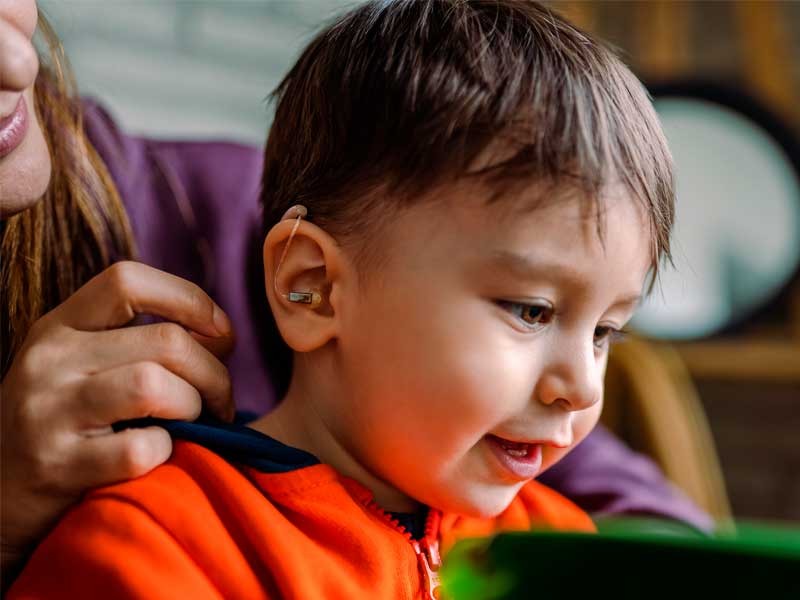
The World Health Organization estimates that by 2050 almost 2.5 billion people will have some degree of hearing loss, while 700 million will require some form of rehabilitation. In a story published by Conecta, a media outlet from Mexico, Brian Earl, PhD, of the Department of Communication Sciences and Disorders at the UC College of Allied Health Sciences said there are solutions and technology to treat hearing loss, but there is still much to be done to make those remedies accessible to all.
Conecta reported that as people get older, hearing loss related to aging is inevitable. However, Earl said that there are steps that can be taken to something about its progression.
"We can prevent hearing loss from an early age by taking care of the volume with which we listen to music or using earplugs if we work in noisy environments," Earl said.

Brian Earl, PhD, Department of Communication Sciences and Disorders in the College of Allied Health Sciences/Photo/Colleen Kelley/UC Marketing + Brand
As with other health conditions, hearing loss can be mild, moderate or severe, and Earl explained that it also depends on the location of the damage.
"The ear is composed of three parts: external, middle and internal," he said. "Hearing problems involving the outer ear can be as simple as earwax blocking the ear canal."
Earl said some hearing loss that can occur due to genetic changes during the different stages of a baby's gestation.
"The structures of the ear (external, middle and internal) develop at different times and, either by genetic changes or by something in the mother's environment, it can lead to congenital hearing loss," he said. "Other conditions related to the birth of the baby, for example, the time it takes to take his first breath, lack of oxygen can cause damage to the cells of the ear."
Earl said medical associations have pondered whether it is advisable to have annual checkups or every three or five years to check hearing health.
"I suggest that as soon as someone notices a change or red flag, they go for a check-up to determine if it's something temporary or a hearing loss that will gradually become more pronounced," he said. "I also lean toward recommending early screening because if it takes years before diagnosing a hearing loss, it can lead to changes in people's physical and social health."
Note: Article is published in Spanish, click on the 'translate' button to read in English.
Next Lives Here
The University of Cincinnati is classified as a Research 1 institution by the Carnegie Commission and is ranked in the National Science Foundation's Top-35 public research universities. UC's graduate students and faculty investigate problems and innovate solutions with real-world impact. Next Lives Here.
Related Stories
Bidirectional link between oral, kidney health calls for patient education, access
August 4, 2026

Despite growing awareness of the connection between oral health and chronic health conditions, patient awareness and access to dental care remain limited, according to University of Cincinnati experts who recently spoke with Healio | Nephrology News & Issues.
'Be human in it': UC College of Medicine welcomes Class of 2030 at 31st White Coat Ceremony
August 4, 2026
The University of Cincinnati College of Medicine welcomed 185 first-year medical students in the Class of 2030 at the 31st annual White Coat Ceremony.
The subtle changes in hearing you should never ignore
August 4, 2026

It’s easy to dismiss changes in hearing as minor. But as The Washington Post recently reported, these symptoms could also signal a medical emergency that many people don’t recognize — known as sudden sensorineural hearing loss, a rapid decline in hearing that occurs suddenly or over a few days.